
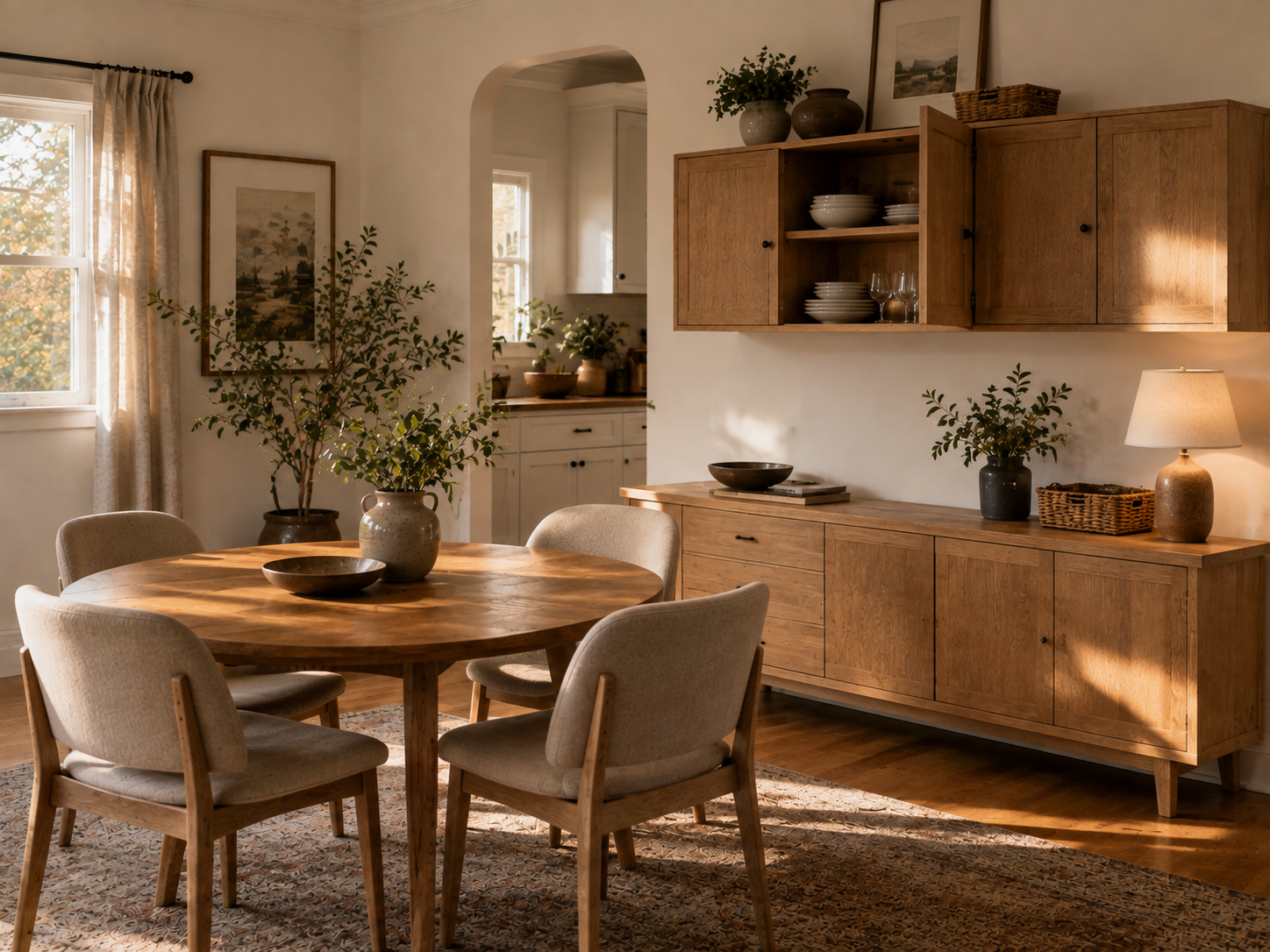
A small dining room can quickly feel crowded when dishes, serving pieces, table linens, and everyday items have nowhere to go. The right dining room storage cabinets can solve that problem without making the room feel heavier.
The key is to choose storage based on your room’s dimensions and how you actually use it. A shallow cabinet may work better than a large sideboard, while wall-mounted storage can free up valuable floor space.
Here are 12 practical ideas that balance storage, style, and usable floor space.
Quick Catch
For a small dining room, look for cabinets that provide useful storage without taking too much floor area. Shallow sideboards, narrow hutches, wall-mounted cabinets, built-in storage, and cabinets with drawers are particularly useful.
Before buying one, measure the available wall, cabinet depth, door swing, and walking space around your dining table. A cabinet that technically fits can still make the room uncomfortable if it leaves too little clearance for chairs and traffic. If your table itself is the real bottleneck, it’s worth revisiting our guide on choosing the right kitchen table for your family.
1. Choose a Slim Sideboard
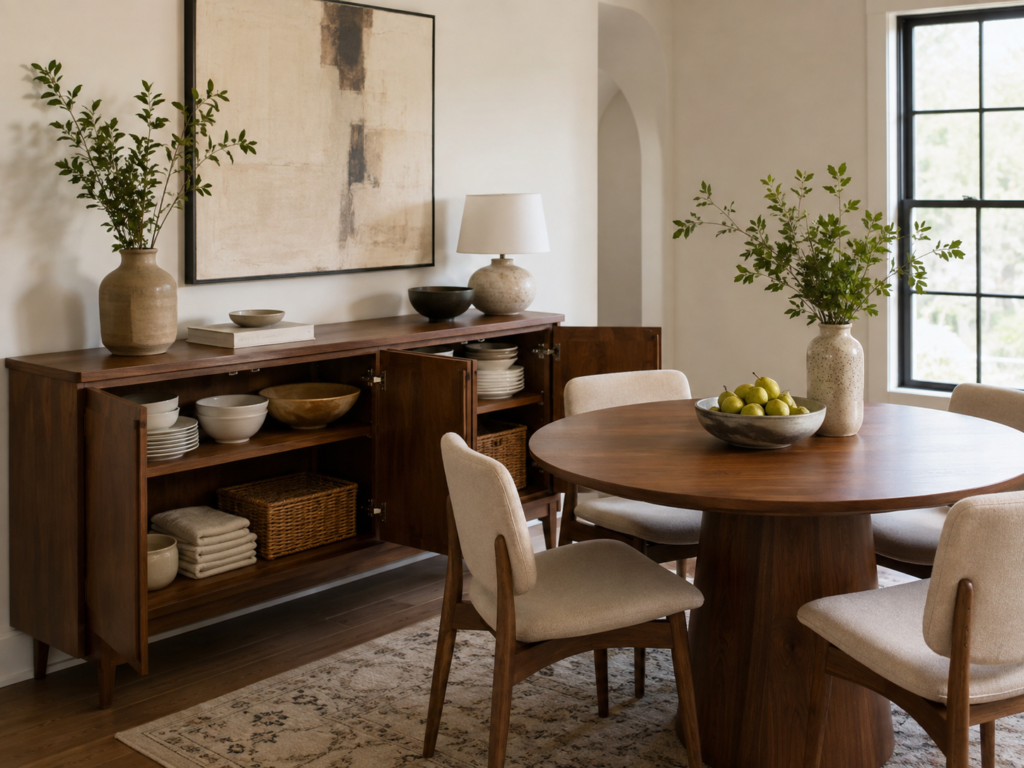
A slim sideboard is one of the easiest ways to add storage without overwhelming a compact dining room.
Look for a cabinet around 12–16 inches deep rather than a bulky piece designed for a large dining area. Use the drawers for flatware, napkins, and table linens, while the larger compartments can hold serving bowls, platters, or small appliances.
A long, low cabinet can also make a small room feel more spacious because it keeps the visual weight closer to the floor.
Watch out: Measure the chair positions around your dining table. A cabinet that works against an empty wall may become a problem when chairs are pulled out.
2. Use a Narrow Dining Room Storage Cabinet
If wall width is limited, go vertical instead of horizontal.
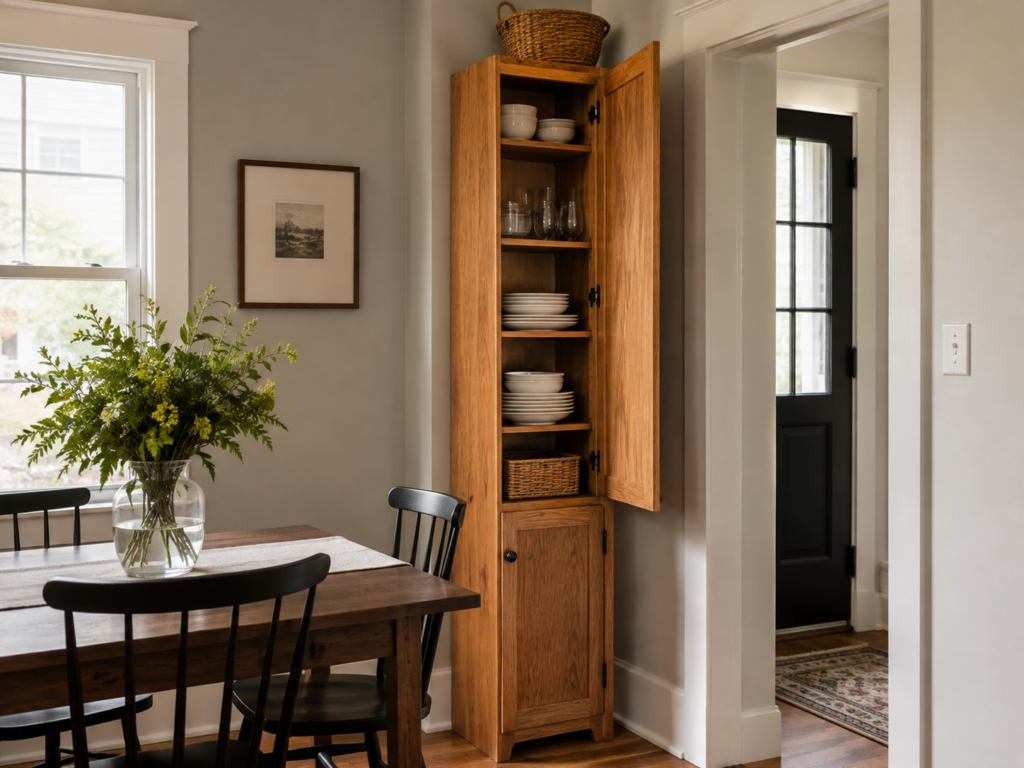
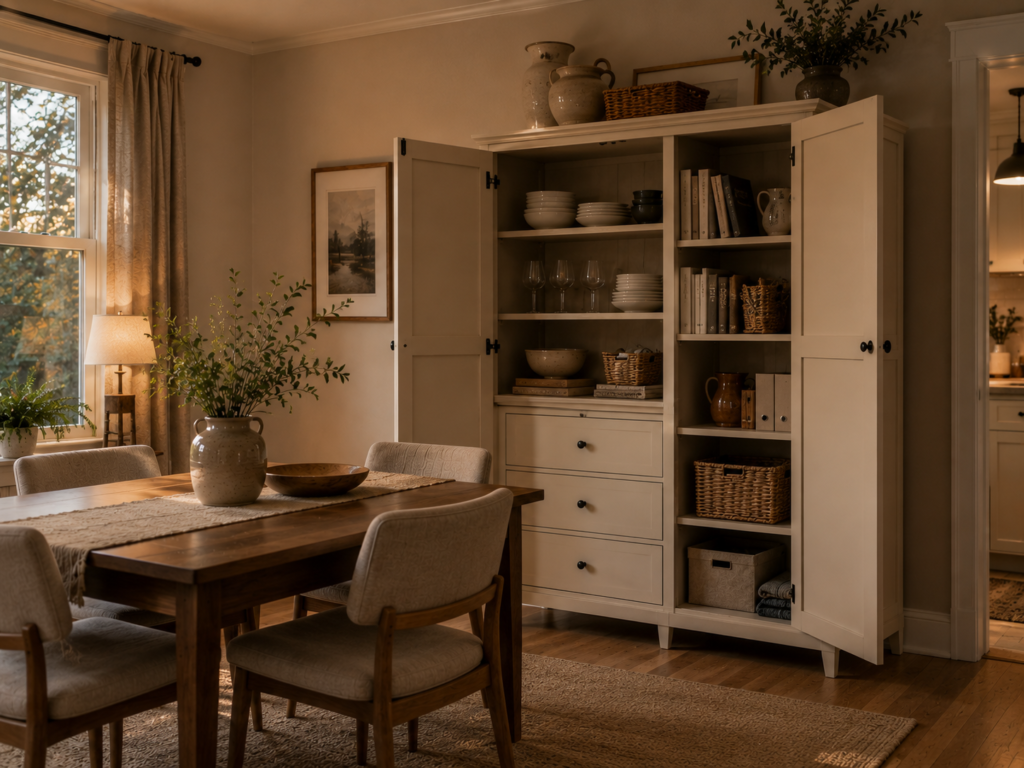
A narrow dining room storage cabinet can fit into an unused corner or beside a doorway while still providing several shelves of storage. Adjustable shelves are especially useful because plates, glasses, serving bowls, and baskets don’t all need the same amount of space.
Choose a cabinet with doors if you want the room to look tidy. Open shelving works better when you’re willing to keep the contents organized.
What to measure
Measure both the cabinet width and the space needed to open its doors. In a tight room, sliding or lift-up doors may be more practical than wide-swinging doors.
3. Install a Wall-Mounted Cabinet
When floor space is extremely limited, take storage off the floor.
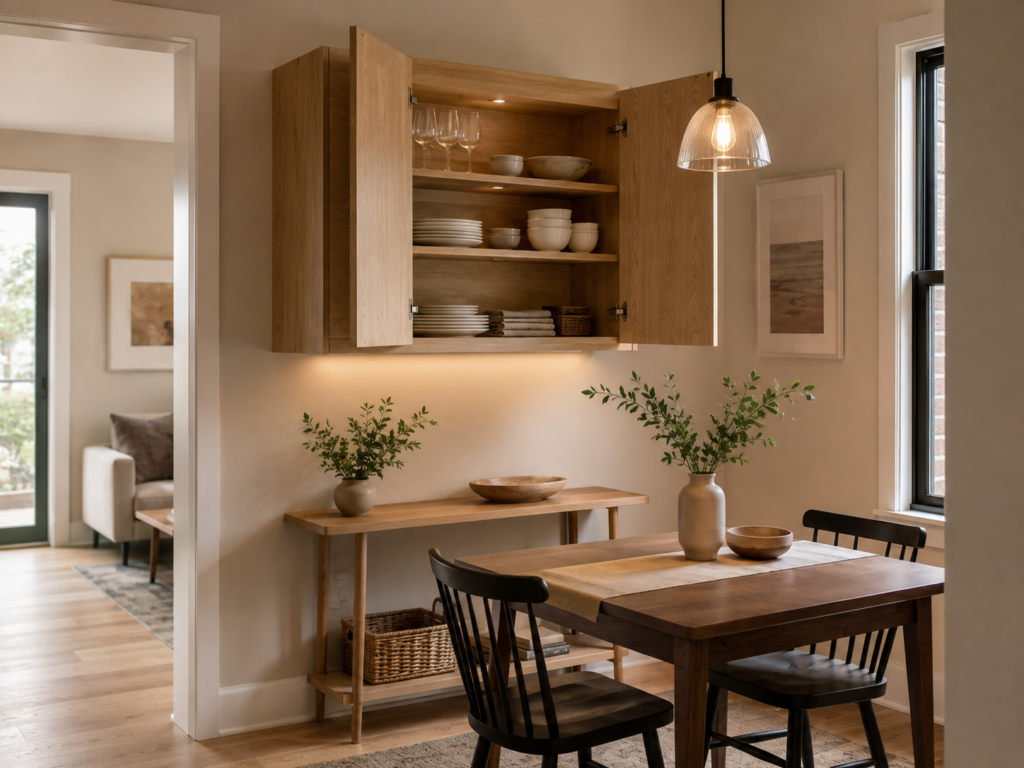
A wall-mounted cabinet can store glasses, dishes, napkins, or decorative pieces while leaving the floor underneath visually open. This approach works particularly well above a low sideboard or on a wall that would otherwise remain unused.
Make sure the wall and mounting hardware can safely support the cabinet and its contents. Heavy dinnerware requires more substantial mounting than lightweight decor.
4. Add a Compact Hutch
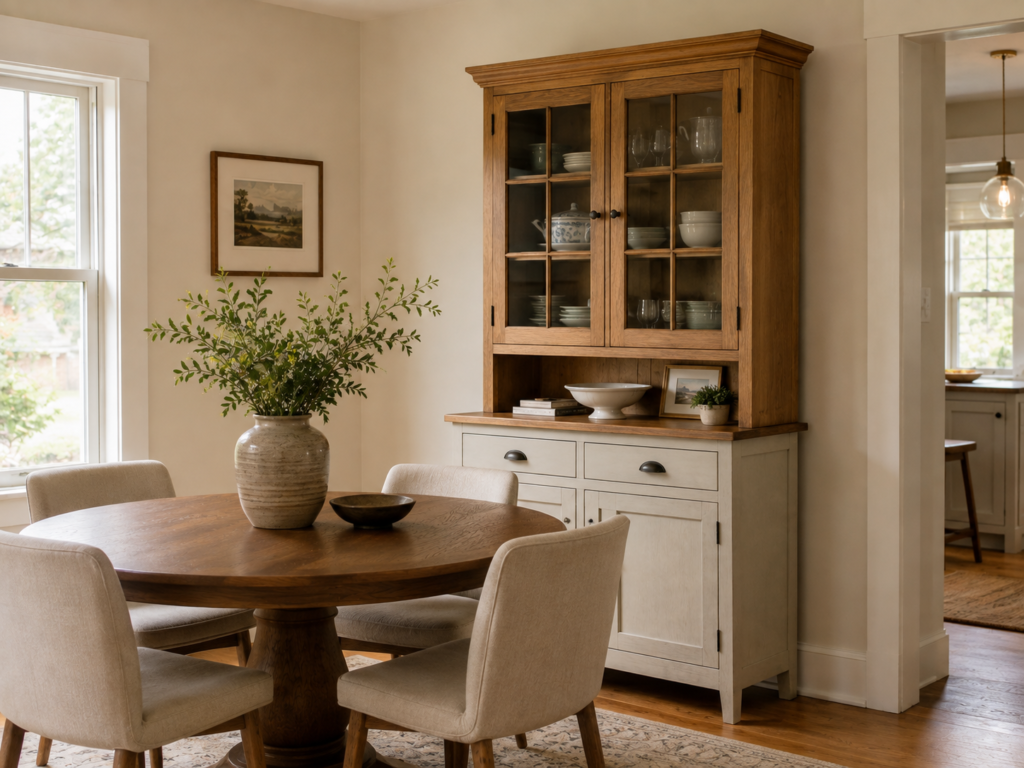
A hutch combines lower cabinet storage with upper shelving, making it useful when one piece needs to do several jobs.
Use the lower section for less frequently used serving dishes and the upper shelves for glasses, bowls, cookbooks, or attractive ceramics.
For a small room, avoid oversized hutches with very deep upper sections. A lighter design with glass doors or open shelving can make the piece feel less bulky.
Pros: Lots of vertical storage in one footprint.
Cons: Can visually dominate a small dining room if it is too tall or wide.
5. Turn an Empty Corner Into Storage
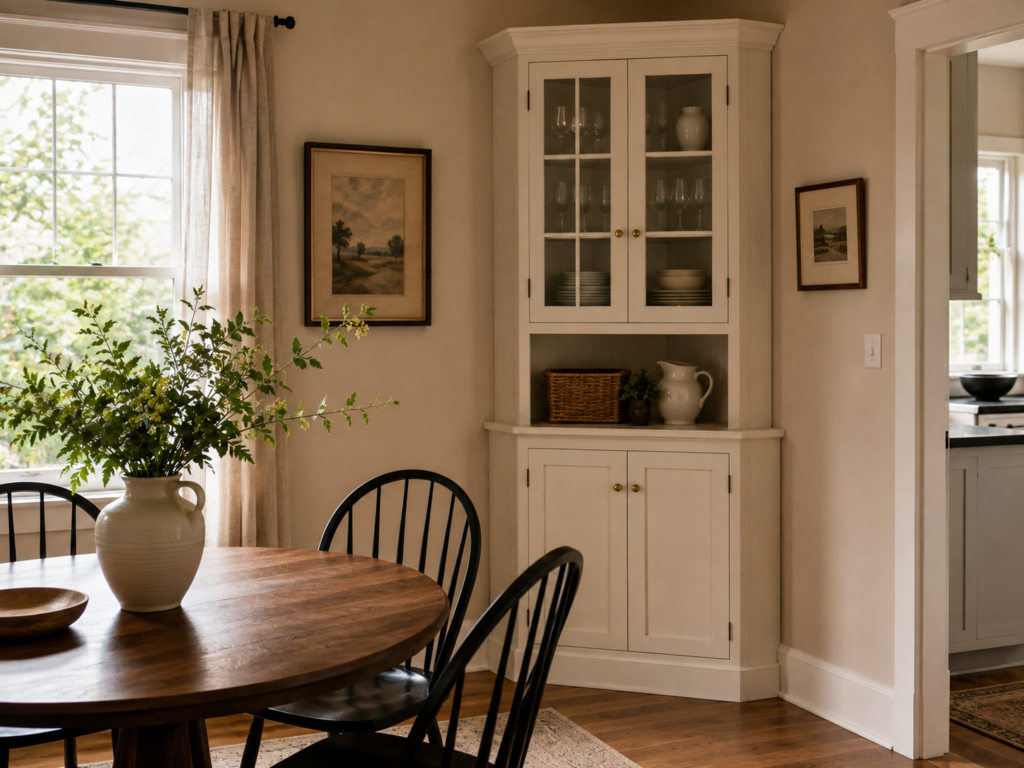
Corners are often wasted in dining rooms, particularly beside a window or near the kitchen entrance.
A corner cabinet can use that awkward area for dishes, linens, barware, or seasonal serving pieces. Choose a shape that follows the corner rather than forcing a standard rectangular cabinet into the space.
For very tight rooms, a shallow corner unit is usually more practical than a deep freestanding cupboard.
6. Use Cabinets With Drawers for Small Items
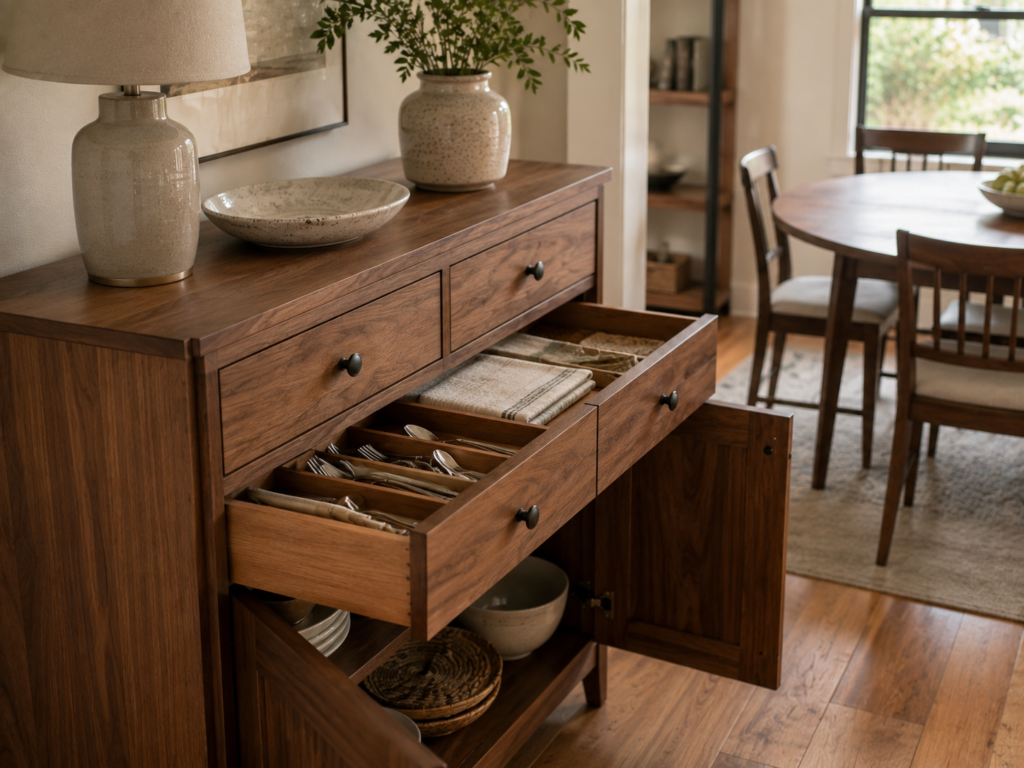
Shelves are excellent for dishes, but drawers are much better for small dining accessories.
If you’re choosing a dining room storage cabinet, consider a combination of drawers and closed compartments. Drawers can hold:
- Flatware
- Napkins
- Placemats
- Candles
- Coasters
- Table runners
- Small serving utensils
Deep drawers aren’t always better. Shallow drawers make small items easier to organize and prevent everything from becoming one large pile.
7. Choose a Glass-Front Cabinet for Visual Lightness
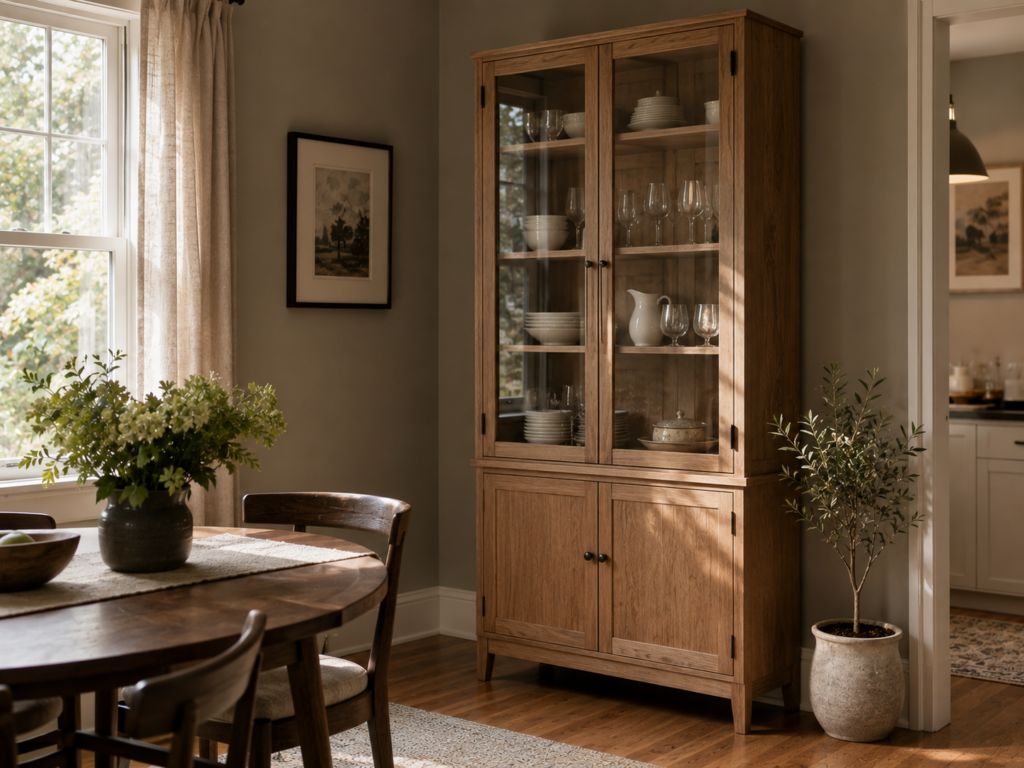
Glass-front cabinets can provide closed storage while keeping the room from looking too heavy.
They work particularly well when you want to display attractive dinnerware or glassware. Use matching or coordinated pieces inside rather than filling the cabinet with unrelated objects.
If you’re concerned about constant cleaning, choose lightly tinted or textured glass. It can obscure minor clutter while still allowing the cabinet to feel visually lighter than a completely solid piece.
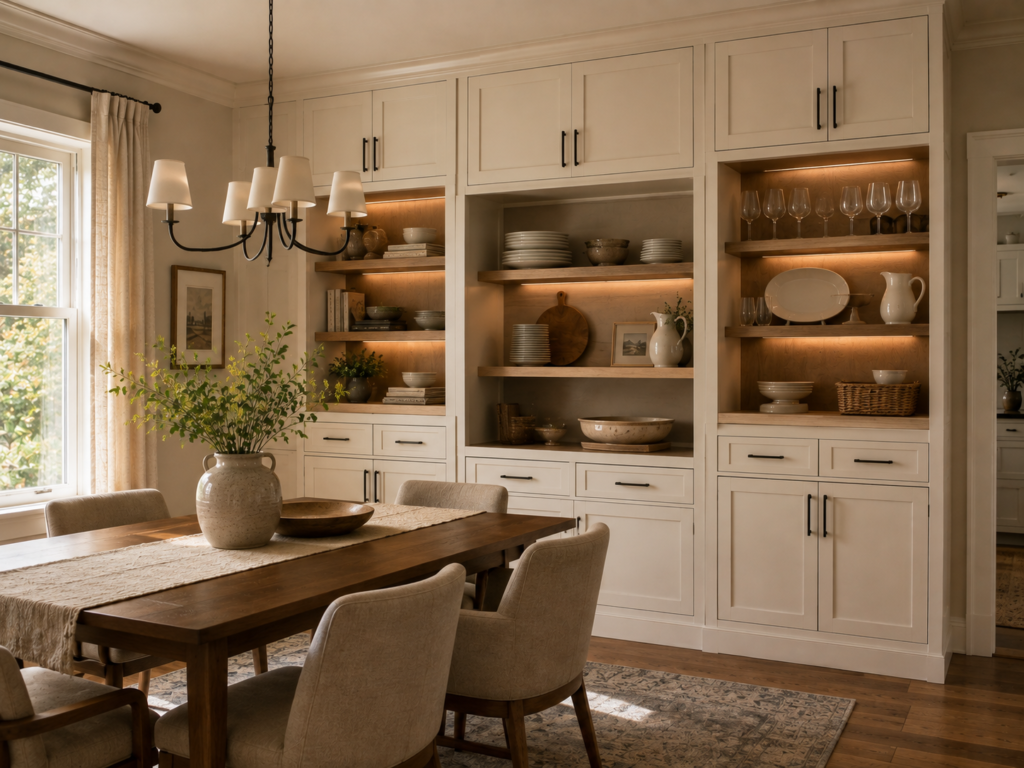
8. Build Storage Into the Wall
For homeowners planning a renovation, built-in cabinetry can make excellent use of difficult wall space.
A built-in dining room storage cabinet can be designed around the room rather than forcing the room to accommodate standard furniture. You can combine drawers, cupboards, open shelves, and even a small serving station in one installation.
The downside is cost and flexibility. Built-ins are more expensive and difficult to relocate, so they’re best suited to homeowners who expect to stay in the home for several years.
9. Try a Cabinet With Sliding Doors
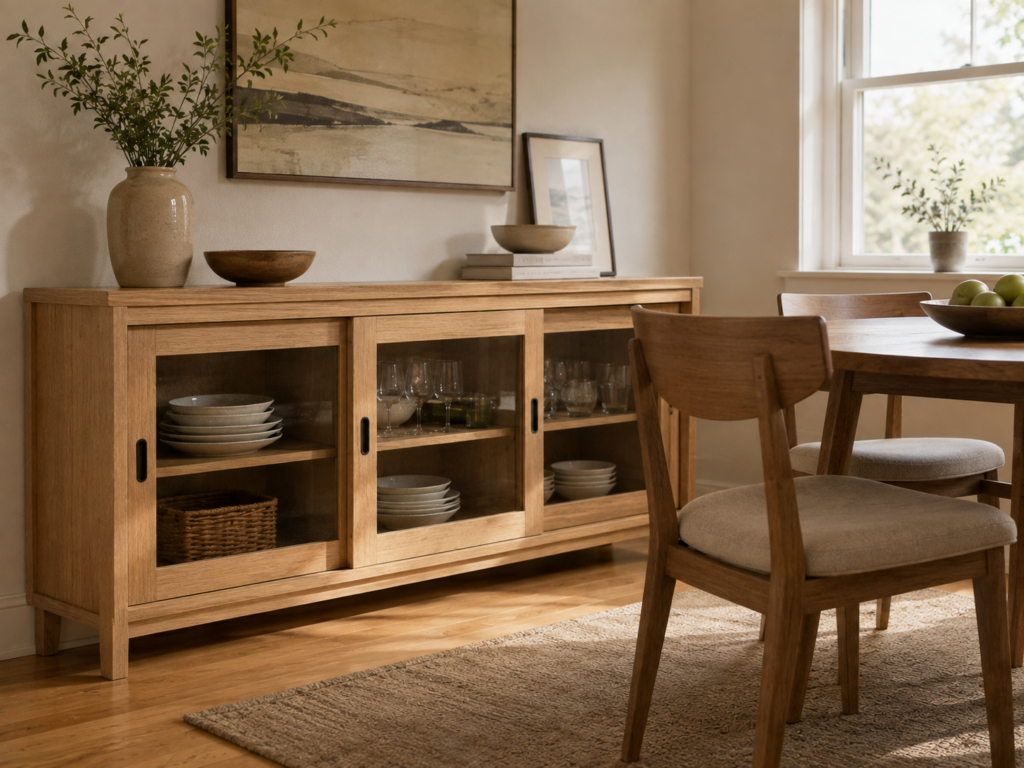
Traditional cabinet doors need clearance in front of the cabinet. That can be inconvenient when your dining table or chairs are nearby.
Sliding doors eliminate much of that issue. They’re particularly useful in narrow dining rooms or apartments where every inch of floor space matters — the same thinking behind our storage solutions for small apartments guide.
The trade-off is that you can’t open the entire cabinet at once. If you frequently need access to everything inside, hinged doors may still be more convenient.
10. Use a Freestanding Cabinet in a Rental
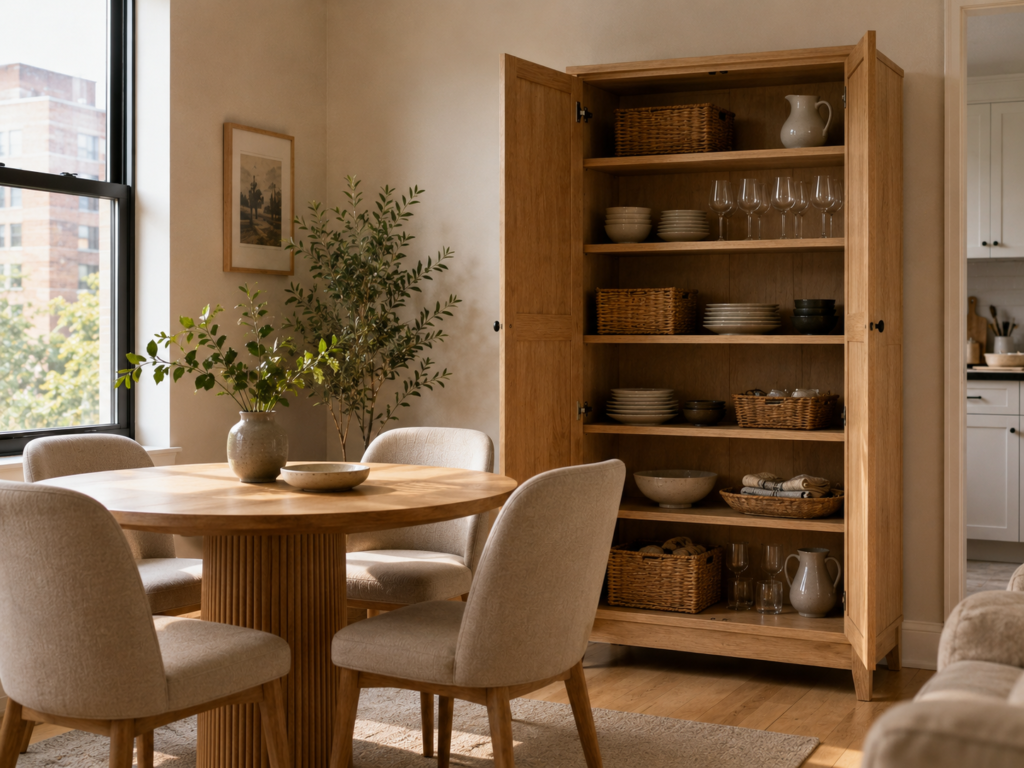
Renters don’t need to give up on dining room storage.
A freestanding cabinet, narrow bookcase with doors, or compact buffet can provide substantial storage without drilling into the wall. Choose a piece that can move with you and avoid making it so deep that it blocks normal traffic.
For a rental, furniture with adjustable shelves is especially valuable because you can adapt it to different rooms later.
11. Add Storage Around a Banquette
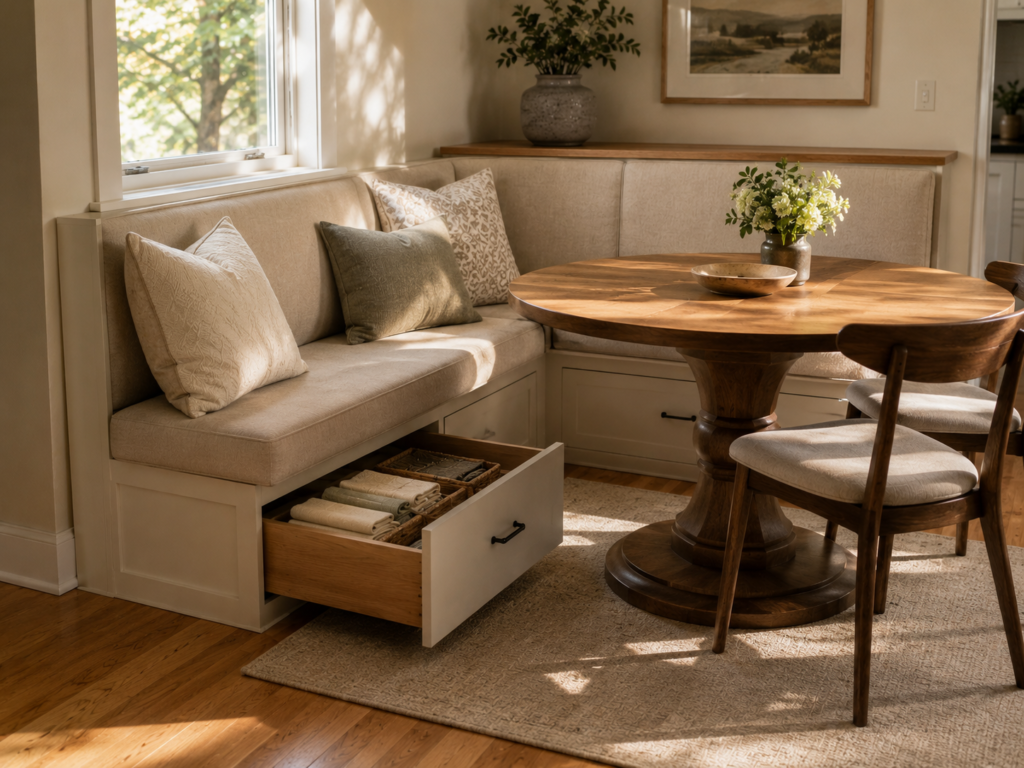
If your dining room has a banquette or built-in bench, use the space underneath it.
Lift-up seats, drawers, or hinged compartments can store table linens, serving pieces, seasonal dishes, and items you don’t use every day.
This is particularly effective in small dining nooks because the seating and storage occupy the same footprint.
Just avoid storing heavy or frequently used items where they make the seat difficult to open.
12. Pick a Multi-Use Cabinet
The best cabinet isn’t always the one labeled for dining rooms.
A well-proportioned media cabinet, console cabinet, linen cabinet, or narrow credenza can work just as well if its dimensions suit the room.
Think about what you actually need to store. If your dining room also functions as a homework area, home office, or entertaining space, choose storage that can handle more than dishes.
A cabinet with adjustable shelves and a mix of drawers and cupboards will usually give you more flexibility than a piece designed for one specific purpose.
How to Choose the Right Dining Room Storage Cabinet
Before buying anything, measure the room rather than shopping by appearance alone.
Check the cabinet depth
A cabinet that is only a few inches deeper can make a noticeable difference in a narrow dining room. Compare the cabinet’s full depth with the space needed to pull dining chairs away from the table.
Measure door and drawer clearance
Open every door and drawer on the product dimensions if possible. You need enough space for them to open without hitting chairs, walls, or other furniture.
Consider what you’re storing
For dinnerware, adjustable shelves are useful. For flatware and linens, drawers are better. For attractive glassware, glass doors can combine storage with display.
Don’t ignore material quality
Wood, plywood, metal, and engineered wood can all work. The better choice depends on your budget and how heavily the cabinet will be used.
For a frequently used dining room, pay particular attention to sturdy hinges, drawer slides, shelf supports, and an easy-to-clean finish.
How Much Space Should You Leave Around a Dining Cabinet?
There isn’t one universal number that works for every room, but the important principle is simple: the cabinet shouldn’t interfere with normal movement around the table.
Measure the space with dining chairs pulled out, not just pushed underneath the table.
If the cabinet is directly behind dining chairs, test the actual chair position before buying. A beautiful cabinet becomes frustrating when people have to squeeze sideways every time someone sits down.
Budget-Friendly Ways to Add Dining Storage
You don’t necessarily need custom cabinetry.
A secondhand sideboard, simple freestanding cupboard, or refurbished console can provide useful storage for considerably less than a built-in installation.
You can also improve an existing cabinet with shelf risers, drawer dividers, baskets, or adhesive labels.
For small dining rooms, better organization inside a modest cabinet is often more useful than buying a much larger cabinet.
FAQs
What is the best cabinet for a small dining room?
A shallow sideboard, narrow storage cabinet, floating cabinet, or compact hutch can work well. The best option depends on available wall width, cabinet depth, and how much storage you need.
How deep should a dining room storage cabinet be?
For a compact dining area, a shallower cabinet is often easier to live with. Around 12–16 inches can provide useful storage while taking up less floor space, although the ideal depth depends on what you need to store.
What should I store in a dining room cabinet?
Common items include dinnerware, serving bowls, platters, glasses, flatware, napkins, tablecloths, placemats, candles, and entertaining accessories.
Are built-in dining cabinets worth it?
They can be worth considering if you own the home, need a highly customized storage solution, and expect to stay for several years. Freestanding furniture is usually more flexible and easier to replace or relocate.
How can I add dining storage without making the room look crowded?
Choose shallow or wall-mounted storage, keep the cabinet proportional to the room, and avoid filling open shelves with too many objects. Closed storage is particularly helpful when you want a cleaner visual appearance.
Conclusion
The best dining room storage cabinets don’t simply add more shelves. They make better use of the space you already have.
For a small dining room, prioritize the cabinet’s depth, door clearance, storage layout, and relationship to the dining table. A slim sideboard may be enough for one home, while a wall-mounted cabinet or built-in could make more sense in another.
Start by measuring the wall and identifying exactly what you need to store. Then choose the smallest cabinet that comfortably handles the job.