
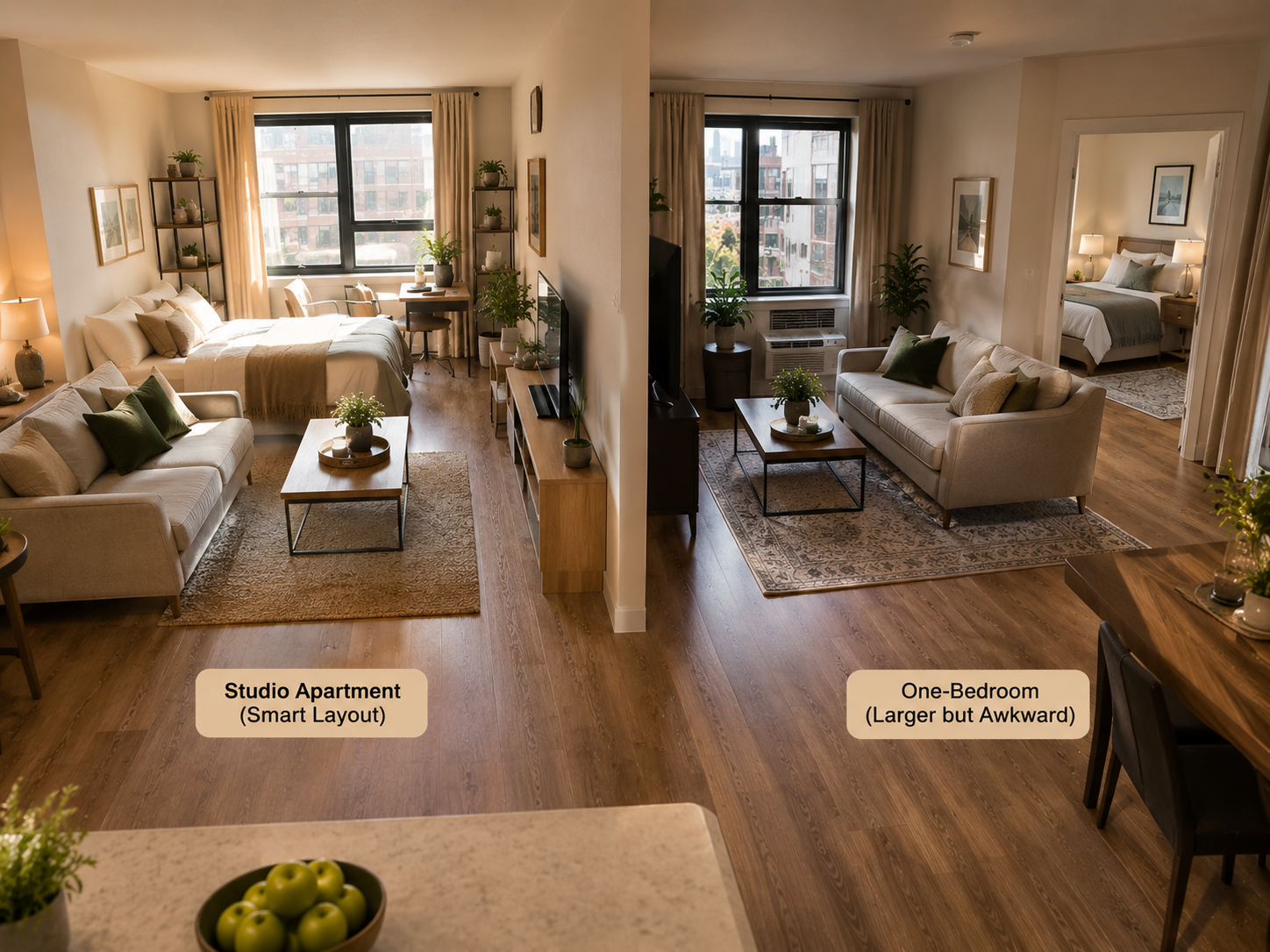
Choosing between a studio and a one-bedroom apartment isn’t simply about getting more square footage. The bigger question is how you use your space every day.
A studio keeps everything in one open area, which can make it affordable and easy to maintain. A one-bedroom gives you a separate sleeping area, more privacy, and usually more flexibility when you have guests or work from home.
For a single renter who spends little time at home, a studio can make sense. If you want a dedicated bedroom, entertain guests, or work from home regularly, the extra separation of a one-bedroom may be worth the additional cost.
Studio vs 1 Bedroom: What’s the Difference?
The main difference is the layout.
A studio apartment generally combines the living room, bedroom, and sometimes dining area into one main living space. The kitchen may be open to the same room or separated by a partial wall.
A one-bedroom apartment has a separate bedroom with a door, plus a living area and kitchen.
| Feature | Studio | 1 Bedroom |
|---|---|---|
| Separate bedroom | No | Yes |
| Privacy | Lower | Higher |
| Furniture flexibility | Limited | Better |
| Cleaning | Easier | More time |
| Storage | Usually limited | Usually more |
| Entertaining | More exposed | More private |
| Work-from-home setup | More difficult | Easier |
| Overall space | Usually smaller | Usually larger |
The exact size and layout vary considerably between buildings, so don’t assume every studio is smaller than every one-bedroom. A well-designed studio can sometimes feel more usable than a poorly planned one-bedroom.
Studio Apartments: What You Get
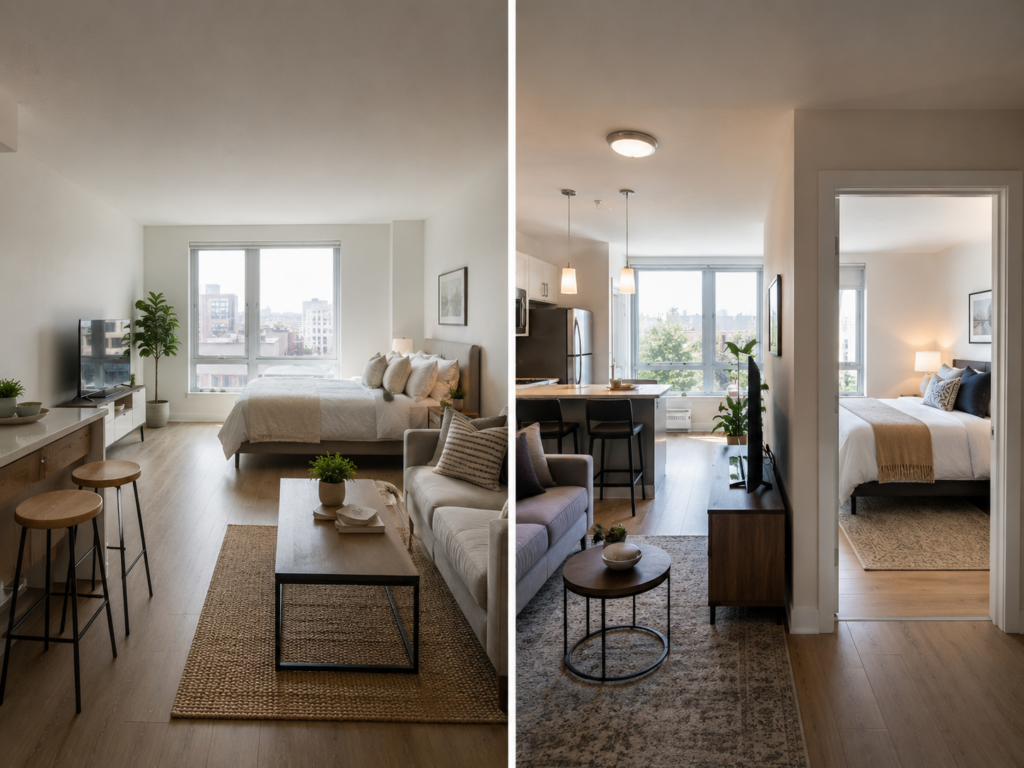
A studio is essentially one main living space designed to perform several jobs.
Your bed, sofa, dining area, and possibly desk may all occupy the same room. That sounds restrictive, but a thoughtfully planned studio can feel surprisingly comfortable.
Advantages of a Studio
Lower overall space requirements: You don’t need to furnish multiple rooms, which can make moving and furnishing simpler.
Easy to maintain: There are fewer rooms and less floor area to clean.
Open feeling: Without a wall separating the bedroom, natural light can travel through more of the apartment.
Efficient for one person: If you mostly sleep, work, and relax alone, you may not need a separate bedroom.
Disadvantages of a Studio
The biggest drawback is the lack of separation.
If your bed is next to your sofa, the entire apartment can start feeling like one large bedroom. Cooking smells, work equipment, laundry, and personal belongings are also visible from most parts of the room.
That matters more if you work from home or regularly have visitors.
One-Bedroom Apartments: What Changes?
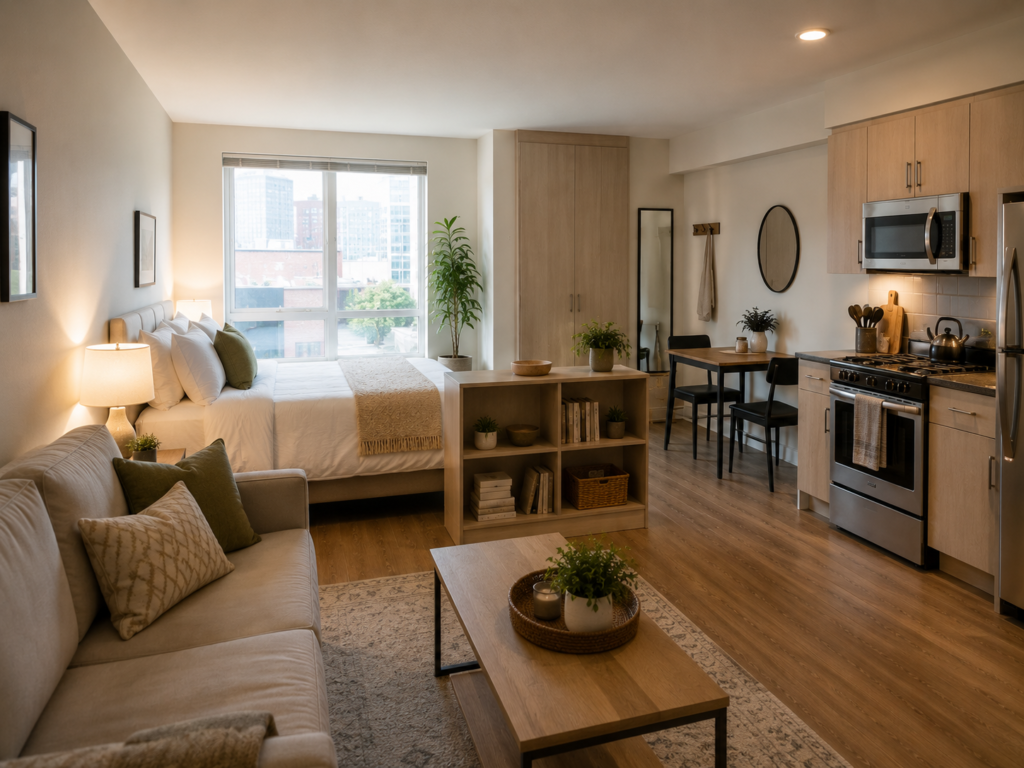
A one-bedroom apartment gives you a dedicated room for sleeping.
That single wall and door can make a surprisingly large difference to how the apartment feels.
You can close the bedroom door when guests visit, keep the bed out of sight, and use the living room for another purpose.
Advantages of a One Bedroom
More privacy: You can separate sleeping from living.
Better for couples: Two people can have different schedules without the entire apartment being one shared room.
Easier work-from-home setup: The bedroom can remain a bedroom while the living area accommodates a desk.
More flexible storage: You generally have additional walls and closets to work with.
Disadvantages
The obvious downside is cost. A one-bedroom usually requires more space, more furniture, and potentially higher utility and moving costs.
You also have more rooms to furnish and clean.
For someone who rarely spends time at home, paying for a separate bedroom may not provide enough practical value.
Studio vs 1 Bedroom for Couples
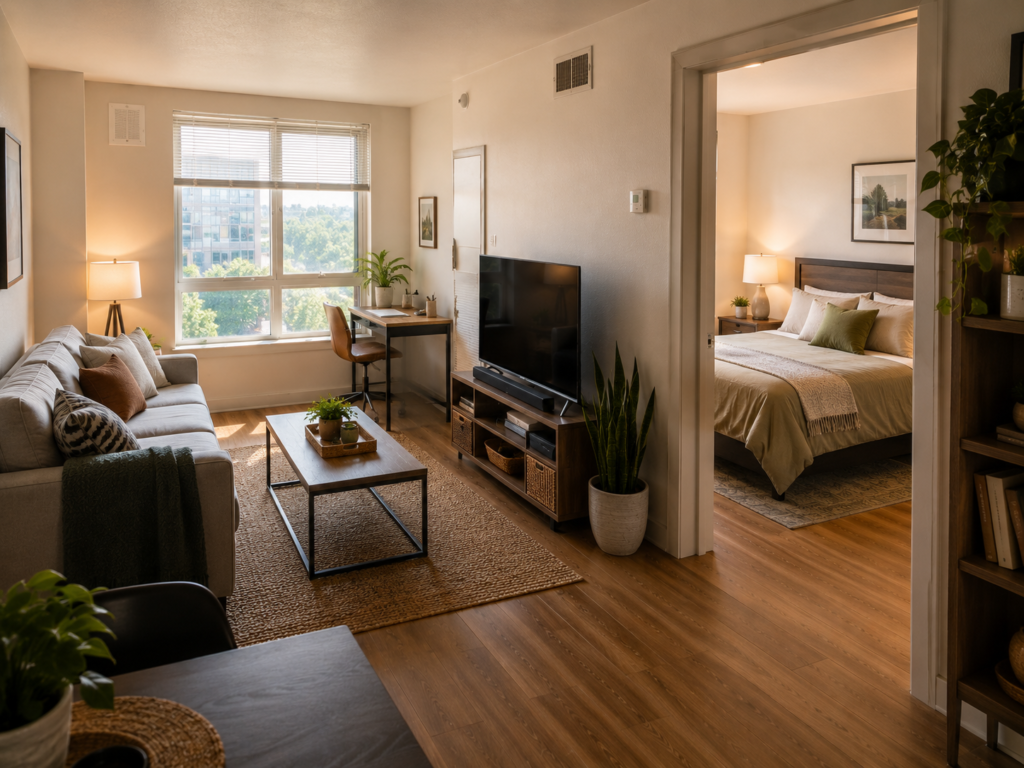
For a couple, the decision becomes more personal.
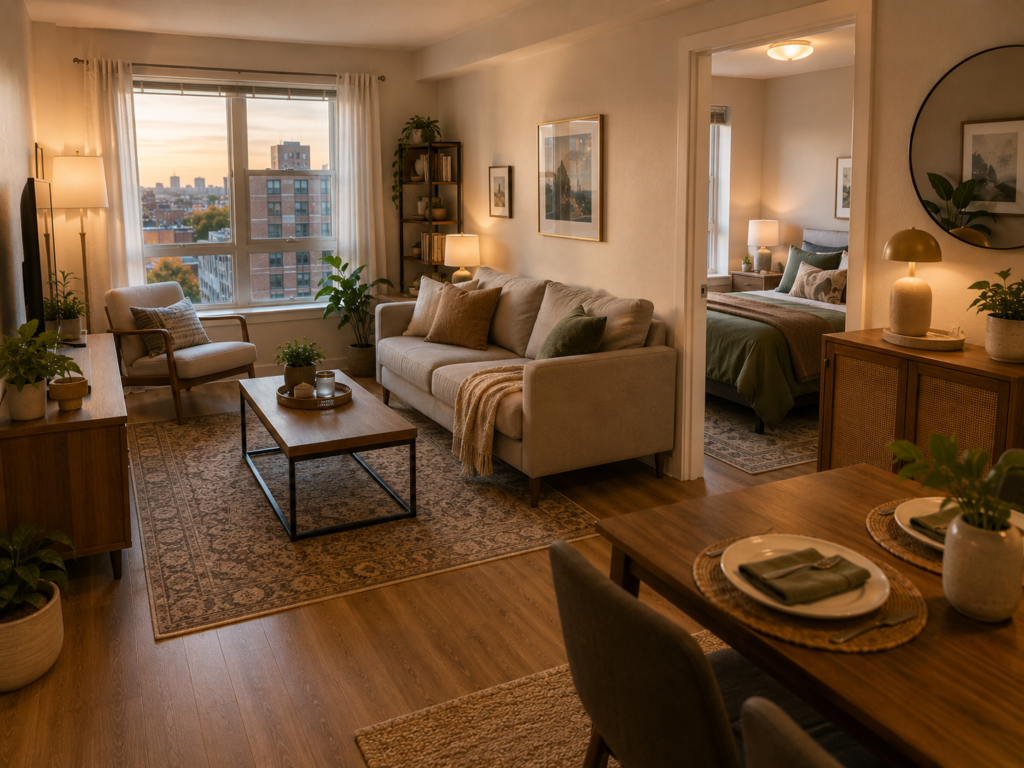
A studio can work if both people have similar schedules, don’t need much personal space, and are comfortable sharing one open room.
But a one-bedroom gives you somewhere to retreat when one person is sleeping, working, watching TV, or simply wants some quiet.
There’s also a practical issue: storage.
Two people’s clothing, shoes, luggage, hobbies, and everyday belongings can quickly overwhelm a studio unless the layout has excellent closets — the kind of problem covered in our guide to storage solutions for small apartments.
My practical take: If two people will live together full-time and the budget allows it, I’d generally favor the one-bedroom. The separate bedroom provides flexibility that becomes more valuable over time.
Studio vs 1 Bedroom for Working From Home
This is one area where the one-bedroom has a clear advantage.
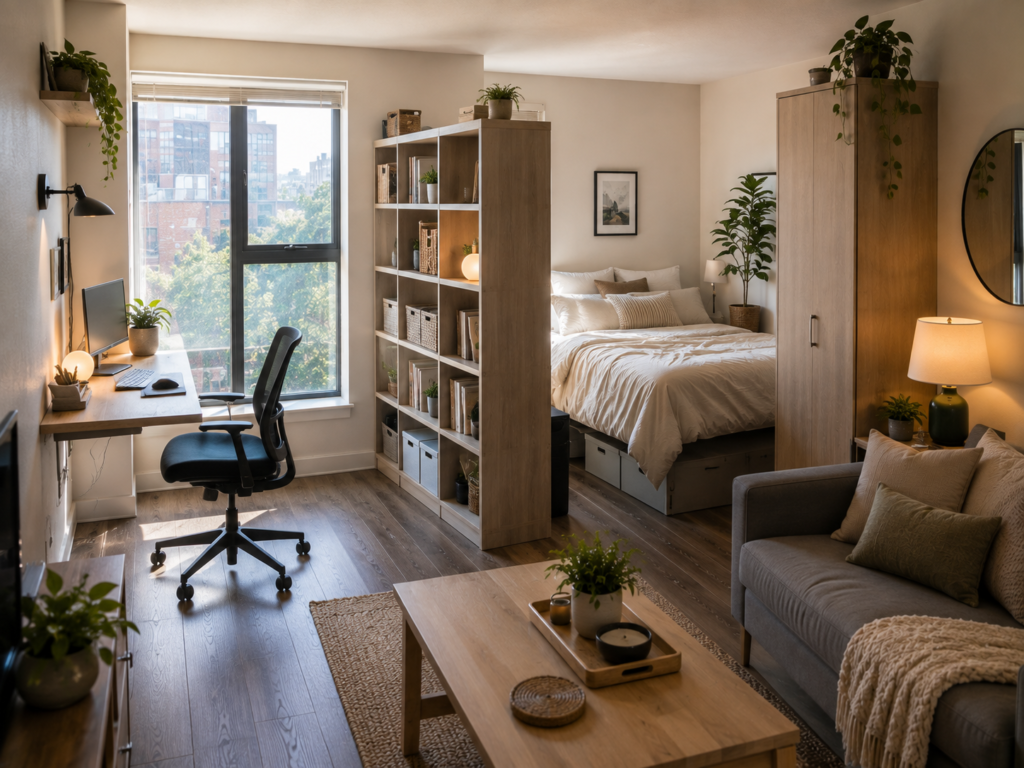
A desk in a studio has to share space with your bed and living area. Even with good organization, it can be difficult to mentally separate work from personal time.
In a one-bedroom, you have more options.
You could put a compact desk in the bedroom, create a workspace in the living room, or use part of a larger bedroom as an office zone. If your one-bedroom is on the larger side, it’s worth checking our notes on average master bedroom size to see how much room a proper office zone actually needs.
However, don’t assume you need a separate bedroom just because you work remotely. A well-designed studio with a wall-mounted desk, room divider, or fold-away workstation can work.
The question is how many hours you spend working there.
Studio vs 1 Bedroom for Storage
Storage is often where the studio’s limitations become obvious.
You can compensate with:
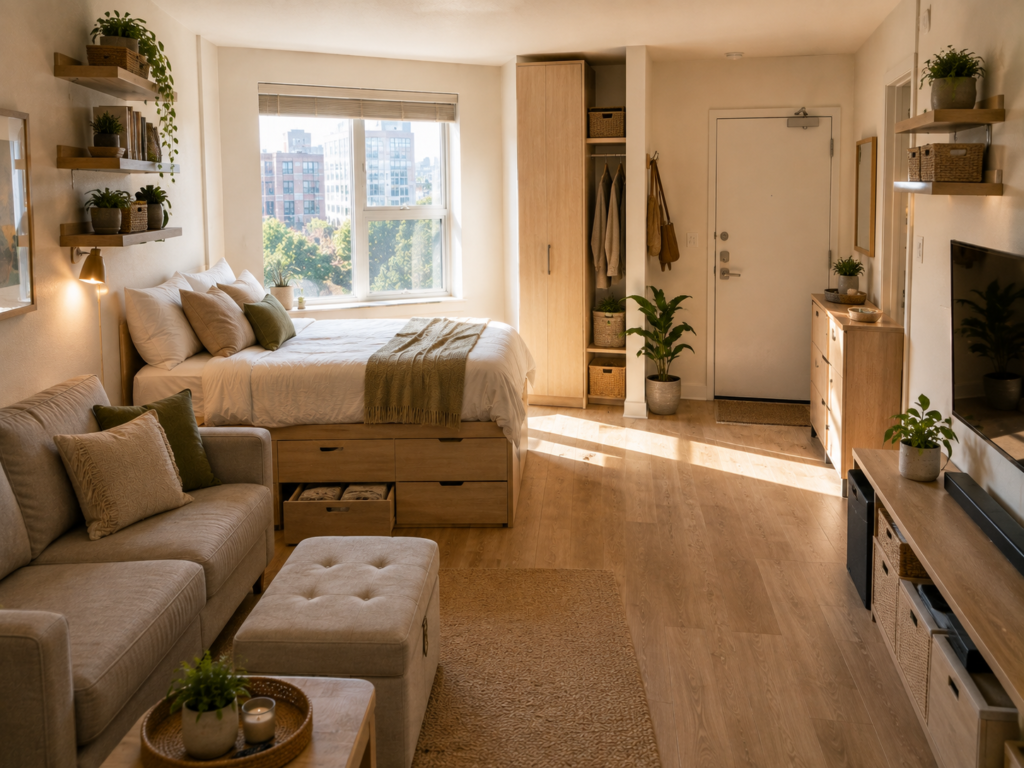
- Under-bed storage
- Tall wardrobes
- Storage ottomans
- Wall-mounted shelves
- Narrow cabinets
- Beds with drawers
- Over-door organizers
But there is a limit to how much furniture you can add before the apartment feels crowded. For a fuller rundown of these tricks, see our guide to storage solutions for small apartments.
A one-bedroom gives you more opportunities to distribute belongings between the bedroom, living room, and closets.
When touring an apartment, don’t focus only on the number of closets. Open them. Check their depth and usable shelf space.
A large-looking closet with poor internal organization may hold less than a smaller but better-designed one.
Which Is Better for Entertaining Guests?
A one-bedroom usually wins here.
In a studio, guests are essentially inside your bedroom area because everything shares one room.
You can make a studio work with a sofa, small dining table, and clever furniture arrangement — a small coffee bar setup can even double as a mini entertaining station — but privacy remains limited.
A one-bedroom lets you keep the bedroom behind a closed door while guests stay in the living area.
If you regularly host friends or family, that separation can make the extra space worthwhile.
Which Is Easier to Furnish?
A studio is usually simpler.
You have fewer rooms and can often furnish it with:
- One bed
- One sofa
- A small dining table
- A compact desk
- One or two storage pieces
The challenge is making those pieces work together without creating visual clutter.
A one-bedroom gives you more freedom but also creates more furnishing decisions.
You’ll need to think about the bedroom, living room, dining area, and possibly a workspace separately.
Studio Flat vs 1 Bedroom: Which Is Better for a Small Space?
If you’re specifically trying to minimize your housing footprint, a studio can be the more efficient choice.
But don’t automatically choose the smallest apartment.
Layout matters more than the number on the listing.
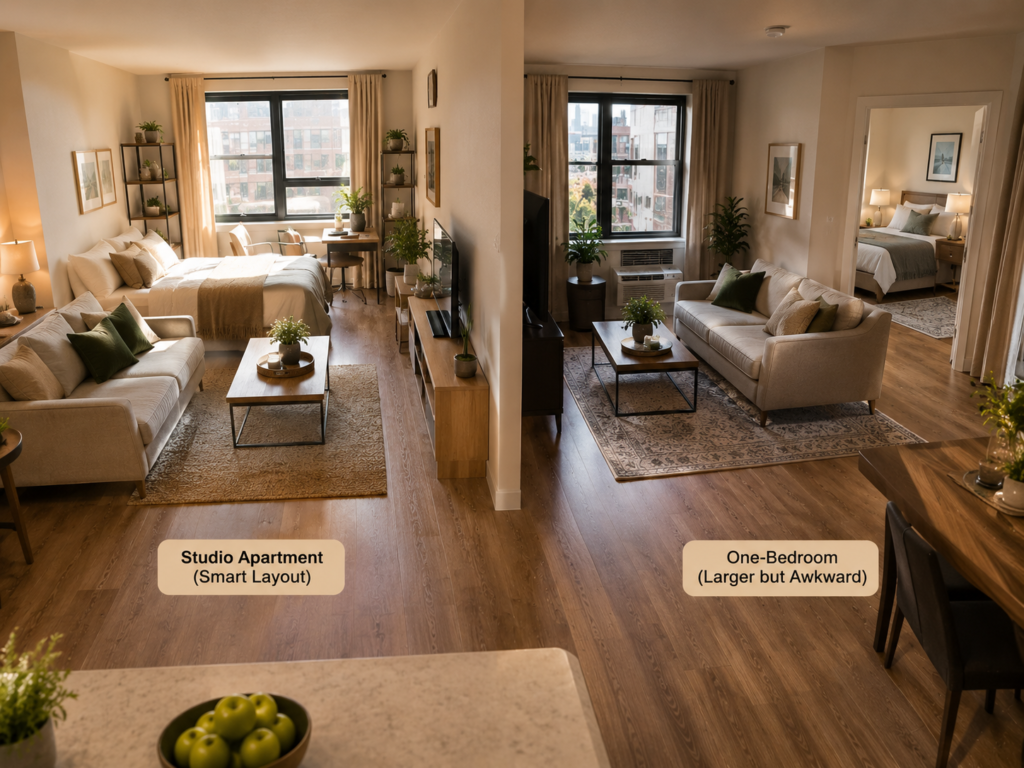
For example, a studio with a large window, generous closet, sensible kitchen placement, and minimal hallway space may feel better than a one-bedroom with a long entry corridor and awkward furniture placement.
When comparing apartments, look at:
- Where your bed will go.
- Where your sofa will go.
- Whether a desk can fit.
- Where your clothing will be stored.
- How easily you can move between zones.
- Where guests will sit.
- Whether doors and cabinets open without blocking furniture.
These details tell you more about livability than square footage alone.
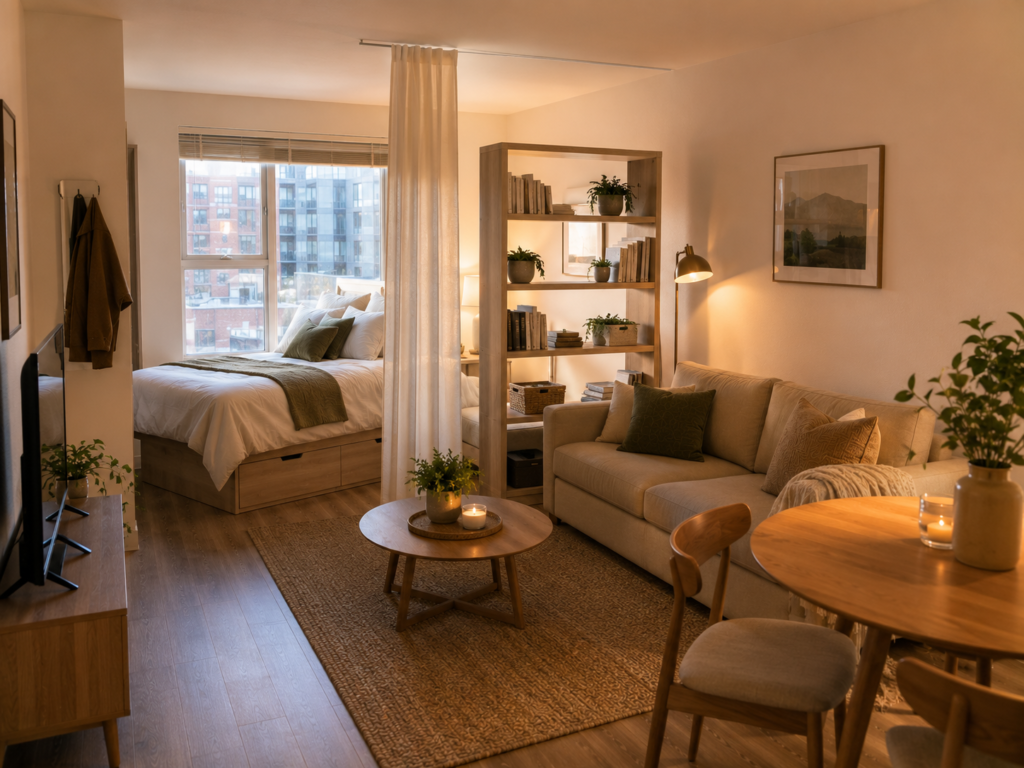
How to Make a Studio Feel More Like a 1 Bedroom
If you choose a studio but want more separation, you don’t necessarily need construction.
Try:
Use a Bookcase as a Room Divider
An open bookshelf can separate the bed from the living area while still allowing light through.
Position the Sofa Between Zones:
Instead of placing the sofa against a wall, use its back to create a natural boundary between living and sleeping areas.
Try a Curtain
A ceiling-mounted curtain around the bed provides privacy when you need it and can disappear when you don’t.
Use a Storage Partition
A tall cabinet can divide the room while providing useful storage.
Choose Furniture With Multiple Functions
A storage bed, folding dining table, nesting tables, or compact desk can save valuable floor space.
These solutions won’t truly create another bedroom, but they can make a studio feel much more organized.
What About Cost?
Cost is one of the biggest reasons people choose a studio, but don’t compare rent alone.
Think about the complete monthly housing cost, including:
- Rent
- Utilities
- Parking
- Internet
- Renter’s insurance
- Pet fees, if applicable
- Laundry costs
- Transportation
A cheaper studio farther from work isn’t necessarily the better financial choice if it adds significant commuting costs.
Likewise, paying more for a one-bedroom may be worthwhile if you spend most of your time at home and actually use the extra room.
Apartment prices vary dramatically by city and neighborhood, so it’s better to compare actual listings in the area you’re considering rather than relying on a national “studio costs X and one-bedroom costs Y” figure.
A Simple Decision Guide
Choose a studio if:
- You live alone.
- You want to keep housing costs lower.
- You don’t need much privacy.
- You own relatively few belongings.
- You spend limited time at home.
- You like open layouts.
- You’re comfortable using multifunctional furniture.
Choose a one-bedroom if:
- You want a separate sleeping area.
- You work from home regularly.
- You live with a partner.
- You frequently have guests.
- You need more storage.
- You want clearer separation between work and personal life.
- The additional cost fits comfortably within your budget.
Frequently Asked Questions
Is a studio cheaper than a one-bedroom?
Often, a studio has a lower rental price than a one-bedroom in the same area, but this isn’t universal. Compare actual apartments with similar locations, amenities, building quality, and lease terms.
Is a studio big enough for one person?
Yes. A well-planned studio can be perfectly comfortable for one person, especially if you don’t own a lot of furniture or belongings.
Is a one-bedroom worth it for one person?
It can be, particularly if you work from home, entertain guests, need storage, or simply value having a separate bedroom. If those things aren’t important to you, the additional space may not justify the extra cost.
Can two people live comfortably in a studio?
Yes, but it depends heavily on the layout, storage, lifestyle, and personal space each person needs. A studio can become cramped quickly when two people have different schedules or lots of belongings.
What is the biggest disadvantage of a studio?
The lack of separation is usually the biggest issue. Your sleeping, living, working, and sometimes dining areas all share the same room.
Conclusion
The choice between a studio and one-bedroom apartment comes down to how you actually live.
A studio makes sense when simplicity, lower space requirements, and efficient living matter most. A one-bedroom makes more sense when privacy, storage, guests, or working from home are important.
Don’t choose based on square footage alone. When you tour an apartment, imagine where your bed, sofa, desk, clothes, and everyday belongings will go. If everything fits naturally without blocking walkways, the apartment is probably using its space well.
And if you’re deciding between two specific apartments, compare the layout and total monthly cost, not just the number of bedrooms.