
A microwave can take up a surprising amount of counter space in a small kitchen. The good news is that you don’t need a large remodel to give it a better home. With the right microwave and cabinet setup, you can free counter space, improve storage, and keep the kitchen easier to use. If you’re rethinking the whole layout rather than just the microwave, see our small kitchen design layout ideas.
The best solution depends on your available wall space, cabinet depth, microwave size, and how often you use the appliance.
Quick Answer: Where Should You Put a Microwave in a Small Kitchen?
For most small kitchens, the best options are:
- Under a cabinet or on a dedicated shelf
- Inside a properly designed appliance cabinet
- Under the countertop
- In a kitchen island
- Above the range
- In a tall pantry or appliance cabinet
- On a sturdy open shelf
If you’re renting, a shelf or microwave cart is usually easier. If you’re remodeling, an integrated cabinet can create a much cleaner result.
Before installing anything, measure the microwave and check its manufacturer’s requirements for ventilation, clearance, electrical access, and installation.
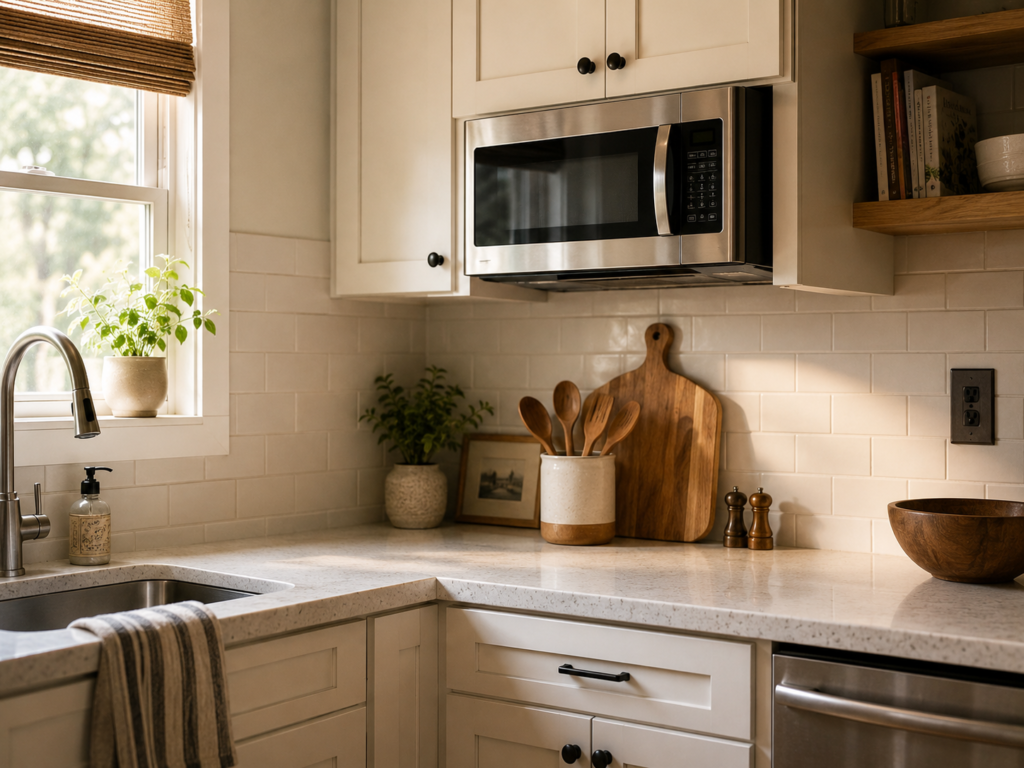
1. Put the Microwave Under an Upper Cabinet
One of the simplest solutions is placing the microwave beneath an upper cabinet rather than leaving it in the middle of the countertop.
This keeps the appliance at a convenient height while preserving most of the counter underneath.
A dedicated shelf can work particularly well when the existing cabinets don’t have a built-in opening.
Best for: Small kitchens with limited counter space.
Watch out for: Make sure the shelf is properly supported and deep enough for the microwave.
2. Create a Dedicated Microwave Cabinet
If you’re remodeling your kitchen, consider creating a cabinet specifically for the microwave.
Instead of squeezing the appliance between other items, the cabinet can be designed around its actual dimensions. You can add drawers underneath for containers, cookware, or kitchen towels.
This makes the microwave feel like part of the kitchen rather than an appliance sitting on the counter.
Best for: Homeowners planning new cabinetry.
Trade-off: It looks more integrated but requires more planning than a freestanding shelf.
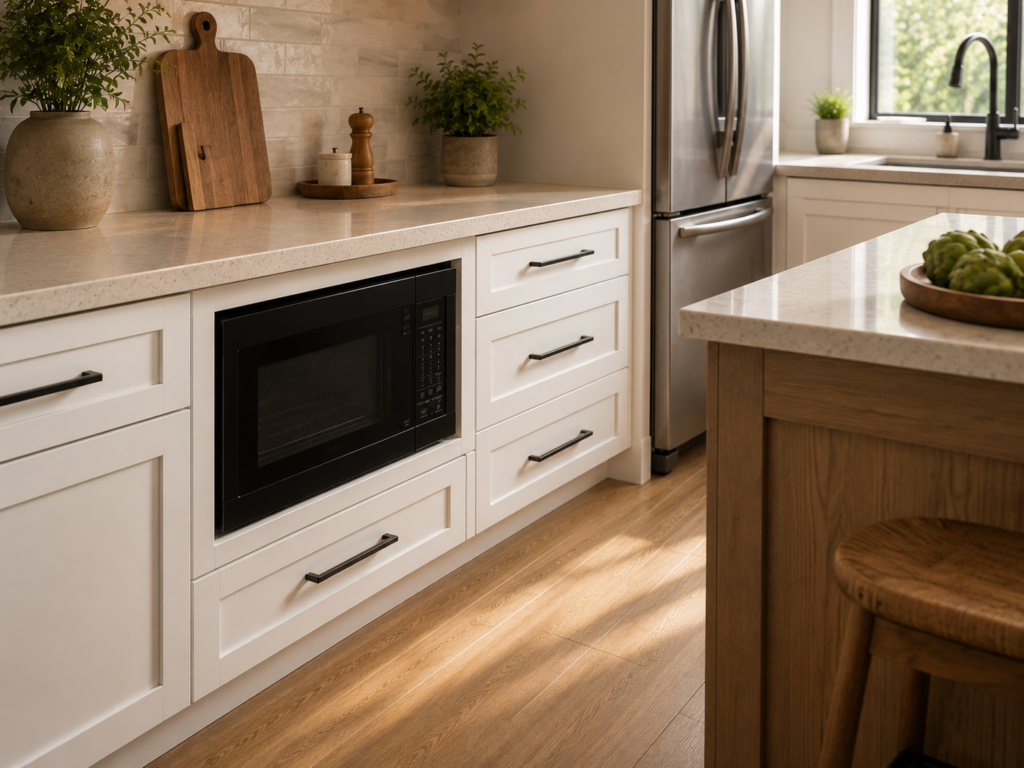
3. Install the Microwave Under the Counter
Moving the microwave below the countertop can completely clear the main work surface.
A lower cabinet can be modified or designed to accommodate a suitable microwave, with drawers or storage placed nearby.
This can work especially well in kitchens where upper cabinets are already needed for dishes and pantry items. If your countertop is already crowded with small appliances, it’s worth rethinking the whole surface — see our tips on decorating a kitchen countertop without clutter.
The downside is accessibility. If you use the microwave several times a day, constantly bending down may become inconvenient.
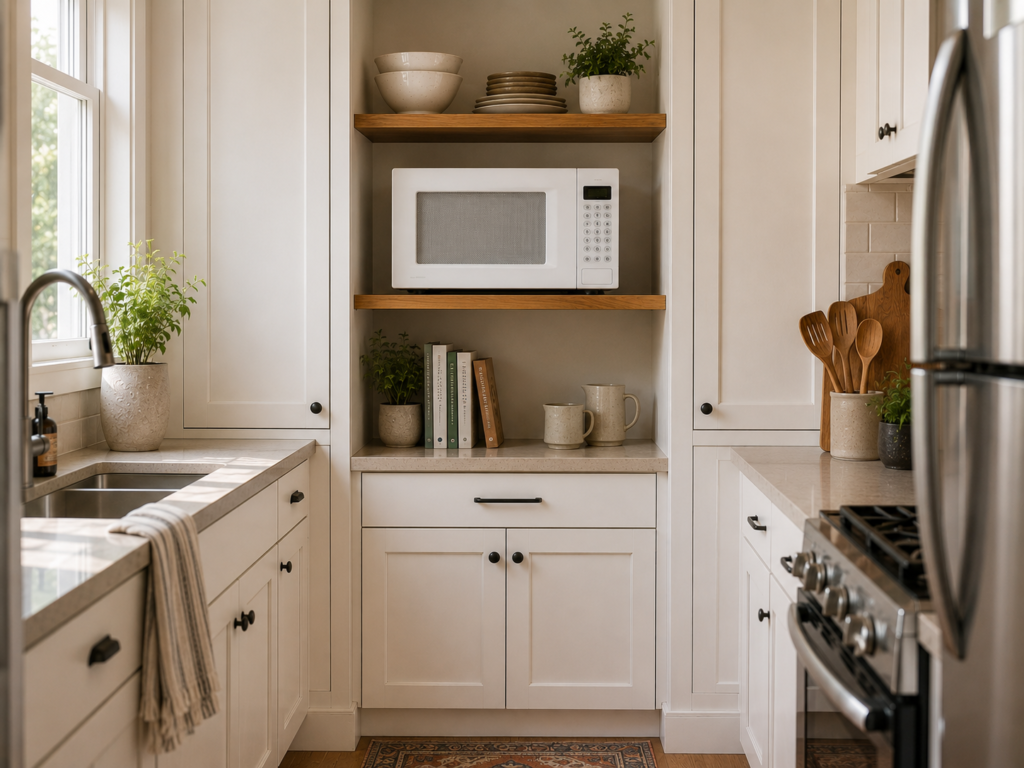
4. Use a Microwave Shelf Between Cabinets
A narrow shelf between two cabinet sections can turn unused wall space into a dedicated appliance zone.
For a small kitchen, this can be more practical than adding another large cabinet.
Use the space above the microwave for lightweight items such as bowls or cookbooks, provided the arrangement doesn’t interfere with ventilation or appliance operation.
Best for: Compact kitchens and budget-friendly updates.
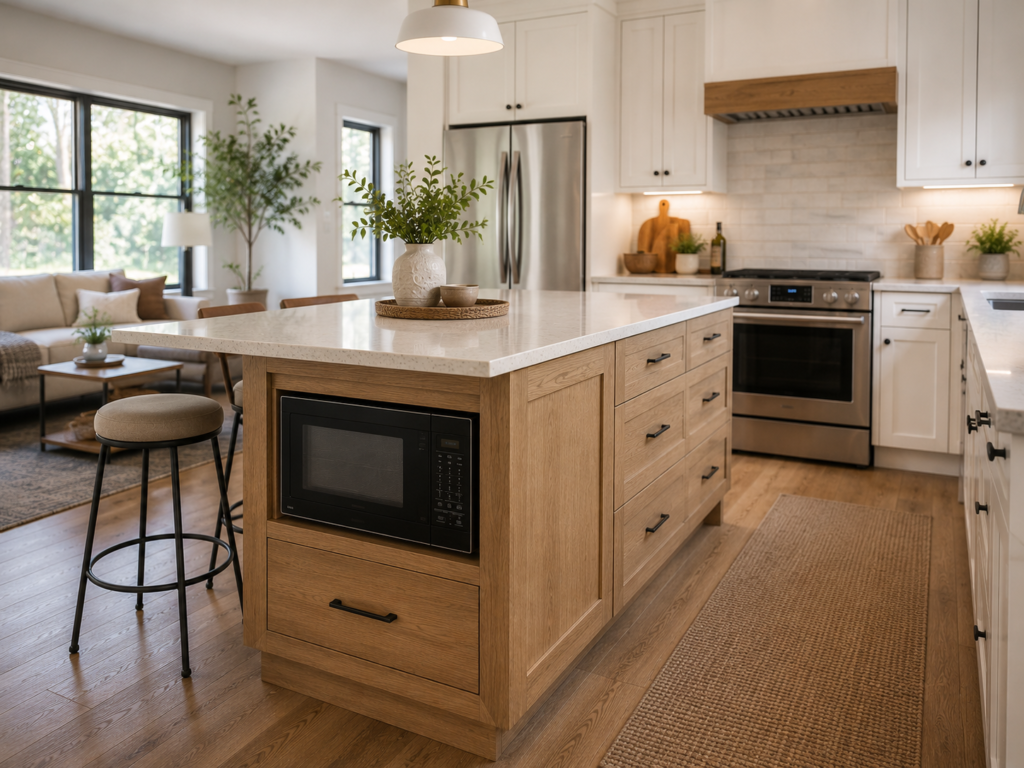
5. Put the Microwave in a Kitchen Island
Even a relatively small island can provide a useful location for a microwave.
Installing the appliance into the side of the island keeps the main countertop clear and can create a convenient cooking zone.
However, consider the direction of the microwave door. You don’t want an open door to block the main walkway between the island and cabinets.
Best for: Kitchens with an existing island.
Trade-off: Excellent counter savings, but poor placement can interfere with traffic flow.
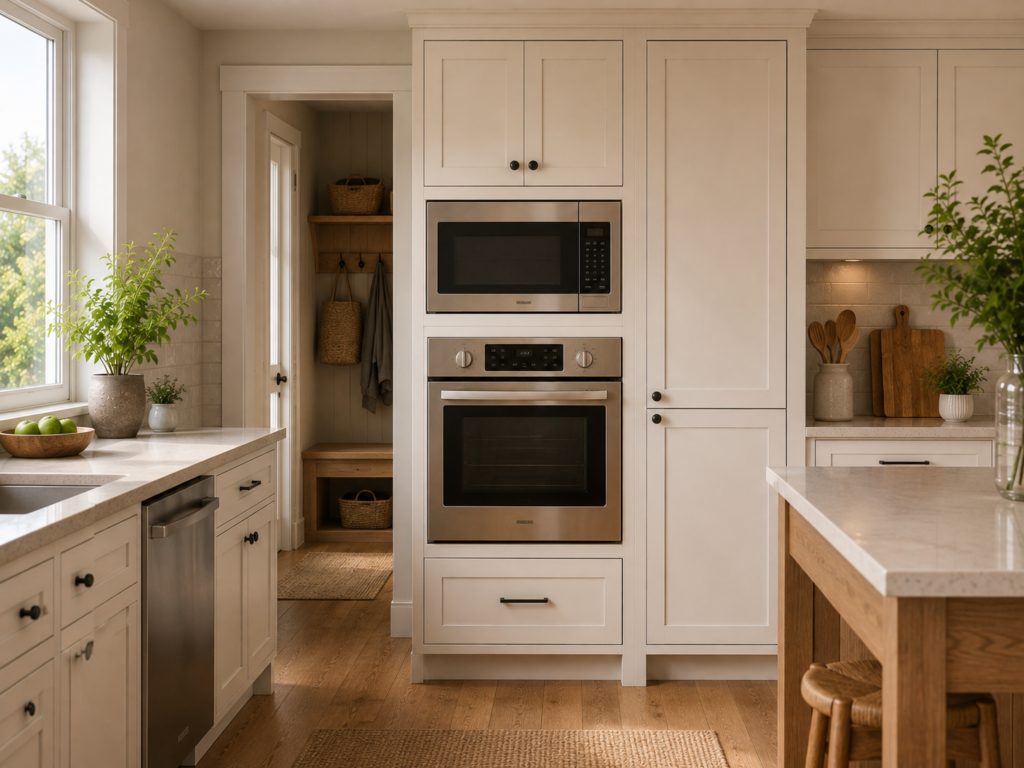
6. Build an Oven and Microwave Cabinet
An oven and microwave cabinet can make excellent use of vertical space in a small kitchen.
Instead of spreading appliances across different parts of the room, place them together in one tall cabinet.
This can leave more room for drawers, pantry storage, or countertop workspace elsewhere. If you have unused space above your upper cabinets, pair this with a few above-cabinet decorating ideas to make the whole wall feel finished.
However, appliance height matters. A microwave installed too high can be uncomfortable to reach, particularly for shorter household members.
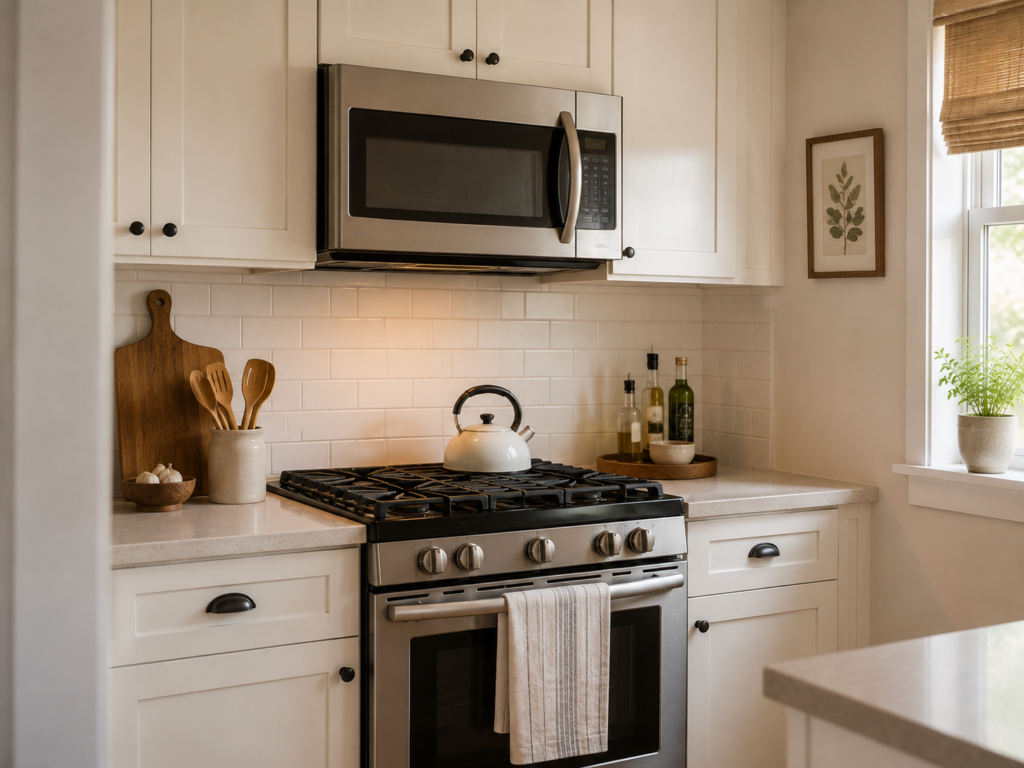
7. Use an Over-the-Range Microwave
An over-the-range microwave combines the microwave and range area in one vertical zone.
This can be particularly useful when you don’t have enough counter or wall space for a separate appliance.
Many models also incorporate ventilation, but you should choose the appliance based on your kitchen’s actual installation requirements rather than assuming any microwave can be mounted above a range.
Best for: Small kitchens where every inch of counter space matters.
Trade-off: Saves space but can place the microwave higher than some people prefer.
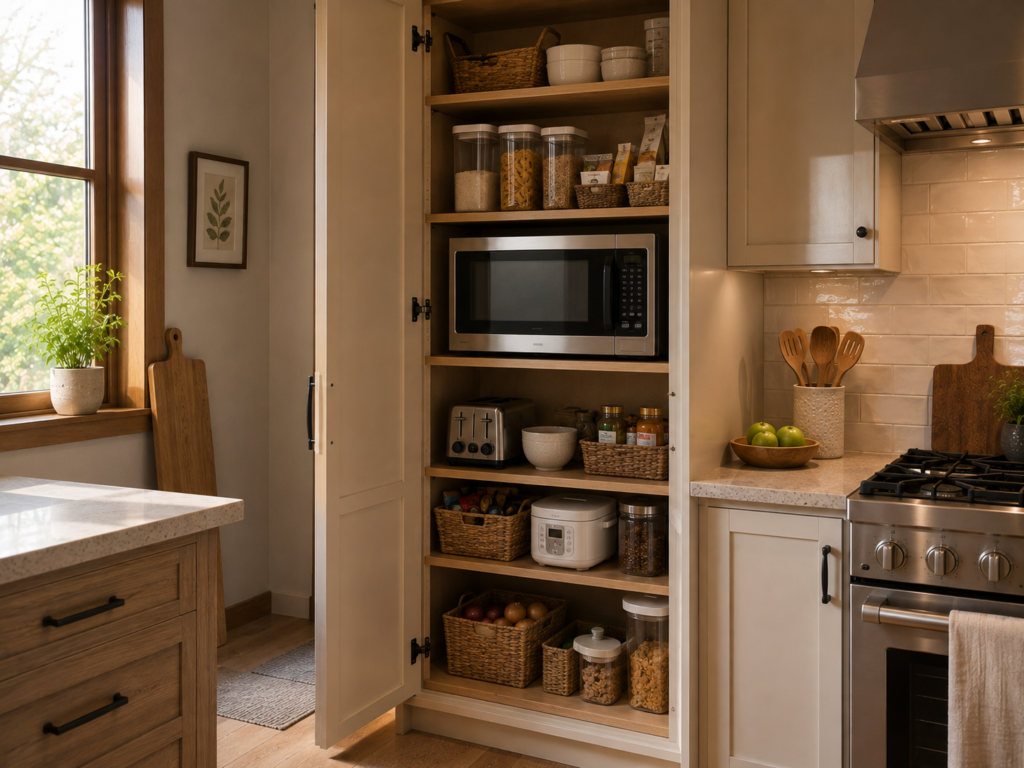
8. Add a Microwave to a Pantry Cabinet
If your kitchen has a tall pantry cabinet, part of it can potentially become an appliance area.
A dedicated section for the microwave can be surrounded by storage for dry goods, small appliances, or cooking supplies.
This approach is especially useful when you want to keep the microwave visually contained.
The cabinet must still be designed around the appliance’s installation and ventilation requirements.
9. Try a Corner Microwave Cabinet
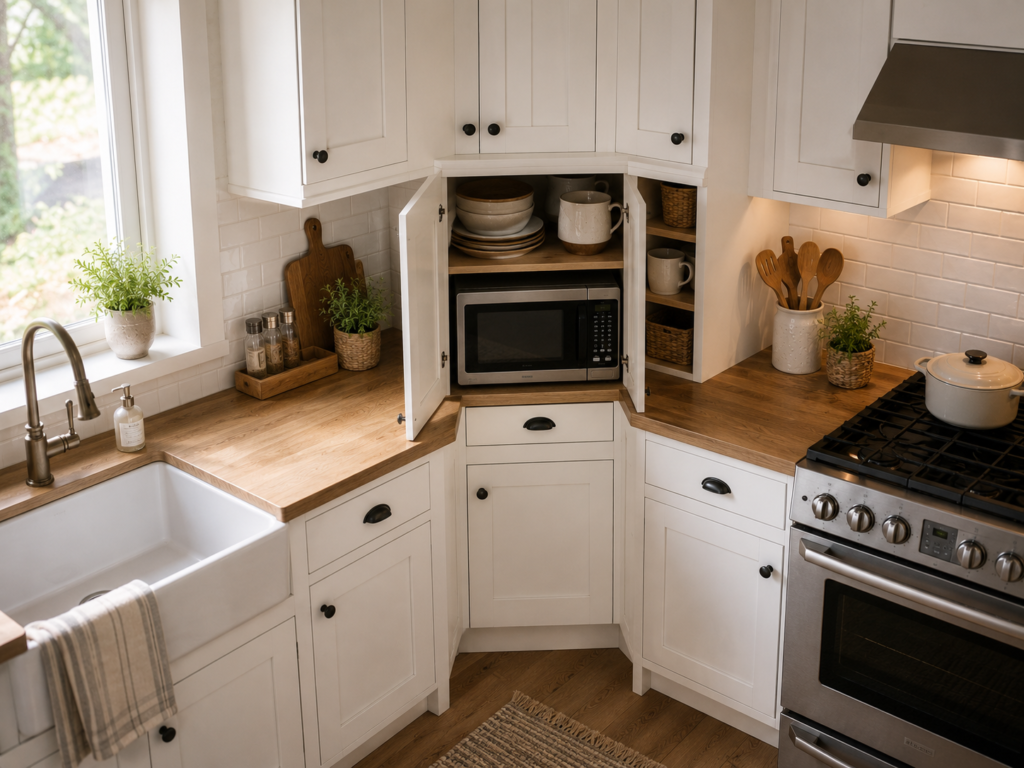
Corners are often difficult to use efficiently in small kitchens.
A properly planned corner cabinet can provide a home for the microwave without taking up the center of the countertop.
Pay close attention to door clearance. A microwave door that collides with an adjacent cabinet can quickly make an otherwise clever layout frustrating.
Best for: Kitchens with an awkward or underused corner.
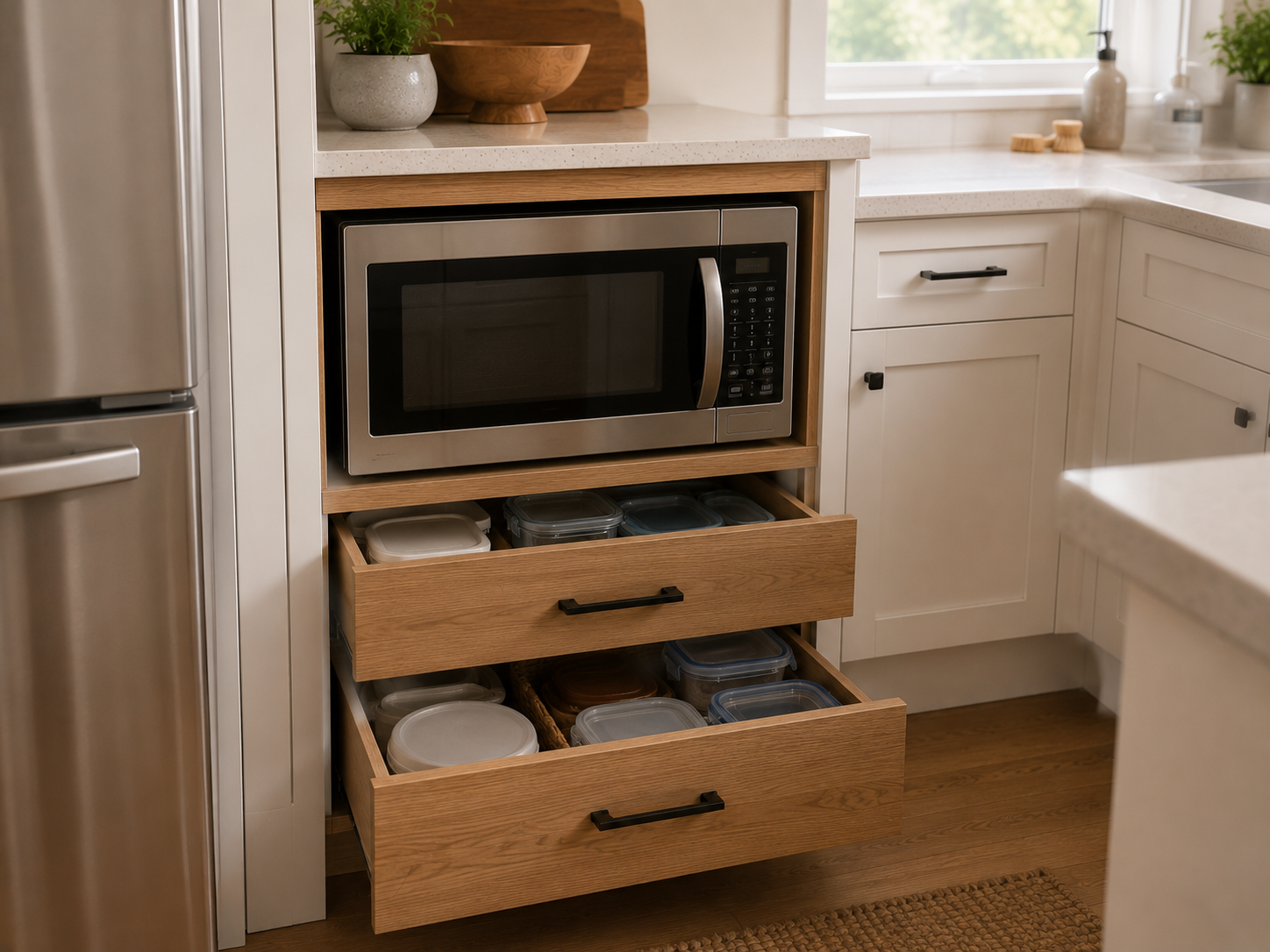
10. Combine the Microwave With Storage Drawers
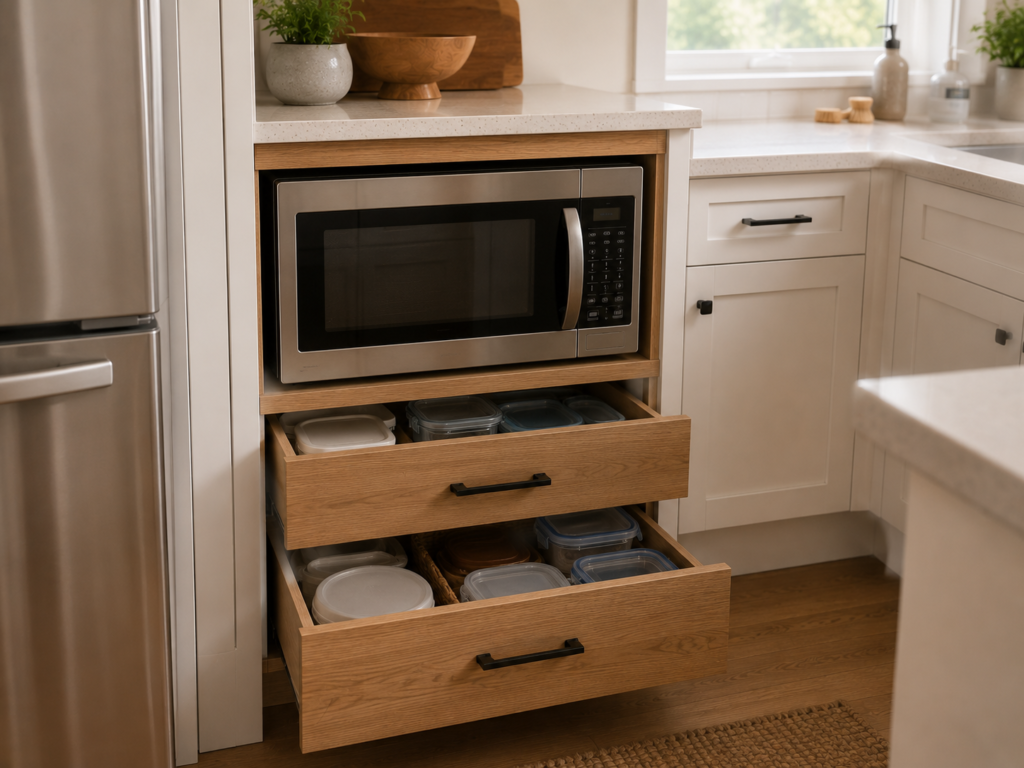
Instead of giving the microwave an entire cabinet section, make the area work harder.
Place the microwave above a set of drawers and use those drawers for items you regularly need when heating food.
For example, microwave-safe containers, plates, bowls, and food storage lids can all stay close to the appliance.
This turns one small section of the kitchen into a functional storage zone.
11. Use an Open Wood Shelf
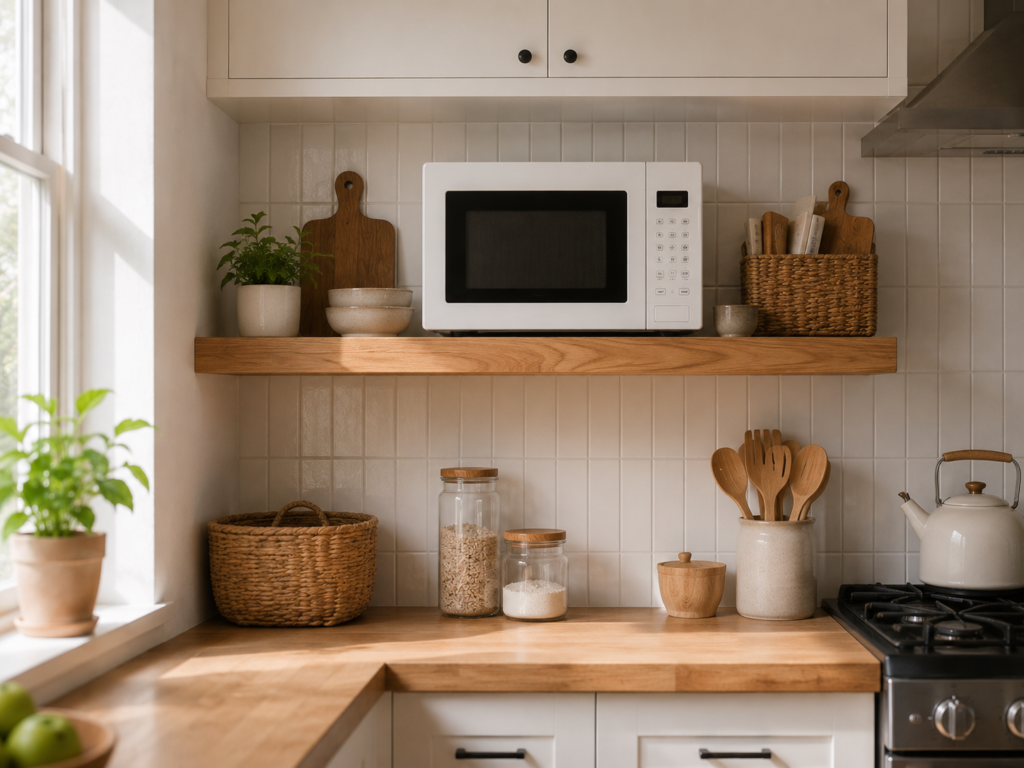
An open wood shelf is one of the easiest ways to give a microwave a dedicated location without installing custom cabinetry.
A thick shelf in oak, maple, or another durable material can add warmth to a small kitchen while keeping the appliance accessible.
You can use the space below for countertop items or baskets.
Best for: Renters and homeowners looking for a simple update.
Trade-off: Less expensive and flexible, but the microwave remains visible.
12. Create a Small Appliance Station
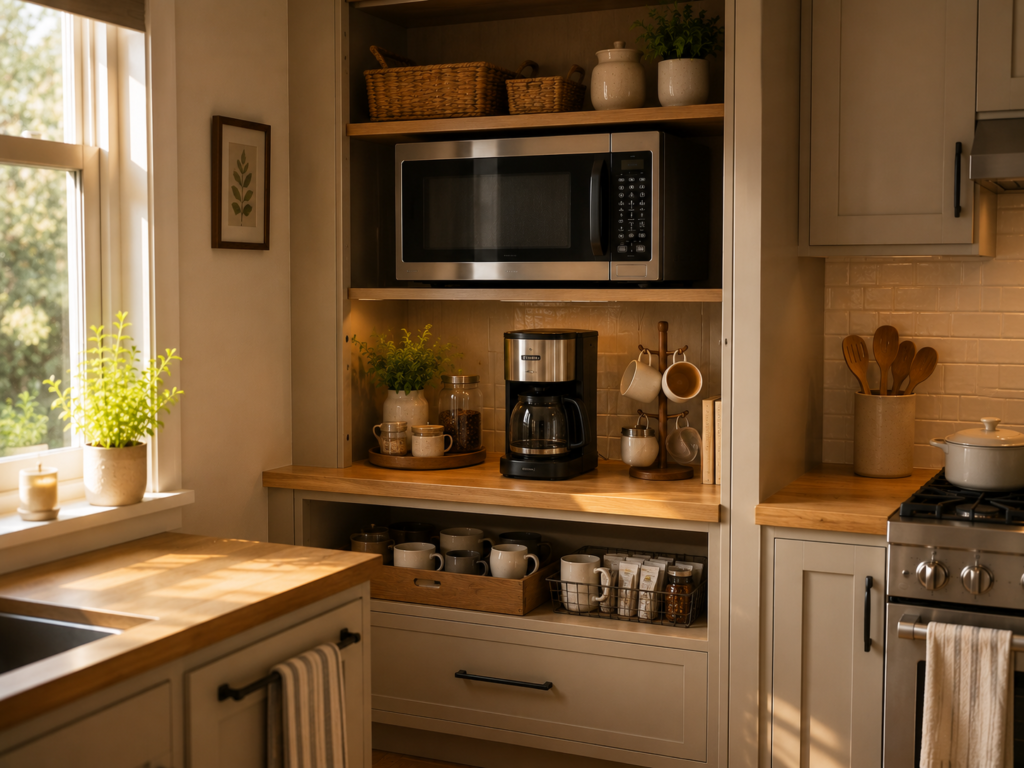
If your counter is crowded with a microwave, coffee maker, toaster, and other appliances, group them into one compact station. A dedicated coffee bar setup is a good model for this — the same grouping logic works for any small appliance cluster.
For example, the microwave can sit above or beside a coffee maker, while cabinets or shelves underneath hold mugs, coffee supplies, and food containers.
The goal isn’t simply to hide appliances. It’s to keep frequently used items together so the rest of the kitchen stays clear.
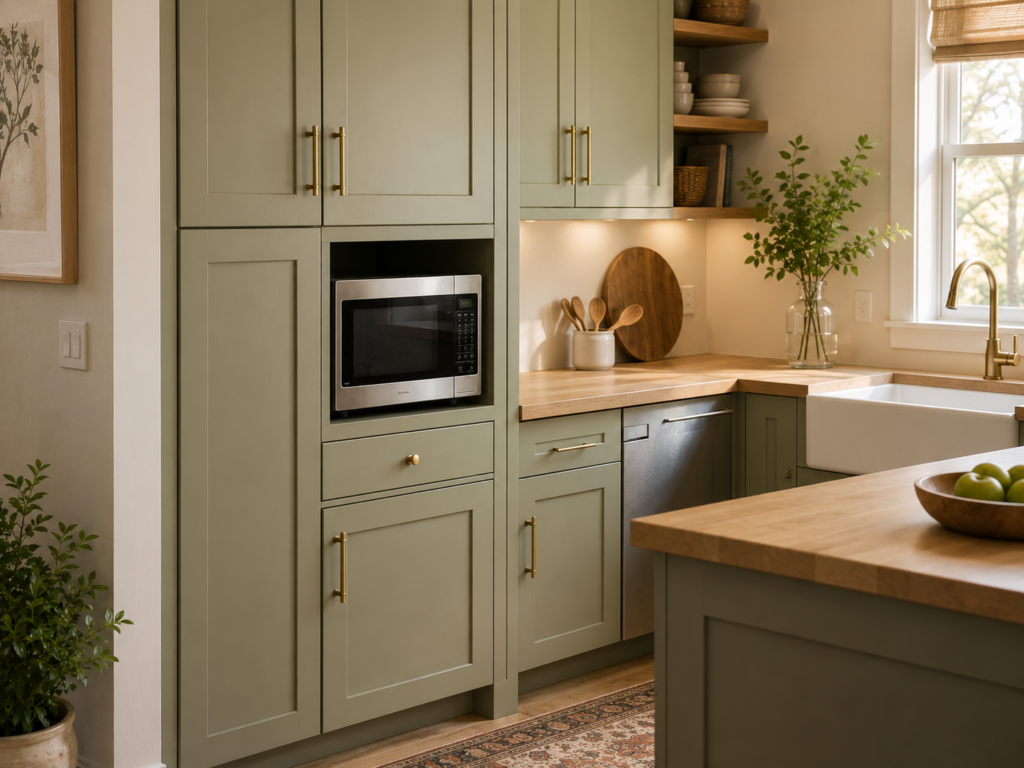
13. Put the Microwave Inside a Tall Cabinet
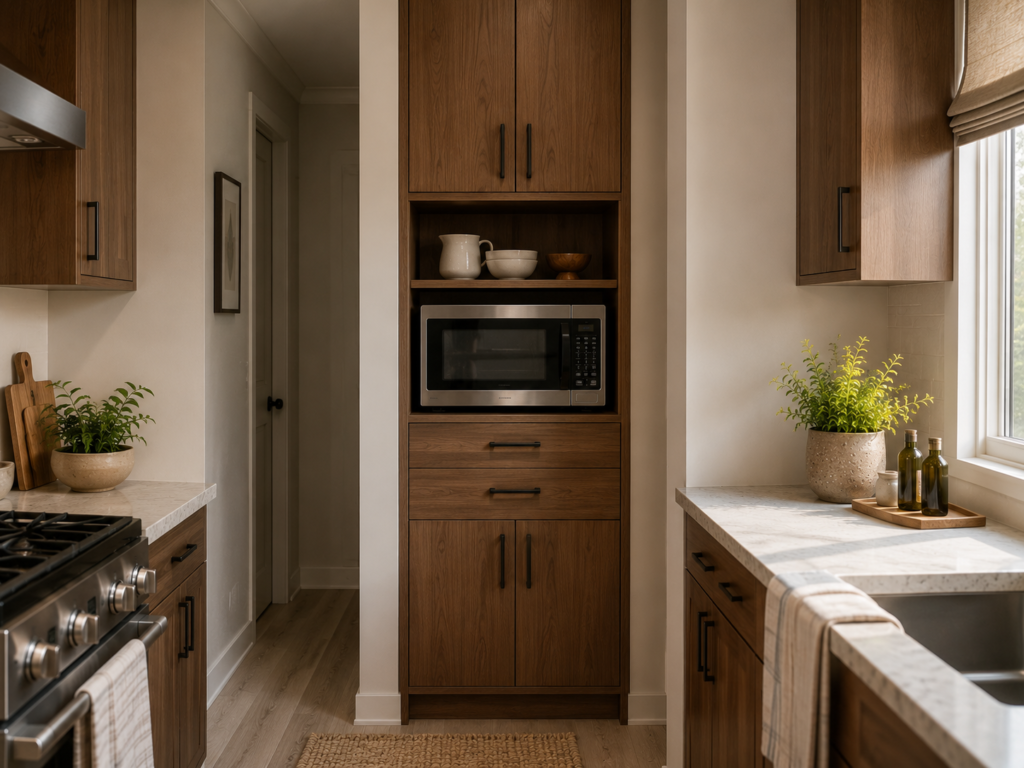
A tall cabinet can use vertical space that would otherwise go unused.
The microwave can occupy the middle portion, with storage above and below it.
This is particularly useful in a small kitchen with limited horizontal cabinet space.
Just make sure the appliance is installed at a comfortable height and that the cabinet is appropriate for the specific microwave.
14. Use a Freestanding Microwave Cabinet
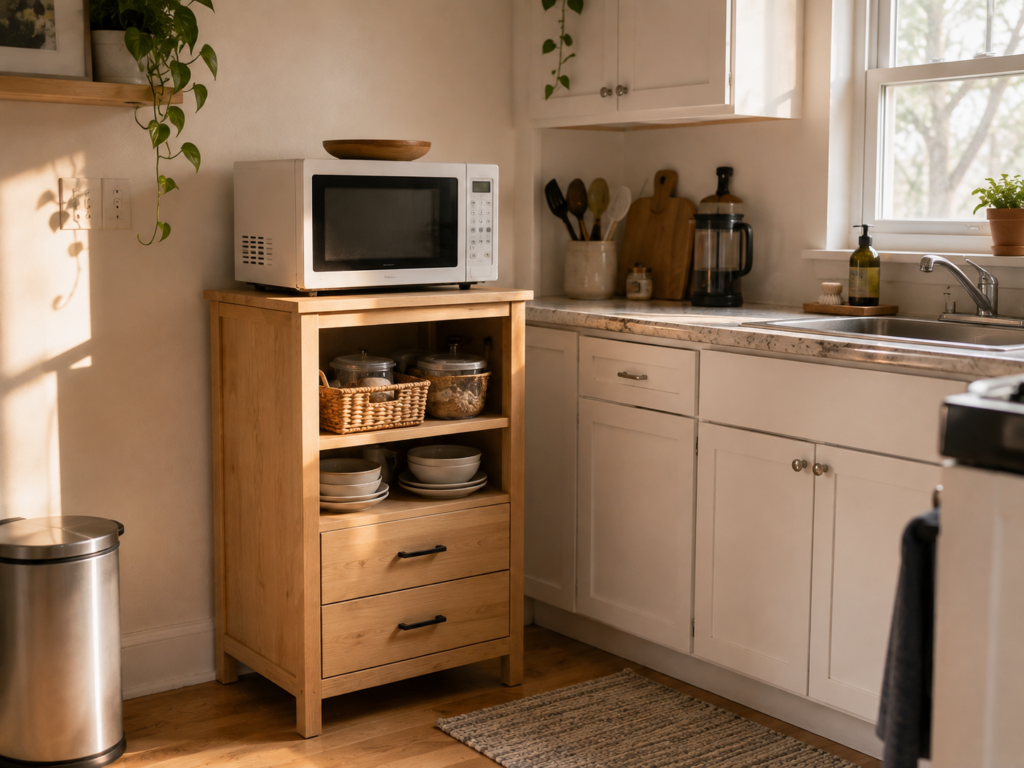
You don’t necessarily need to modify your existing kitchen cabinets.
A narrow freestanding cabinet or microwave stand can provide a dedicated appliance area while adding drawers or shelves underneath.
This is a practical option for renters because it can move with you.
Choose a sturdy unit with a surface designed to support the microwave’s weight and enough depth for the appliance.
15. Hide the Microwave in a Small Appliance Nook
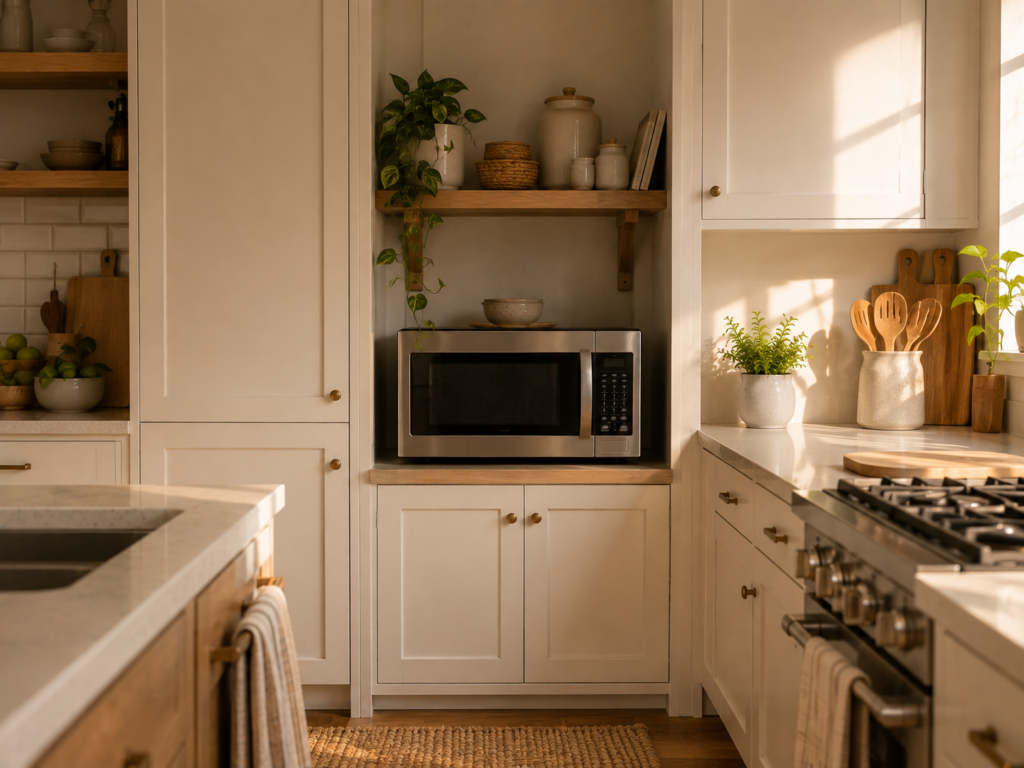
If you have a small section of countertop that isn’t being used efficiently, consider turning it into an appliance nook.
The microwave can sit inside the opening, with cabinets or shelves surrounding it.
You can make the nook visually cohesive by matching the cabinet finish, countertop material, or shelving with the rest of the kitchen.
This gives you some of the appearance of a custom microwave cabinet without requiring an entire wall of new cabinetry.
How to Choose the Right Microwave Cabinet for a Small Kitchen
The best design isn’t necessarily the one that hides the microwave most effectively. It should also make the kitchen easier to use.
Measure Before Choosing the Cabinet
Measure the microwave’s:
- Width
- Height
- Depth
- Door swing
- Handle clearance
Then check the manufacturer’s installation instructions for the required opening and ventilation.
Don’t build a cabinet based only on the microwave’s visible dimensions.
Think About Counter Space
If your biggest problem is a crowded countertop, prioritize a wall-mounted, built-in, island, or under-counter solution.
If counter space isn’t your main concern, an open shelf may be simpler and cheaper.
Consider Traffic Flow
A microwave should be easy to access without forcing someone to stand in the middle of a busy walkway.
This is especially important when the microwave door opens outward.
Choose Storage Around the Microwave
Use the surrounding space for things you actually use.
For example:
- Drawers for food containers
- Shelves for bowls
- Cabinets for small appliances
- Pantry storage for dry goods
- Open shelves for everyday dishes
This makes the microwave zone much more useful.
Don’t Ignore Ventilation and Electrical Requirements
This is especially important with built-in installations.
Not every countertop microwave is designed to be enclosed inside cabinetry. Follow the manufacturer’s instructions for clearances, ventilation, electrical connections, and installation.
What Is the Best Microwave Cabinet for a Very Small Kitchen?
If you have very little space, I’d narrow the choices to three.
For homeowners remodeling: A dedicated built-in microwave cabinet.
For renters: A sturdy freestanding microwave shelf or cabinet.
For maximum counter space: An under-counter or properly planned over-the-range installation.
There’s no single best position for every kitchen. The right choice depends on how much counter space you have and how frequently you use the microwave.
Frequently Asked Questions
Can I put a microwave inside a kitchen cabinet?
Some microwaves are designed for built-in installation, while others are intended to sit on a countertop. Check the specific manufacturer’s instructions before placing a microwave inside an enclosed cabinet.
How deep should a microwave cabinet be?
There isn’t one universal depth because microwave sizes vary. Measure the appliance and check its installation requirements before choosing or building the cabinet.
Is an under-counter microwave good for a small kitchen?
It can be. It frees valuable counter and upper-cabinet space, but it may be less convenient if you frequently use the microwave or don’t want to bend down.
Can I put a microwave above an oven?
Yes, an oven and microwave cabinet can be an efficient use of vertical space. However, both appliances need to be installed according to their manufacturer’s requirements, and the microwave should be positioned at a comfortable height.
How can I hide a microwave without remodeling?
A freestanding microwave cabinet, appliance cart, or sturdy open shelf can give the microwave a dedicated location without modifying permanent cabinetry.
Conclusion
A small kitchen doesn’t need to sacrifice valuable counter space just to accommodate a microwave.
A dedicated cabinet, open shelf, island installation, under-counter location, or appliance tower can all work. The best option is the one that fits your kitchen’s dimensions while keeping the microwave comfortable to reach and the surrounding storage useful.
If you’re not remodeling, start with a simple shelf or freestanding cabinet. If you’re replacing your cabinetry, consider designing the microwave location into the kitchen from the beginning.