
The fastest way to add useful storage to a cramped entryway is to choose a shallow cabinet that uses vertical wall space instead of floor depth. A cabinet around 10–14 inches deep gives you room for shoes, bags, keys, and mail without making the front door area feel blocked.
That distinction matters in a small foyer. A cabinet that looks compact in a product photo can make a narrow hallway frustrating when the doors swing into the walking path. The goal is not simply to find a small entryway cabinet — it is to match the cabinet’s depth, width, and opening style to the space around your front door.
Here are 15 practical setups worth considering.
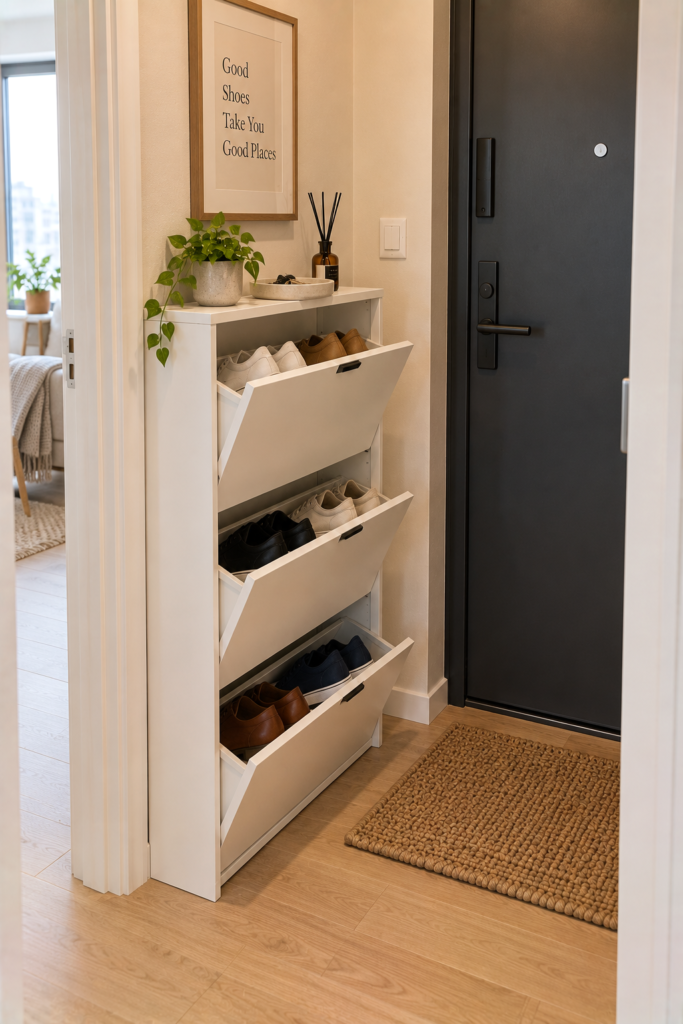
1. Slim Shoe Cabinet Beside the Front Door
A narrow shoe cabinet is one of the easiest solutions for a small apartment entrance. Look for a flip-down design rather than a traditional deep shoe rack.
The shallow profile keeps shoes organized while leaving more walking space in front of the cabinet. A white or light-oak finish also helps the furniture visually blend into the wall.
Best for: Apartment entrances and foyers with one uninterrupted wall.
Storage idea: Keep everyday shoes inside and place a small tray on top for keys.
2. Floating Cabinet for a Visually Lighter Foyer
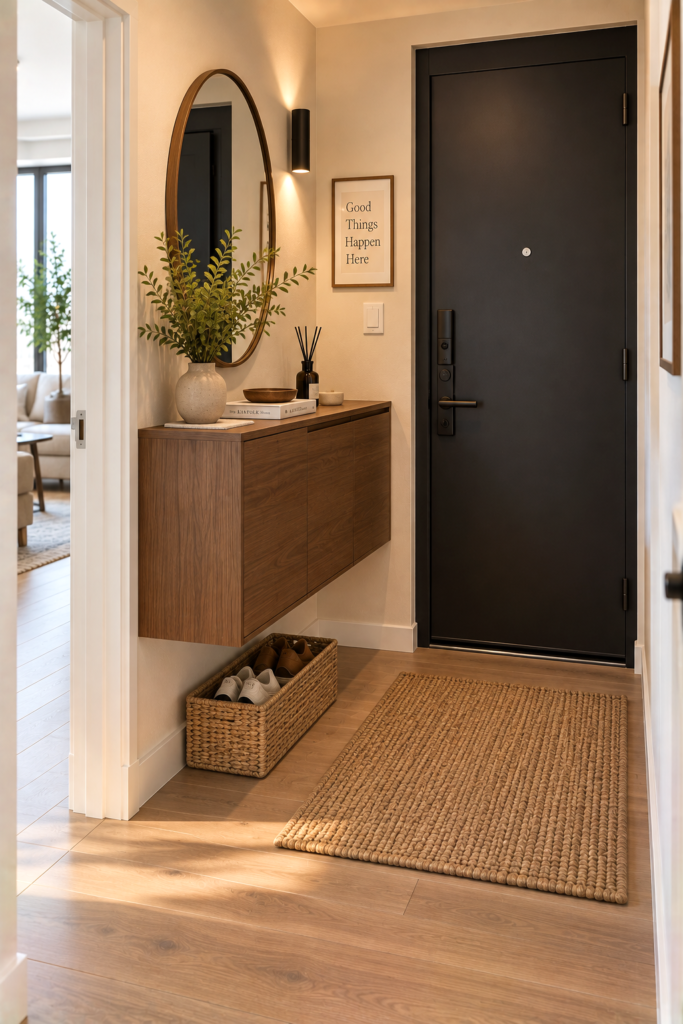
A wall-mounted cabinet keeps the floor underneath visible, which makes a tight entryway feel less crowded.
This approach works particularly well in modern apartments where every inch of floor space matters. Mount the cabinet high enough for comfortable use while leaving the area underneath open for shoes or a slim basket.
I’d choose a floating cabinet over a bulky floor-standing unit in a very narrow hallway. Seeing more floor makes a surprisingly noticeable difference.
3. Narrow Cabinet With Drawers for Keys and Mail
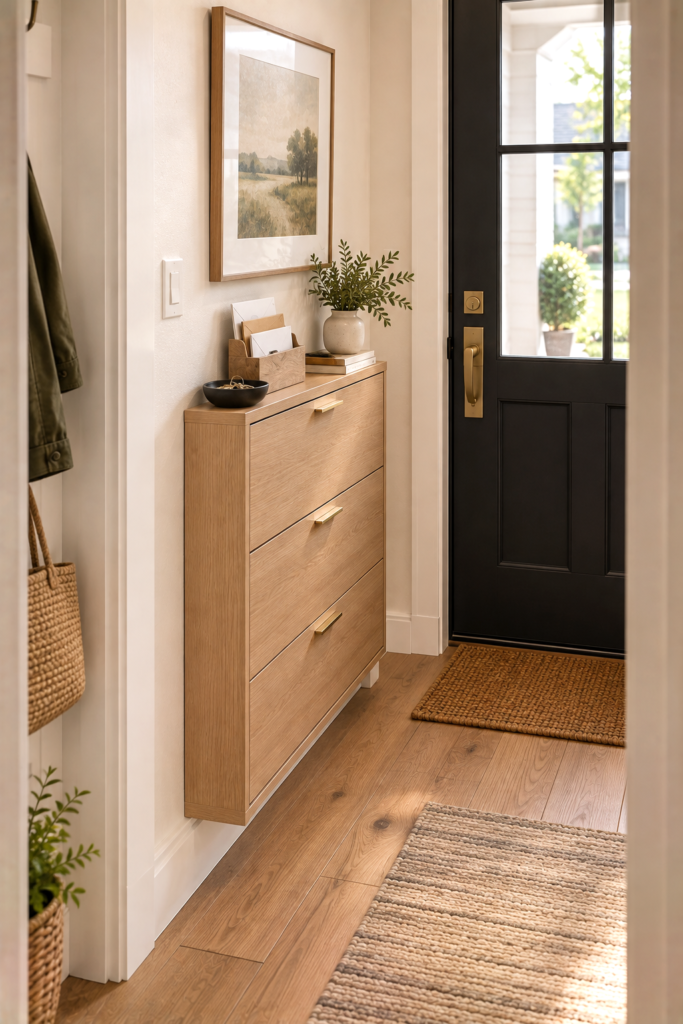
Not every entryway needs shoe storage. For homes where shoes are kept elsewhere, a slim drawer cabinet makes more sense.
Use the top drawer for keys, sunglasses, wallets, and small electronics. Reserve the lower drawer for mail, reusable shopping bags, and dog-walking supplies.
A cabinet only 10–12 inches deep is enough for this setup without stealing valuable hallway clearance.
4. Closed Cabinet Under a Wall Mirror
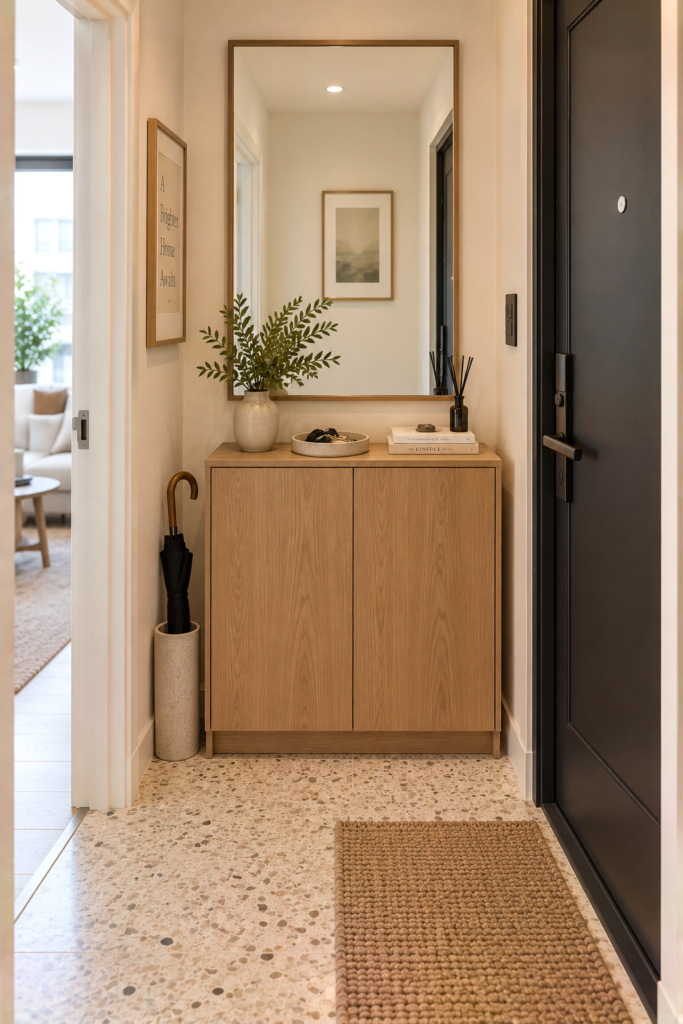
A mirror and cabinet combination solves two problems at once.
Hang a medium-sized mirror above a compact cabinet so the furniture becomes a practical landing station. The mirror reflects light and gives you a final place to check your appearance before leaving.
Keep the cabinet closed-front. Open shelving tends to turn into a visible pile of shoes, bags, and random objects.
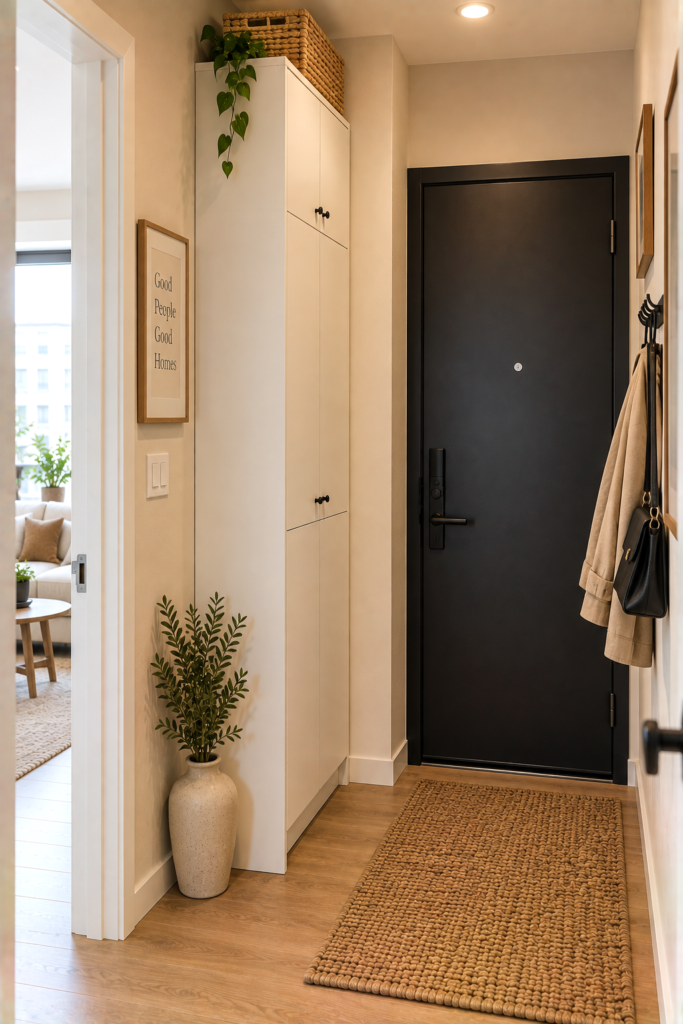
5. Tall and Narrow Cabinet for Maximum Vertical Storage
When floor width is limited, go upward.
A tall cabinet with a small footprint provides substantially more storage than a low console while occupying the same narrow section of wall. Choose adjustable shelves so the interior works for bags, shoes, hats, cleaning supplies, or seasonal accessories.
Don’t place a tall cabinet directly where the door opens. Position it on the adjacent wall or beside the door’s swing zone.
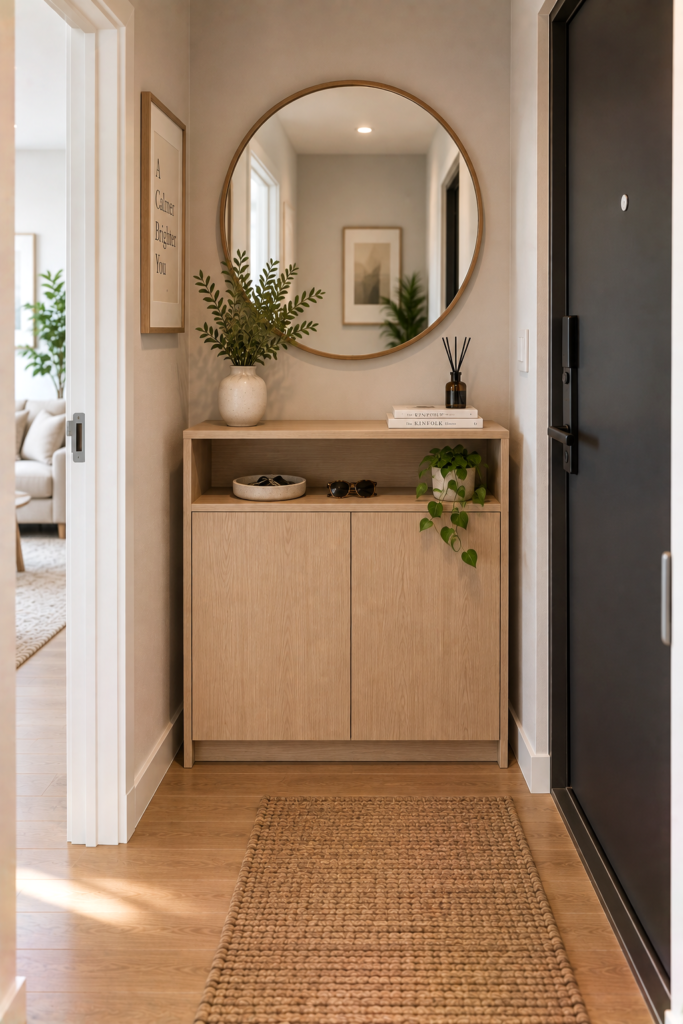
6. Entryway Cabinet With an Open Niche
A small open niche makes a cabinet much more useful for everyday items.
Store the things you grab constantly — keys, sunglasses, headphones, and wallets — in the open section. Keep less attractive clutter behind closed doors below.
This creates a simple drop zone without requiring a separate shelf.
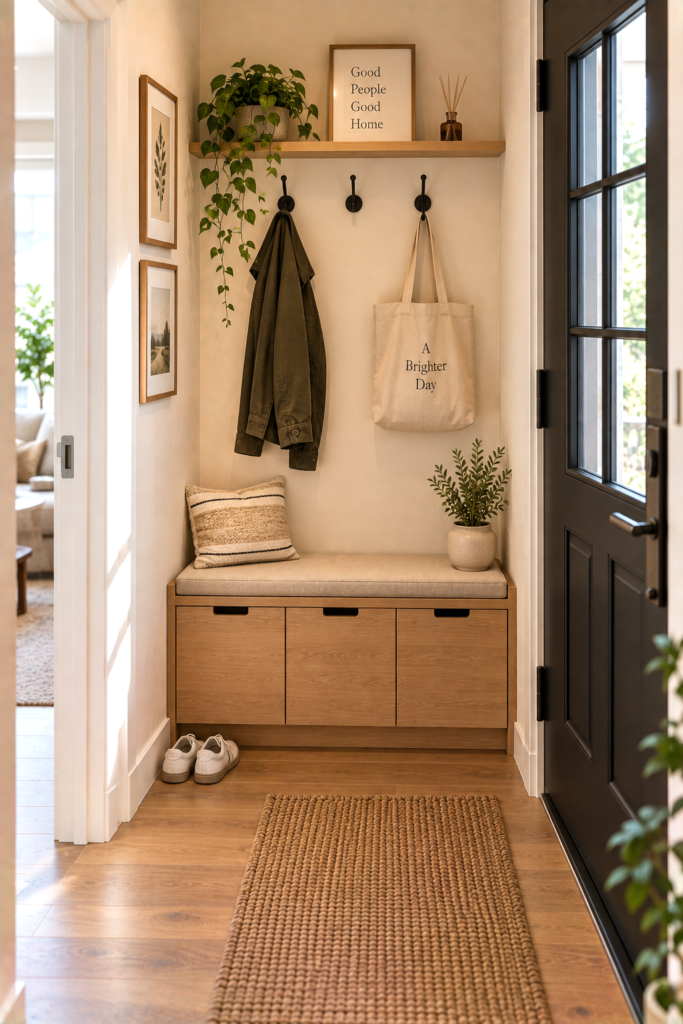
7. Small Cabinet With a Built-In Bench
A cabinet-and-bench combination works when the entrance is wide enough to provide a dedicated sitting area.
Use the bench for putting on shoes while the cabinet underneath stores footwear. Add a few hooks above for coats and bags.
Keep the bench narrow. A deep bench in a tight entrance quickly becomes an obstacle.
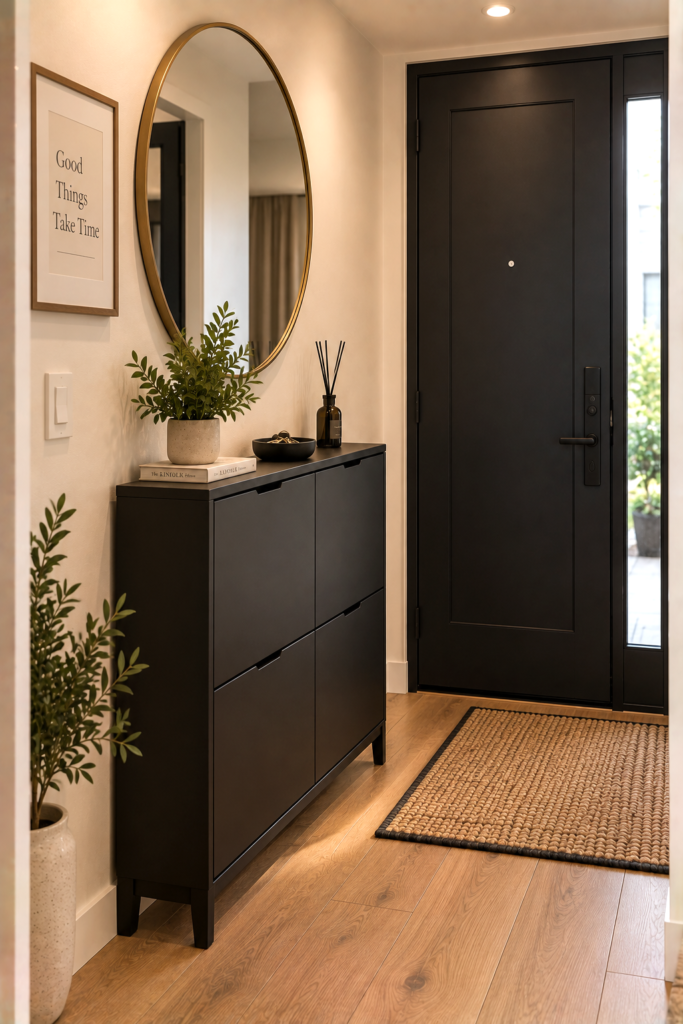
8. Black Cabinet for a Modern Small Entrance
A dark cabinet gives a small entryway more visual definition, especially against a light wall.
A matte-black finish from brands such as IKEA or a similar minimalist cabinet creates a clean contrast without requiring decorative clutter.
Keep the styling restrained: one mirror, one small tray, and perhaps a plant are enough.
9. Cabinet Under a Staircase
The dead space beneath stairs is valuable storage territory.
A custom or modular cabinet fitted under the lowest part of the staircase can hold shoes, bags, umbrellas, and cleaning supplies while keeping the main hallway clear.
Use several cabinet widths rather than forcing one oversized piece into the space.
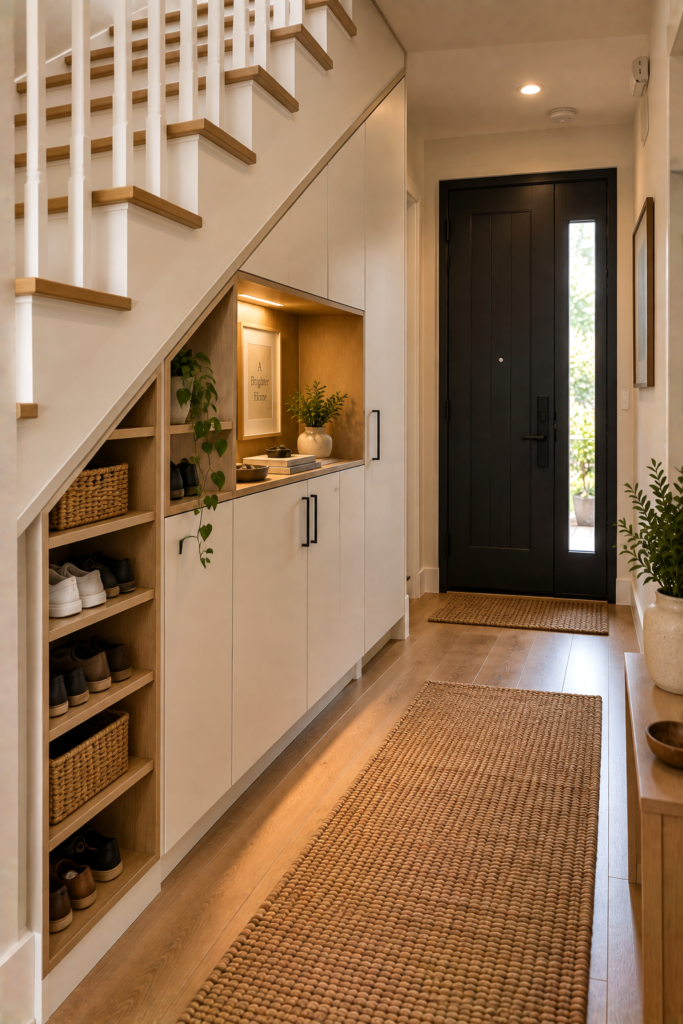
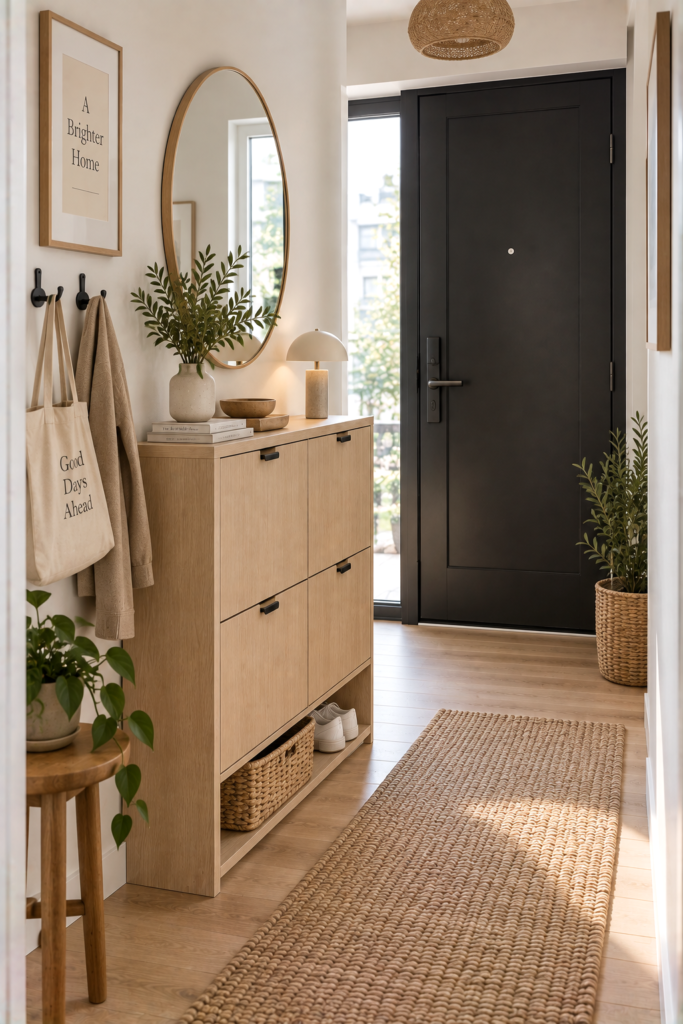
10. Light-Oak Cabinet in a Scandinavian-Style Entryway
Light oak works particularly well in small spaces because it adds warmth without creating a heavy visual block.
Pair it with white walls and simple hardware. IKEA’s BESTÅ and EKET ranges are useful references for this style because their modular formats make it easier to work around unusual wall dimensions.
Measure first rather than buying based on appearance alone.
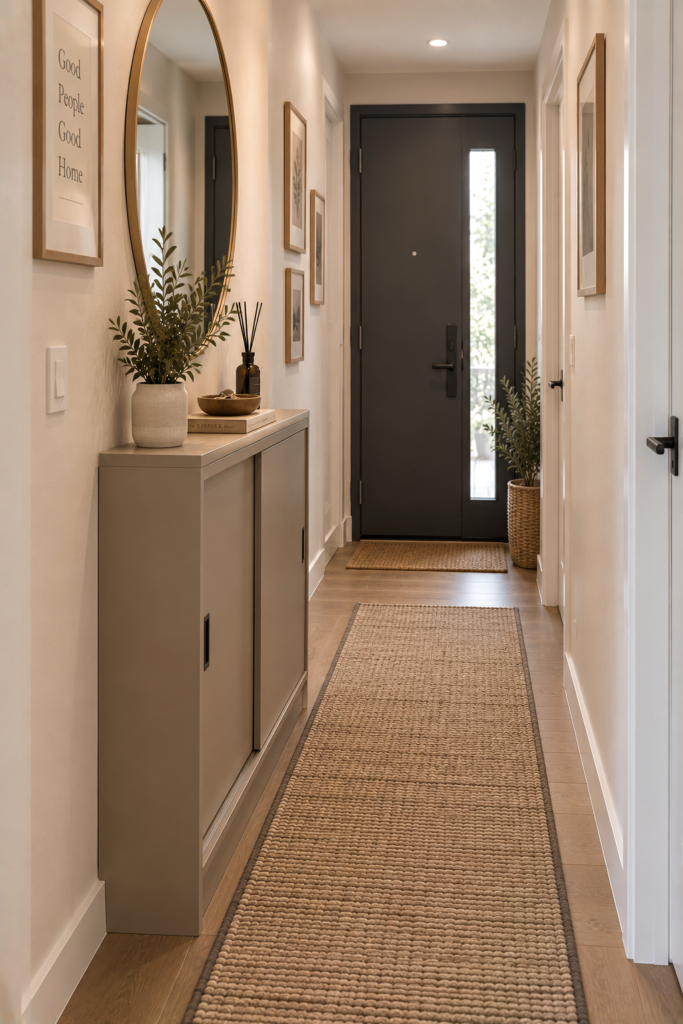
11. A Cabinet With Sliding Doors for a Narrow Hallway
Sliding doors solve one major problem: door swing clearance.
A conventional cabinet door needs space in front of the unit to open. Sliding panels eliminate that movement, making this configuration particularly useful in narrow corridors.
Use the interior for shoes and bags while keeping the outside visually simple.
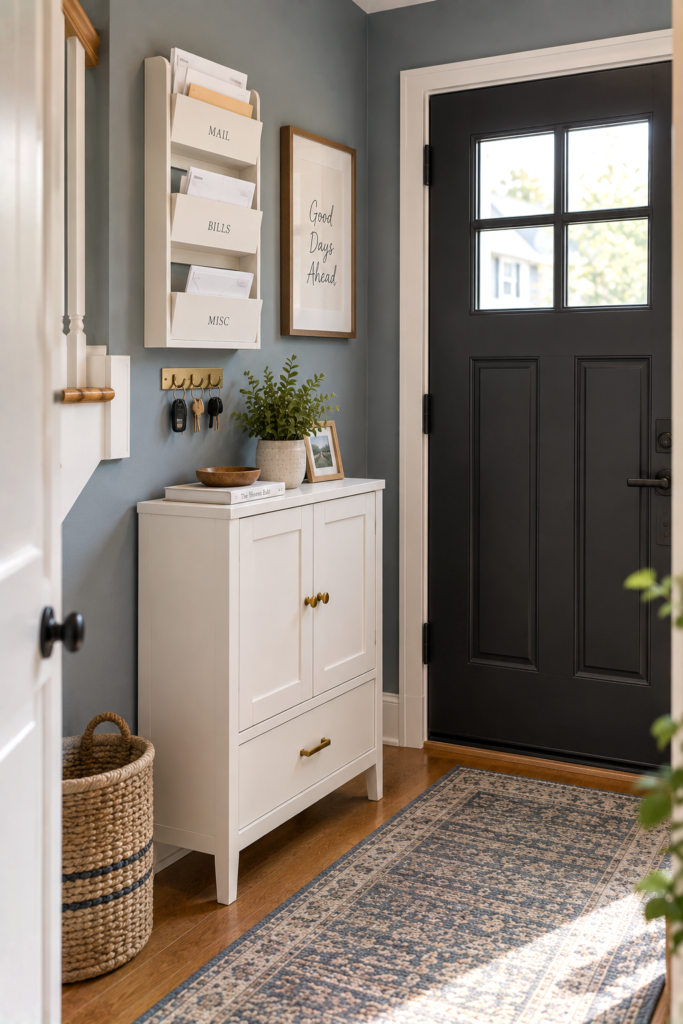
12. Small Cabinet With a Dedicated Mail Station
For households that receive lots of paperwork, turn the cabinet into an organized mail station.
Place a wall-mounted sorter above or beside the cabinet. Add separate sections for incoming mail, documents that need action, and outgoing letters.
This prevents the cabinet top from becoming a permanent paperwork pile.
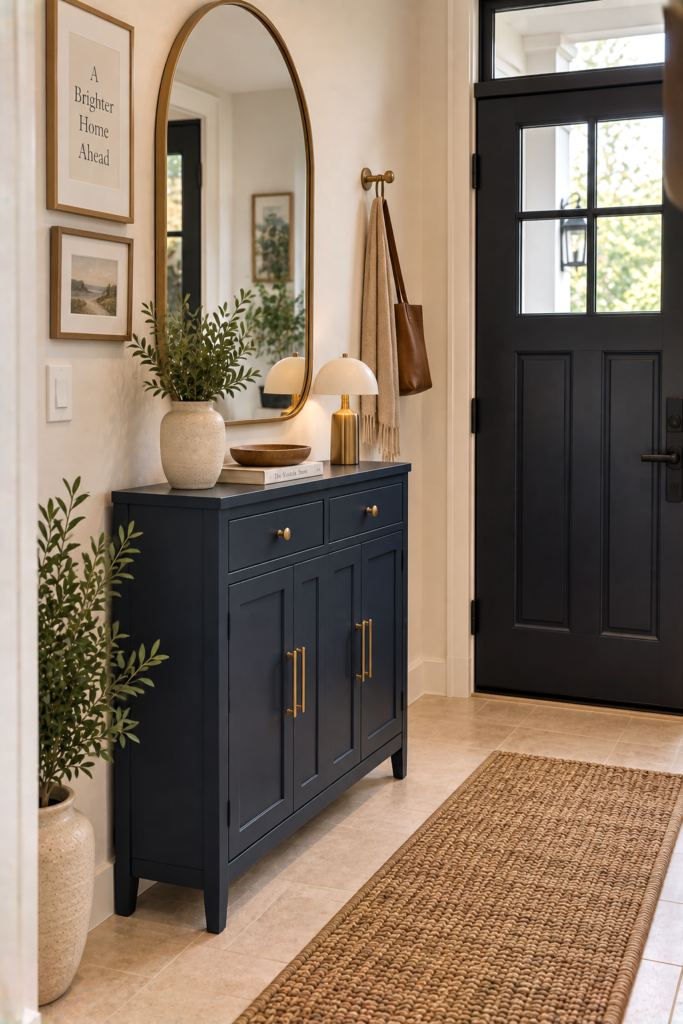
13. A Narrow Cabinet With a Statement Color
A compact cabinet is a good place to introduce color without repainting the entire entryway.
Try Benjamin Moore Hale Navy for a sophisticated dark blue cabinet against warm white walls. The strong color gives the furniture a deliberate architectural role.
I’d skip overly distressed finishes here. They make a tiny entryway look visually busy instead of intentional.
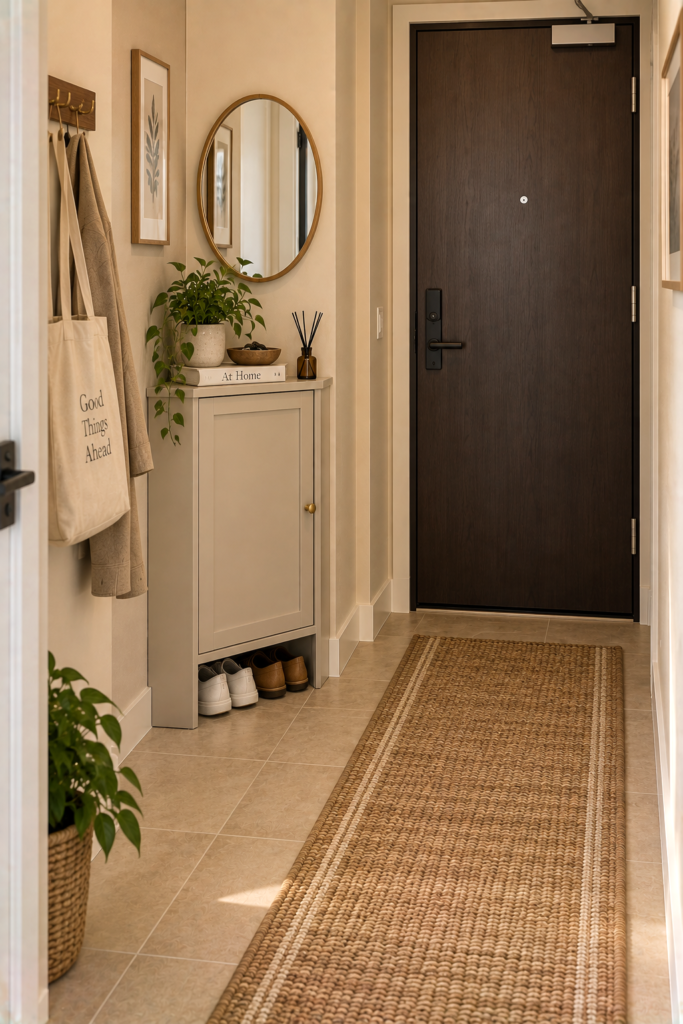
14. Corner Cabinet for an Awkward Entryway
A corner that looks useless can become a compact storage station.
Choose a triangular or narrow cabinet designed to sit close to two walls. This keeps the central walking path open while giving you a dedicated place for small items.
Corner storage works particularly well near apartment doors where a straight cabinet would interfere with circulation.
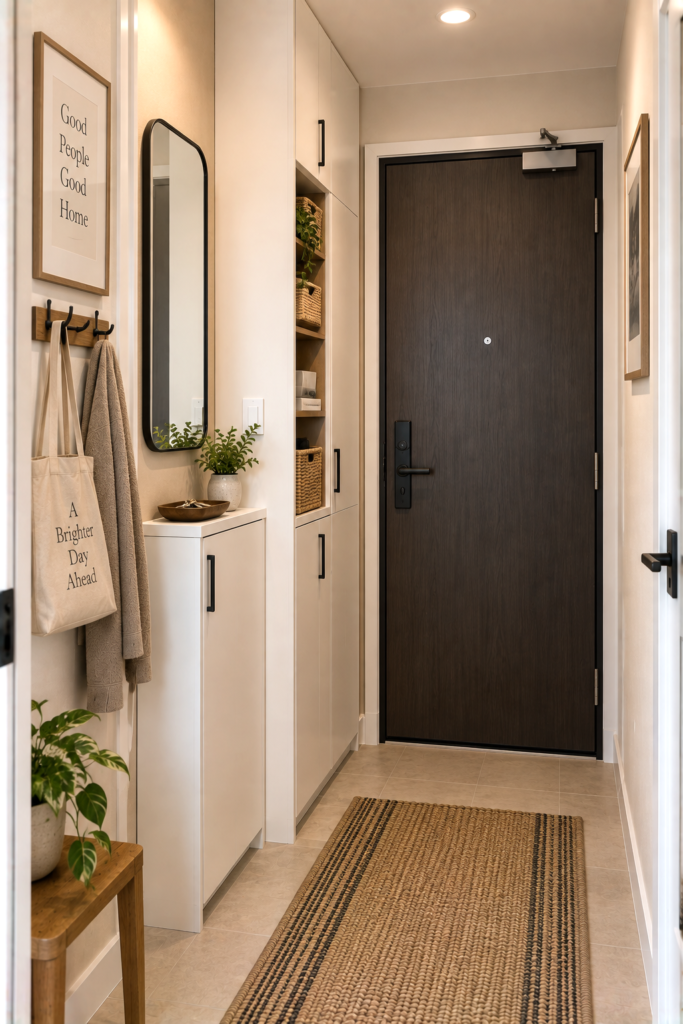
15. Floor-to-Ceiling Cabinet for a Tiny Foyer
When the entryway has almost no usable floor width, a floor-to-ceiling cabinet provides the highest storage capacity from a small footprint.
Divide the interior by purpose: shoes at the bottom, bags in the middle, and seasonal items toward the top. Add labeled baskets to make the upper shelves easier to manage.
The cabinet should remain visually simple. Too many handles, colors, and exposed objects make a small foyer feel cluttered.
How Deep Should a Small Entryway Cabinet Be?
Depth matters more than height when you’re working with a narrow entrance.
For a tight hallway, start by looking at cabinets around 10–14 inches deep. That range gives you useful storage while reducing the chance that the furniture will obstruct the walking path.
Before ordering, measure three things:
- Distance from the wall to the opposite wall
- Front-door swing and handle clearance
- Space required for people to walk past the cabinet
Don’t measure only the empty wall. A cabinet that technically fits against the wall can still make the entrance uncomfortable once the door opens.
How to Arrange a Cabinet Around the Front Door
The front door should dictate the cabinet position.
Draw the door’s swing on the floor using painter’s tape. Then mark the cabinet’s expected footprint with another strip of tape. Open the door fully and walk through the entrance several times.
This simple test exposes problems that measurements alone miss.
For a narrow hallway, position the cabinet on the long uninterrupted wall whenever possible. For a small foyer with space beside the door, a compact cabinet perpendicular to the entry wall can create a natural drop zone.
What Should Go Inside a Small Entryway Cabinet?
Avoid turning one cabinet into a miscellaneous storage box. Assign each section a job.
Top drawer: Keys, sunglasses, wallets, earbuds
Middle shelf: Everyday bags, small purses, dog supplies
Lower section: Shoes and slippers
Closed upper shelves: Seasonal accessories, hats, gloves, rarely used bags
For a family of four, four small labeled bins work better than one large basket because everyone gets a defined storage zone..
FAQ
What is the smallest practical entryway cabinet?
A cabinet around 8–10 inches deep works for small accessories and slim shoe storage, but interior capacity drops quickly at very shallow depths. Measure the items you actually plan to store before choosing the cabinet.
Should an entryway cabinet have legs or sit directly on the floor?
Legs make cleaning underneath easier and visually separate the furniture from the floor. A fully grounded cabinet provides a more built-in appearance and makes better use of the lowest available space.
How high should an entryway cabinet be?
There is no universal height because the correct size depends on whether the cabinet is primarily for shoes, drawers, or vertical storage. For a wall-mounted cabinet, check the manufacturer’s mounting requirements and keep frequently used storage within comfortable reach.
What can I use instead of an entryway cabinet?
A narrow console with baskets, a wall-mounted cube system, a built-in closet, or a combination of hooks and floating shelves can provide similar organization. The right substitute depends on whether your biggest problem is shoes, bags, paperwork, or coats.
The Most Common Small Entryway Mistake
The biggest mistake is buying the widest cabinet that fits the wall and ignoring the space required to open the front door and walk around it.
Measure the door swing and walking clearance first, then choose the cabinet around those measurements — not the other way around.