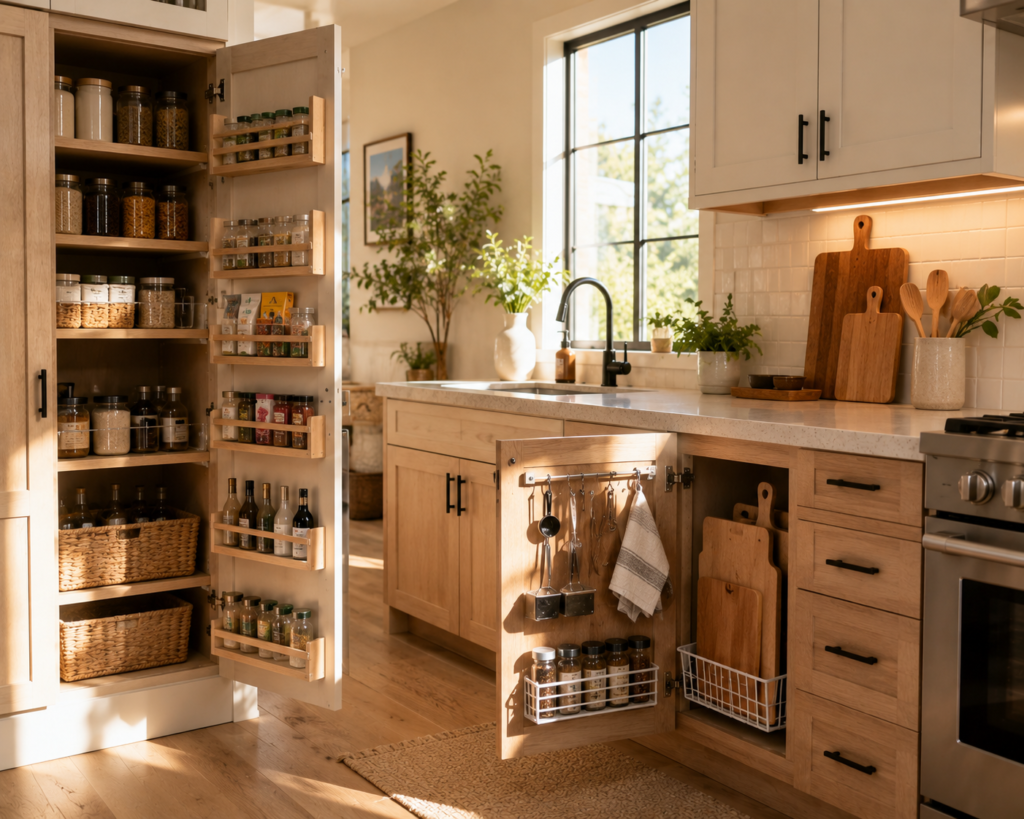
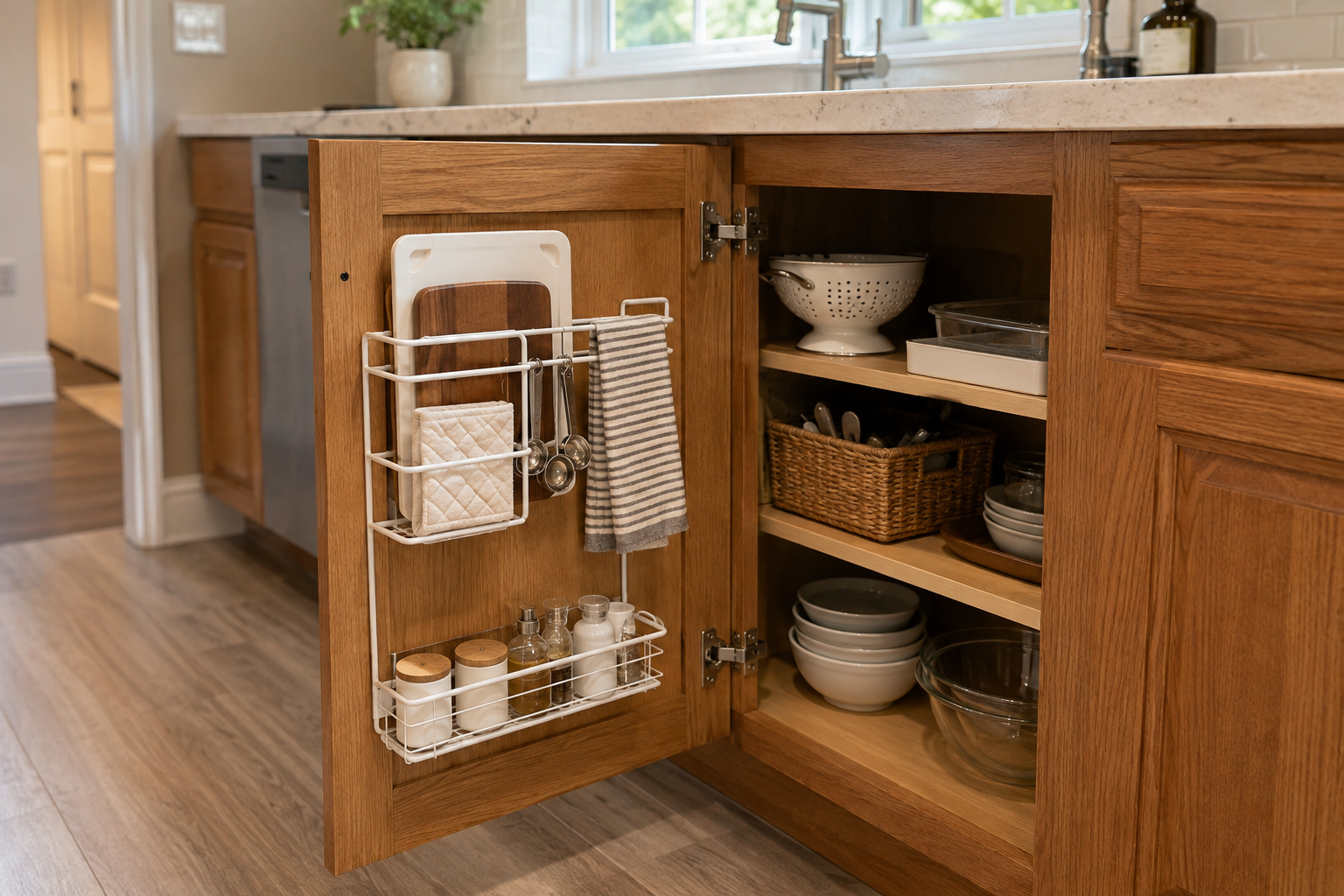
Cabinet doors are easy to overlook when you’re trying to add storage. The inside face of a door may only be a few inches wide, but it can hold surprisingly useful items such as cutting boards, cleaning supplies, measuring spoons, pot lids, wraps, toiletries, and small tools.
The key is choosing storage that is shallow enough to let the door close, light enough for the hinges, and positioned so it doesn’t interfere with shelves or plumbing.
Quick Answer: Is Cabinet Door Storage Worth It?
Yes—especially in small kitchens, bathrooms, laundry rooms, and utility spaces.
The best cabinet door storage uses the otherwise unused space behind the door without making the cabinet difficult to open or close. Shallow racks, adhesive organizers, narrow bins, hooks, and purpose-built door shelves can all work well. If you’re tackling this across a whole small apartment, this same logic runs through our broader guide on storage solutions for small apartments.
Before installing anything, open the door fully and check the clearance between the door and the cabinet contents. A storage system that sticks out too far can collide with shelves, drawers, pipes, or items stored inside.
A good rule: use the door for small, lightweight items rather than turning it into a second full-size shelf.
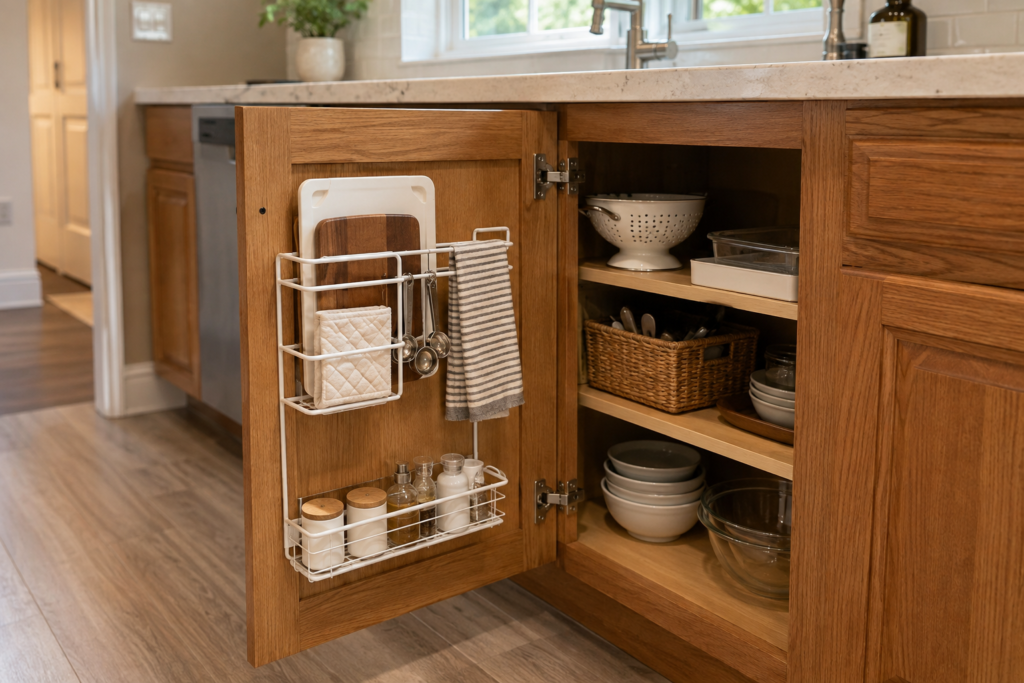
1. Add a Slim Door-Mounted Rack for Everyday Items
A narrow rack is one of the most useful cabinet door storage solutions because it creates several small storage zones without requiring much depth.
In a kitchen, use one for spice packets, measuring spoons, food wraps, parchment paper, or small bottles. In a bathroom, it can hold extra toiletries or cleaning products.
Look for a rack that is shallow and securely mounted. Measure the distance from the door to the nearest shelf before buying. Even a rack that looks slim can prevent the door from closing if the cabinet interior is tightly packed.
Wire racks are practical because they’re lightweight and easy to see through. Wood organizers look more built-in but may be heavier.
Best for: Kitchens, bathrooms, laundry rooms, and utility cabinets.
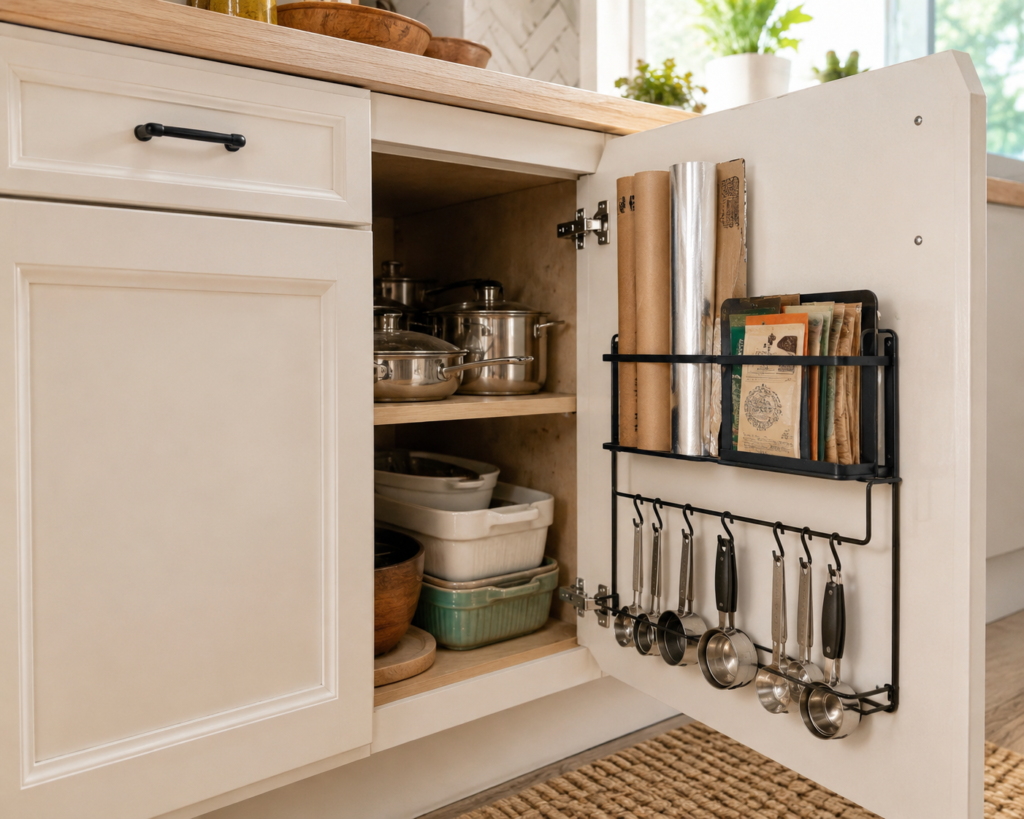
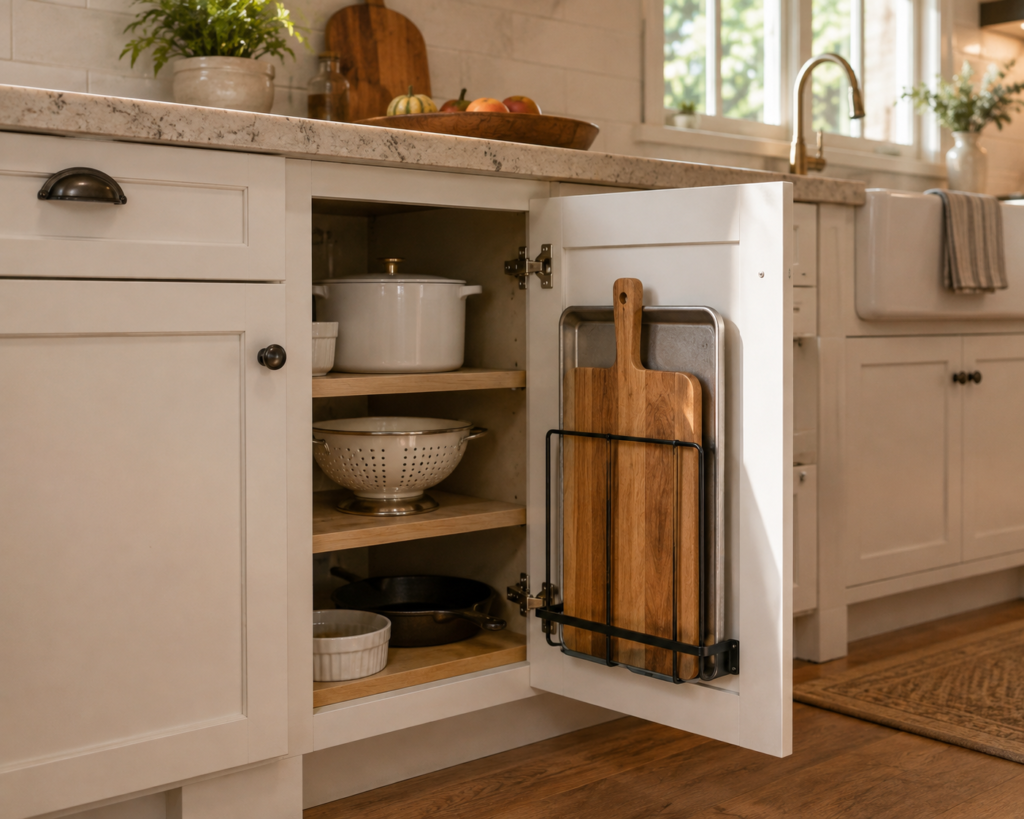
2. Use the Door for Cutting Boards and Baking Sheets
Flat kitchen items are particularly well suited to cabinet door storage because they don’t require much depth.
A simple rack can hold one or two cutting boards, baking sheets, or serving trays vertically. This can free up valuable shelf space and make large flat items easier to grab.
Check the weight before mounting the rack, especially on lightweight cabinet doors. If the door feels flimsy or the item is heavy, storing the boards vertically inside the cabinet may be safer.
Best for: Base cabinets and tall pantry cabinets.
3. Install a Narrow Spice Organizer
If your spice collection is scattered across shelves, the cabinet door can become a convenient location for smaller containers.
A narrow spice rack works best when the cabinet door has enough clearance around the shelves. Arrange frequently used spices at eye level and less-used ones lower down.
Avoid placing heavy glass jars on a lightweight door. If you have a large spice collection, a shallow pull-out shelf may be a better long-term solution.
Best for: Kitchens with limited drawer or counter space.
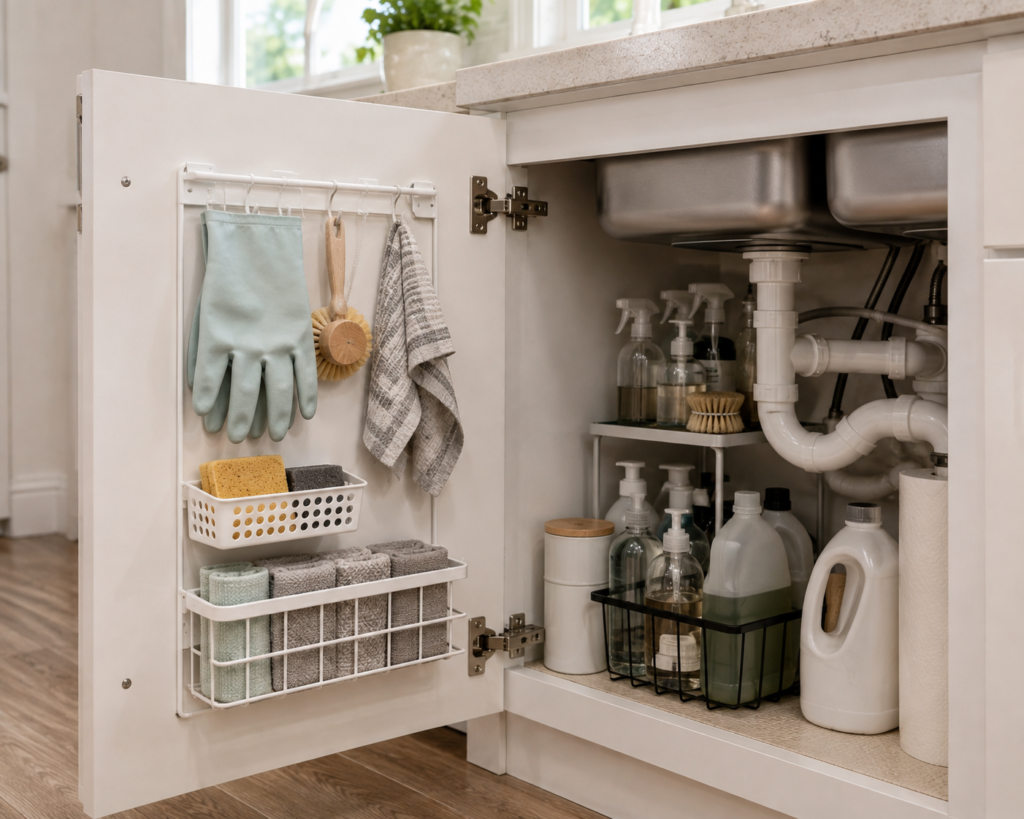
4. Turn the Door Into a Cleaning-Supply Station
The inside of a sink cabinet door is often wasted space, making it a useful location for small cleaning supplies.
Use adhesive hooks for gloves and brushes, a slim basket for sponges, or a narrow rack for spray bottles. Keep heavier bottles on the cabinet floor rather than loading them onto the door.
Also leave enough room around plumbing connections. A storage system that works perfectly on a normal cabinet may not work inside a sink cabinet.
5. Add Hooks for Measuring Spoons and Small Tools
Sometimes you don’t need a rack at all.
A row of small hooks can turn the cabinet door into a simple hanging station for measuring spoons, whisks, vegetable peelers, or lightweight kitchen tools.
This works particularly well when drawer space is limited. Use removable adhesive hooks if you’re renting, but make sure the adhesive is rated for the item’s weight and the cabinet’s surface.
For permanent installations, screw-mounted hooks are more dependable.
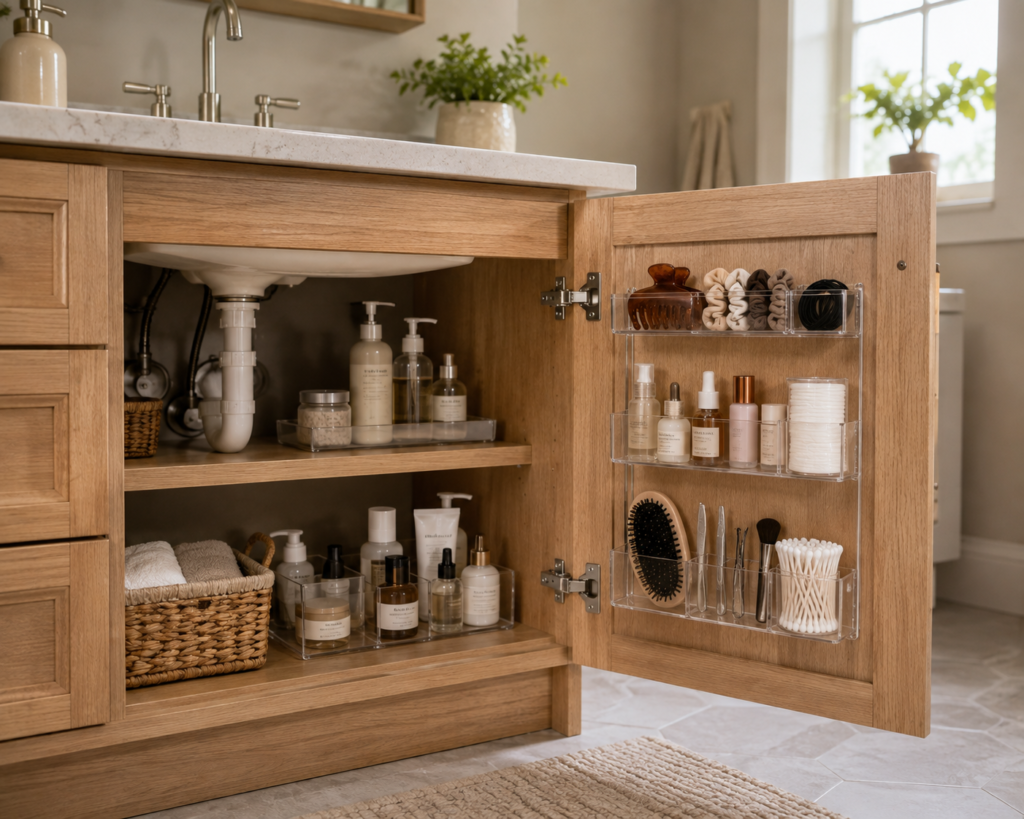
6. Create Bathroom Cabinet Door Storage
Bathroom vanity doors can hold many small items that otherwise clutter drawers.
Try shallow bins for hair accessories, adhesive pockets for skincare products, or hooks for brushes and small grooming tools. Keep the organizer shallow because bathroom vanities often have plumbing occupying much of the cabinet interior — see our bathroom storage ideas for small bathrooms for more vanity-specific tricks.
Avoid storing leak-prone liquids directly above electrical equipment or in places where spills could damage the cabinet.
Best for: Hair tools, grooming accessories, extra toiletries, and cleaning cloths.
7. Use Adhesive Bins for Renter-Friendly Storage
If you don’t want to drill into cabinetry, adhesive bins can provide a temporary solution.
They’re particularly useful for lightweight items such as sponges, packets, small toiletries, brushes, or cloths. Choose bins with a flat mounting surface and clean the cabinet door according to the manufacturer’s instructions before applying them.
The limitation is weight. Adhesive storage isn’t the right choice for heavy bottles, cookware, or anything that could become dangerous if it falls.
Best for: Renters and lightweight everyday items.
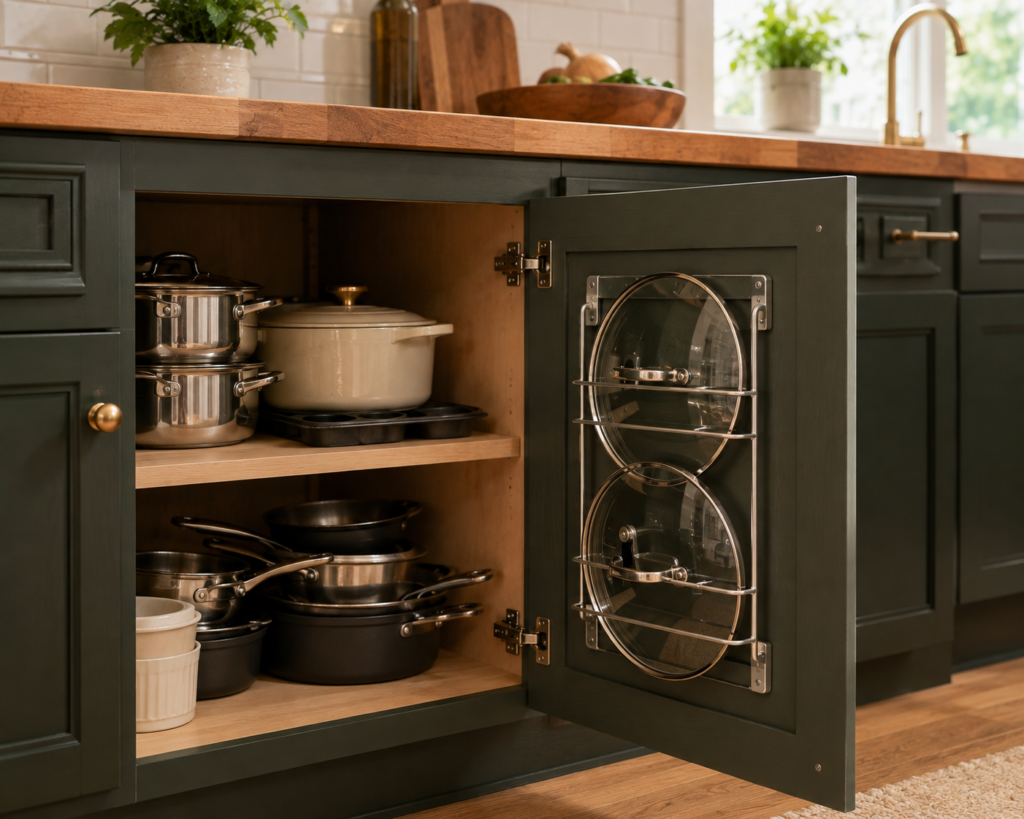
8. Store Pot Lids on the Cabinet Door
Pot lids can be awkward because they’re bulky but relatively flat.
A purpose-built lid rack mounted to the inside of a sturdy cabinet door can keep them upright and easier to access. Measure both the lid diameter and the cabinet’s internal clearance before purchasing.
If your lids have large handles, check that the handles won’t hit the cabinet shelf when the door closes.
This is one of those storage ideas where a few extra minutes of measuring can prevent a frustrating installation.
9. Add a Pocket Organizer for Small Bathroom Items
A fabric or slim plastic pocket organizer can turn the back of a cabinet door into several small compartments.
Use individual pockets for hair ties, brushes, nail-care items, travel toiletries, or backup products. This approach is particularly useful when your bathroom drawers are shallow.
Choose a washable material if the cabinet is exposed to moisture.
The main disadvantage is appearance. Pocket organizers are practical but may look less polished than built-in wood or metal storage.
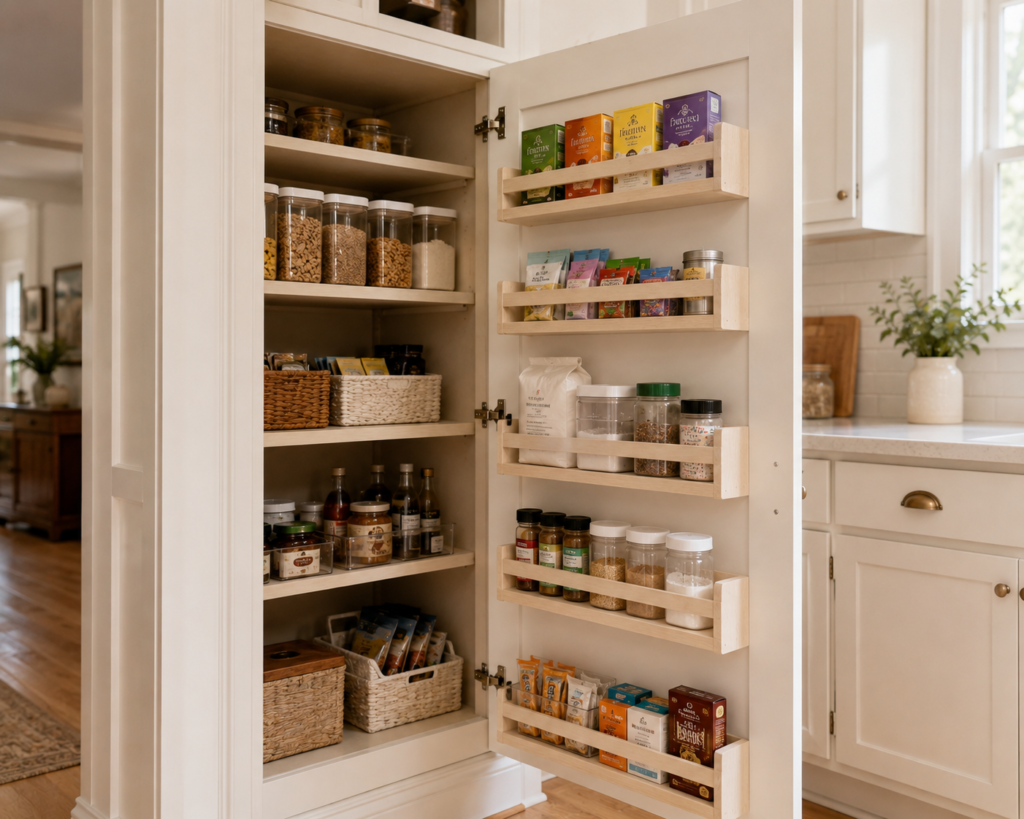
10. Make Use of the Pantry Door
A pantry cabinet door can become valuable storage for flat and lightweight food items.
Use narrow shelves for seasoning packets, small snack bags, baking accessories, or tea. Keep heavier cans and jars on the main shelves.
Avoid filling every inch of the door. A heavily loaded pantry door can become difficult to operate and puts additional stress on hinges.
11. Use a Magnetic System on Metal-Friendly Surfaces
If your cabinet door or mounted organizer supports magnets, magnetic containers can provide flexible storage without permanent shelves.
Small magnetic tins work well for lightweight items such as spice blends, clips, small craft supplies, or bathroom accessories.
The benefit is flexibility: containers can be moved around as your needs change.
The downside is that magnets aren’t suitable for every cabinet material, and the holding strength must match the weight of the container and its contents.
12. Add a Small File-Style Organizer for Boards and Trays
A narrow vertical organizer can separate several flat items rather than stacking them.
This works for cutting boards in the kitchen, cleaning cloths in a laundry room, or small trays in a home office cabinet.
The organizer should have enough support to prevent the items from sliding around every time the door moves.
Best for: Flat objects that are difficult to stack neatly.
How to Choose the Right Cabinet Door Storage
Before buying anything, measure the cabinet rather than shopping by appearance alone.
Pay attention to four dimensions:
| What to measure | Why it matters |
|---|---|
| Door width | Determines the maximum organizer width |
| Available depth | Prevents the organizer from hitting shelves |
| Clearance around shelves | Allows the door to close properly |
| Door and hinge strength | Determines how much weight you can safely add |
Also consider how often you’ll use the items. Cabinet doors are ideal for small things you reach for regularly, but they aren’t automatically the best location for heavy or bulky objects.
For permanent storage, screw-mounted organizers are generally more secure than adhesive systems. For renters, removable adhesive products can make sense when used for lightweight items.
Common Cabinet Door Storage Mistakes
The biggest mistake is treating the cabinet door like a full-size storage surface.
Don’t overload it.
A door organizer that works beautifully with measuring spoons may become a problem when loaded with glass bottles or heavy cookware. Weight also changes how the door feels when opening and closing.
Another common mistake is ignoring the cabinet interior. An organizer may technically fit on the door but still collide with a shelf or the items stored inside.
Before installing anything permanently, close the door slowly with the organizer empty. Then add a few items and test it again.
That simple check can save you from unnecessary holes, damaged hinges, or a storage system you can’t actually use.

FAQs
What can I store on the inside of a cabinet door?
Lightweight, frequently used items work best. Examples include measuring spoons, cleaning brushes, kitchen towels, spice packets, toiletries, hair accessories, pot lids, and small tools.
How deep should a cabinet door organizer be?
There isn’t one universal depth because cabinet construction varies. The important measurement is the clearance between the door-mounted organizer and the shelves or objects inside the cabinet. A shallower organizer is usually safer when clearance is tight.
Is adhesive cabinet door storage strong enough?
It can be, but only for appropriately lightweight items and when installed according to the product instructions. Heavy bottles, cookware, and glass containers are better supported by a properly mounted organizer.
Can renters use cabinet door storage?
Yes. Adhesive hooks, removable bins, and other non-permanent solutions can work well for lightweight items. Check the product’s removal instructions before applying anything to painted or finished cabinetry.
Conclusion
Good cabinet door storage isn’t about squeezing as much as possible onto the back of a door. It’s about using a small amount of overlooked space for the right items.
Start with lightweight things that are currently cluttering shelves or drawers. Measure the clearance, choose a shallow organizer, and test the door before committing to permanent installation.
In a small kitchen, bathroom, pantry, or laundry room, that unused door surface can become one of the most useful few inches of storage in the room.