

The easiest way to make a small bedroom feel bigger is to fix the position of the bed first and protect the walking space around it. Once the bed is in the right spot, the dresser, nightstand, and other furniture become much easier to place.
A small bedroom feels crowded when furniture blocks the natural route through the room. You shouldn’t have to walk sideways around the bed or squeeze between the dresser and wall every morning.
The good news is that you don’t need to buy all new furniture. A better arrangement can make a noticeable difference.
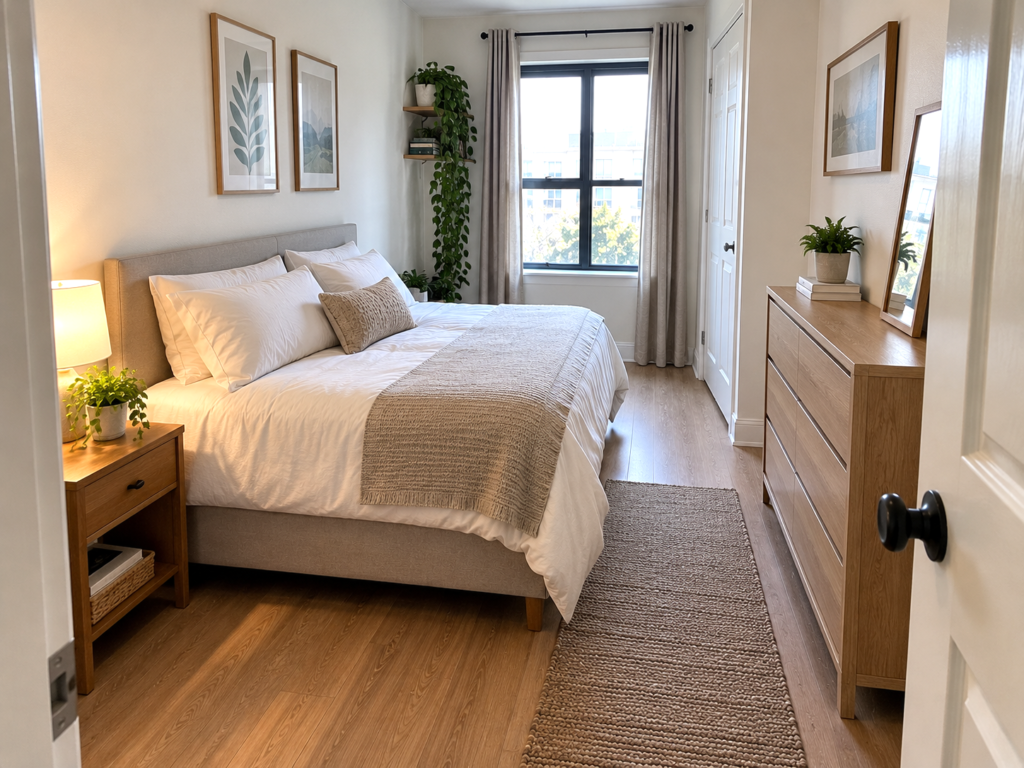
1. Put the Bed Against the Longest Wall
For a narrow bedroom, this is the first layout I’d try.
Place the head of the bed against the longest uninterrupted wall. Then keep the opposite side as open as possible for walking.
Add a small nightstand beside the bed and put the dresser against the opposite wall.
The important part is not making everything perfectly symmetrical. I’d rather have one open side with plenty of walking space than two large nightstands that make the room difficult to move around.
A small nightstand around 15–18 inches wide is enough for a lamp, phone, and a few essentials.
2. Push the Bed Into a Corner
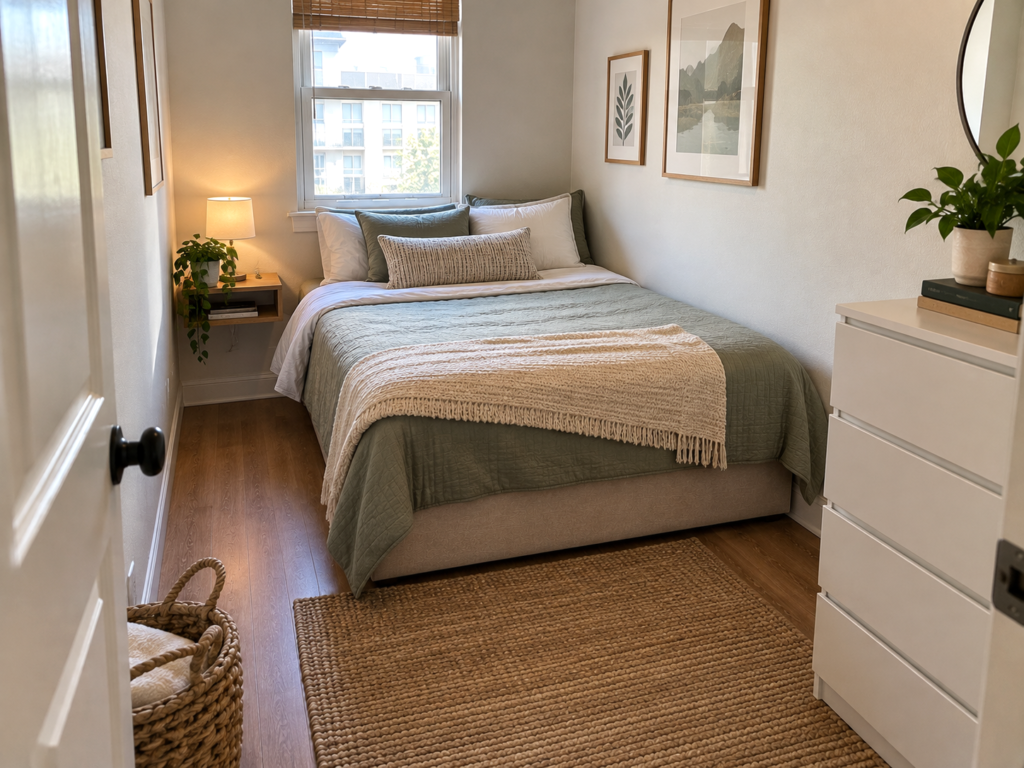
When the bedroom is really small, putting the bed in the corner can free up much-needed floor space.
Place the headboard against one wall and one side of the bed against the adjacent wall.
Keep the other side open.
Then place a small floating shelf beside the accessible side instead of using a full nightstand.
This arrangement works particularly well for one person. It isn’t my first choice for couples because one side of the bed becomes difficult to access.
3. Put the Bed Under the Window
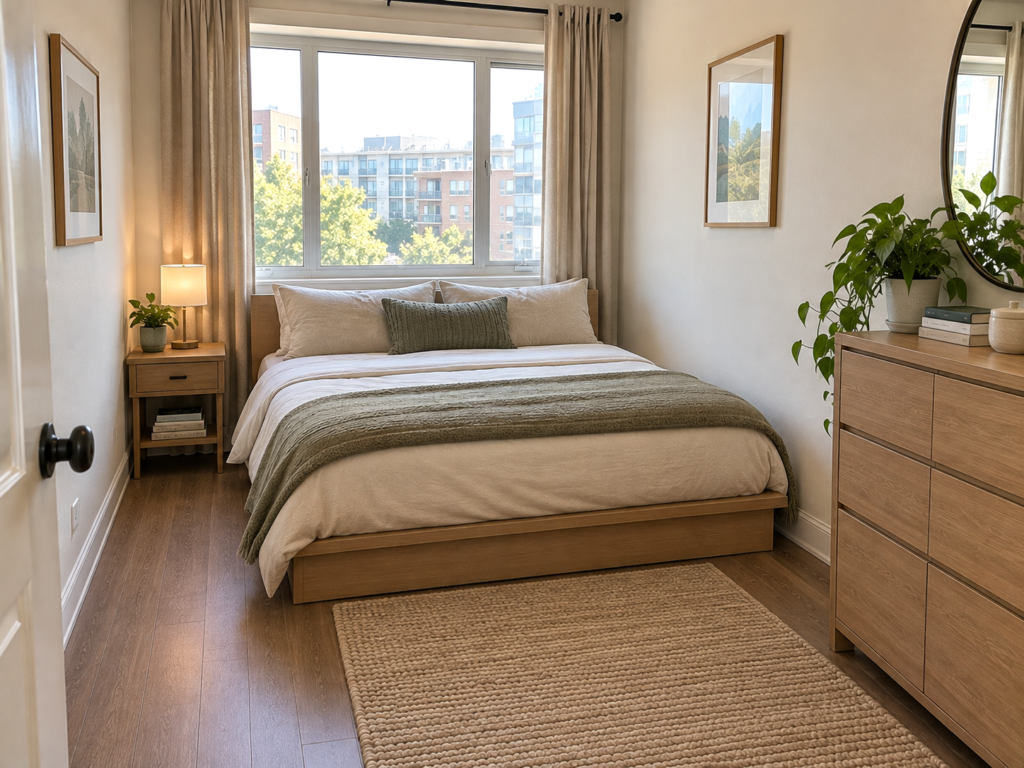
Don’t automatically rule out the wall beneath a window.
A low bed can work there, provided it doesn’t block the window, curtains, radiator, or ventilation.
Place the bed beneath the window and use the side walls for storage.
For example:
- Bed under the window
- Small nightstand on one side
- Slim dresser on the side wall
- Tall storage near the bedroom door
This works especially well when the other walls are taken up by doors or closets.
4. Keep the Middle of the Room Open
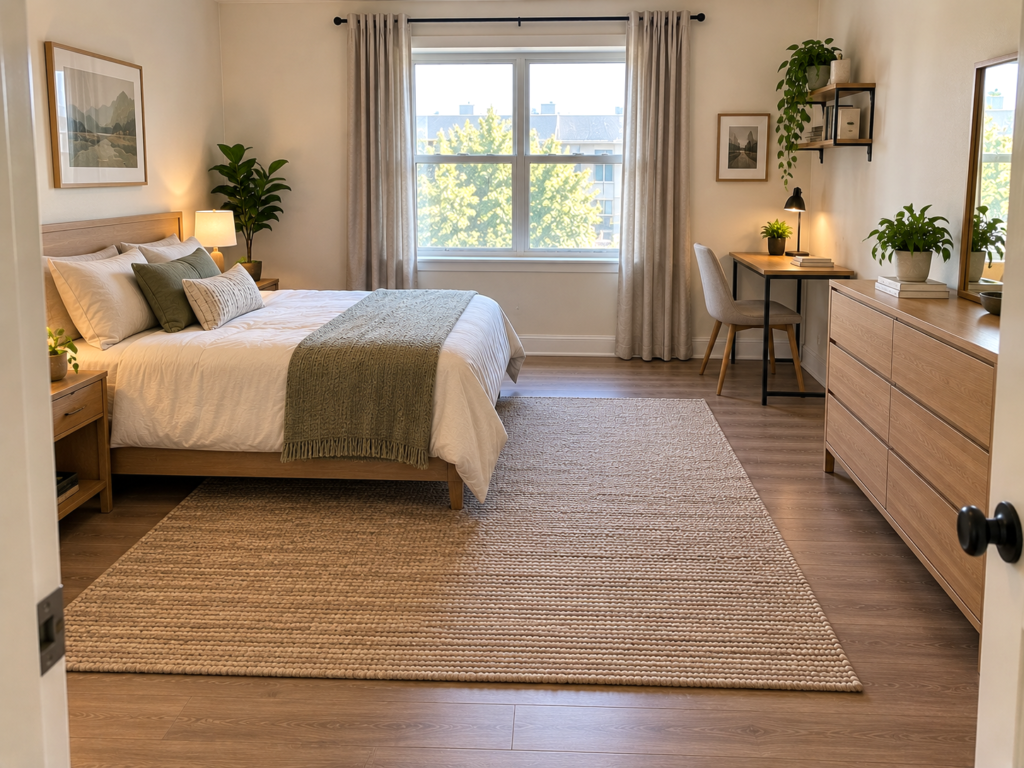
One of the simplest ways to make a bedroom feel larger is to stop putting furniture in the middle.
Keep the larger pieces against the walls and leave the center open.
For example, in a 10×10-foot bedroom, you could place the bed against one wall, a narrow dresser opposite it, and a small desk beside the window.
That open section in the middle becomes your main walking area.
Don’t underestimate how much difference this makes. An empty patch of floor makes a small bedroom feel much less cramped.
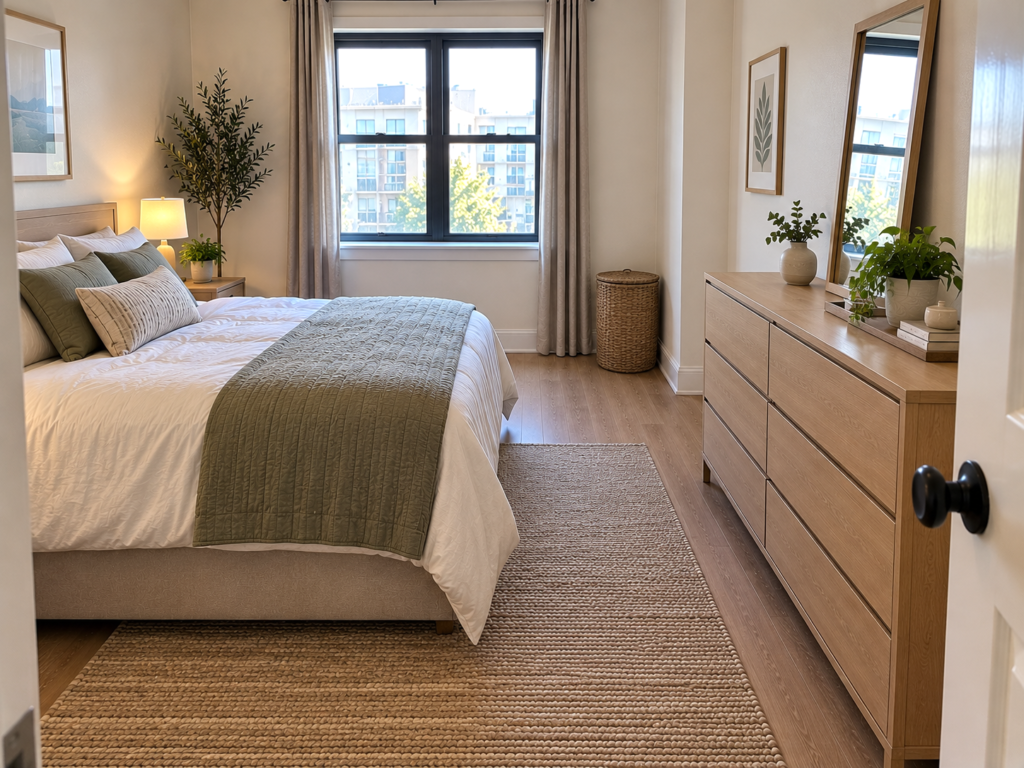
5. Use a Shallow Dresser
A deep dresser can quietly steal a lot of walking space.
Before buying one, measure how far it will stick out from the wall. A dresser around 12–16 inches deep is much easier to fit into a tight bedroom than a bulky 20–24-inch unit.
Place it on the wall opposite the bed when possible.
Then open every drawer before deciding the position. You don’t want a drawer hitting the bed every time you get dressed.
6. Replace the Nightstand With a Floating Shelf
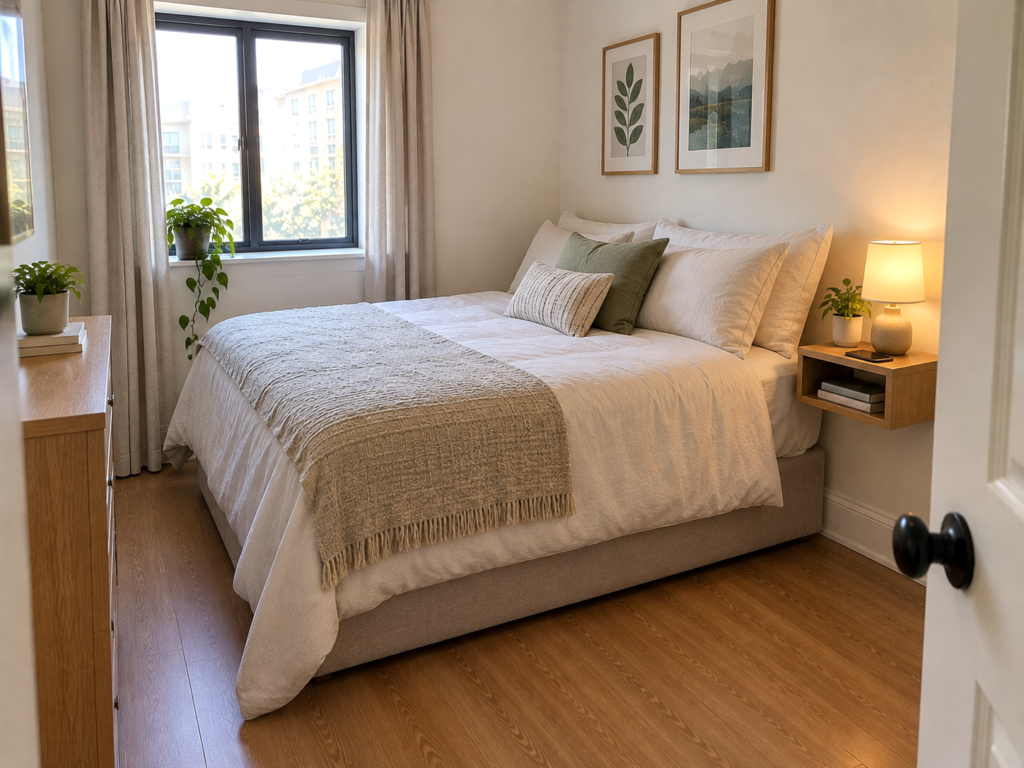
This is one of my favorite tricks for a genuinely small bedroom.
A normal nightstand might take up 18–24 inches of floor space. A floating shelf gives you somewhere for your phone, lamp, glasses, and book without using that floor area.
Install it beside the bed at a comfortable height and keep the surface small.
You could also use a narrow wall-mounted shelf with a drawer.
For example, the IKEA EKBY ALEX is a popular type of wall-mounted storage solution to look for on Amazon.
7. Don’t Automatically Put a Bench at the Foot of the Bed
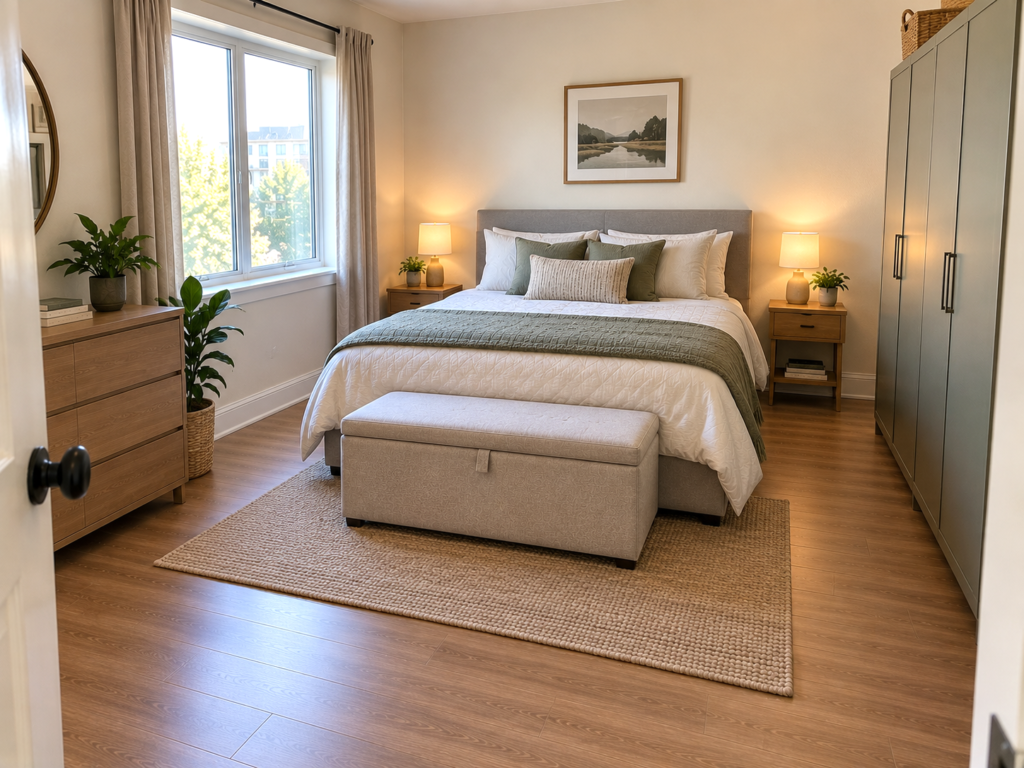
A bench at the foot of the bed looks good, but it isn’t always useful in a small room.
Before adding one, stand at the foot of your bed and check how much space you actually have.
If the walkway becomes narrow, skip it.
Use that space for something more practical instead, such as a small storage ottoman that can be pushed against the wall when you’re not using it.
Skip decorative furniture that makes the room harder to walk through. In a small bedroom, every piece should have a job.
The Simple Way to Arrange Your Bedroom
Not sure which layout will work in your room? Don’t start by moving everything around.
Follow this order instead.
Step 1: Measure the room
Measure the length and width of the bedroom.
Also measure the bed, dresser, nightstand, closet doors, and door swing.
Step 2: Choose the bed position
Try two or three possible positions.
Use painter’s tape on the floor if you’re unsure. It lets you test the layout without dragging heavy furniture around.
Step 3: Protect the main walkway
Stand at the bedroom door and imagine walking to the bed and closet.
That route should feel natural.
Try to keep around 24–30 inches of walking space where your room allows it.
Step 4: Add the dresser
Once the bed is fixed, place the dresser.
Open all the drawers and make sure they don’t hit the bed or block the walkway.
Step 5: Add the nightstand
Only add a nightstand if you actually have room.
A floating shelf is a better solution when the space beside the bed is tight.
Step 6: Test the room
Don’t stop after looking at the furniture.
Walk around the room.
Open the closet.
Pull out the drawers.
Make the bed.
Carry a laundry basket from the door to the closet.
That’s when you’ll notice whether the layout actually works.
A Few Furniture Choices That Help
You don’t need expensive furniture to make a small bedroom work better.
A simple platform bed gives you a cleaner look and leaves useful space underneath. The KD Frames Nomad Platform Bed, for example, is one option worth checking if you’re looking for a simple platform-style frame.
For color, Benjamin Moore White Dove and Sherwin-Williams Alabaster are two good examples of soft whites that work well in small bedrooms.
Keep the rest of the room simple. Too many small decorative pieces make a compact bedroom look busy very quickly.
What I Would Do in a 10×10 Bedroom
Let’s make this practical.
Imagine a 10×10-foot bedroom with a full-size bed, dresser, closet, and small window.
I’d put the bed against the longest wall, use one slim nightstand, place the dresser opposite the bed, and keep the center of the room completely open.
I wouldn’t add a bench.
I wouldn’t add a large armchair just because there is a small empty corner.
Instead, I’d use the wall space for a few shelves and keep the floor as open as possible.
That arrangement gives the room one obvious walking route instead of making you weave around several pieces of furniture.
FAQ
Is it better to put a bed against a wall or in the middle?
For a very small bedroom, placing the bed against a wall often gives you more usable floor space. A centered bed makes more sense when the room is wide enough to provide comfortable access on both sides.
How far should furniture be from a bedroom door?
Keep the door’s full swing clear. Measure the door arc before positioning a dresser, shoe cabinet, or chair nearby. A beautiful layout becomes frustrating when the door hits furniture every morning.
Should curtains touch the floor in a small bedroom?
Floor-length curtains create a taller visual line and work well in small rooms. Hang the rod slightly higher and wider than the window instead of stopping directly at the window frame.
Can I put a desk in a small bedroom?
Yes. Choose a compact desk around 18–24 inches deep and place it against a wall or beside the window. Avoid putting a desk where the chair will interfere with the main walking path.
Final Thought
The most common mistake is trying to fill every empty corner.
Leave some floor empty. That’s not wasted space—it is what makes the bedroom comfortable to move through.