
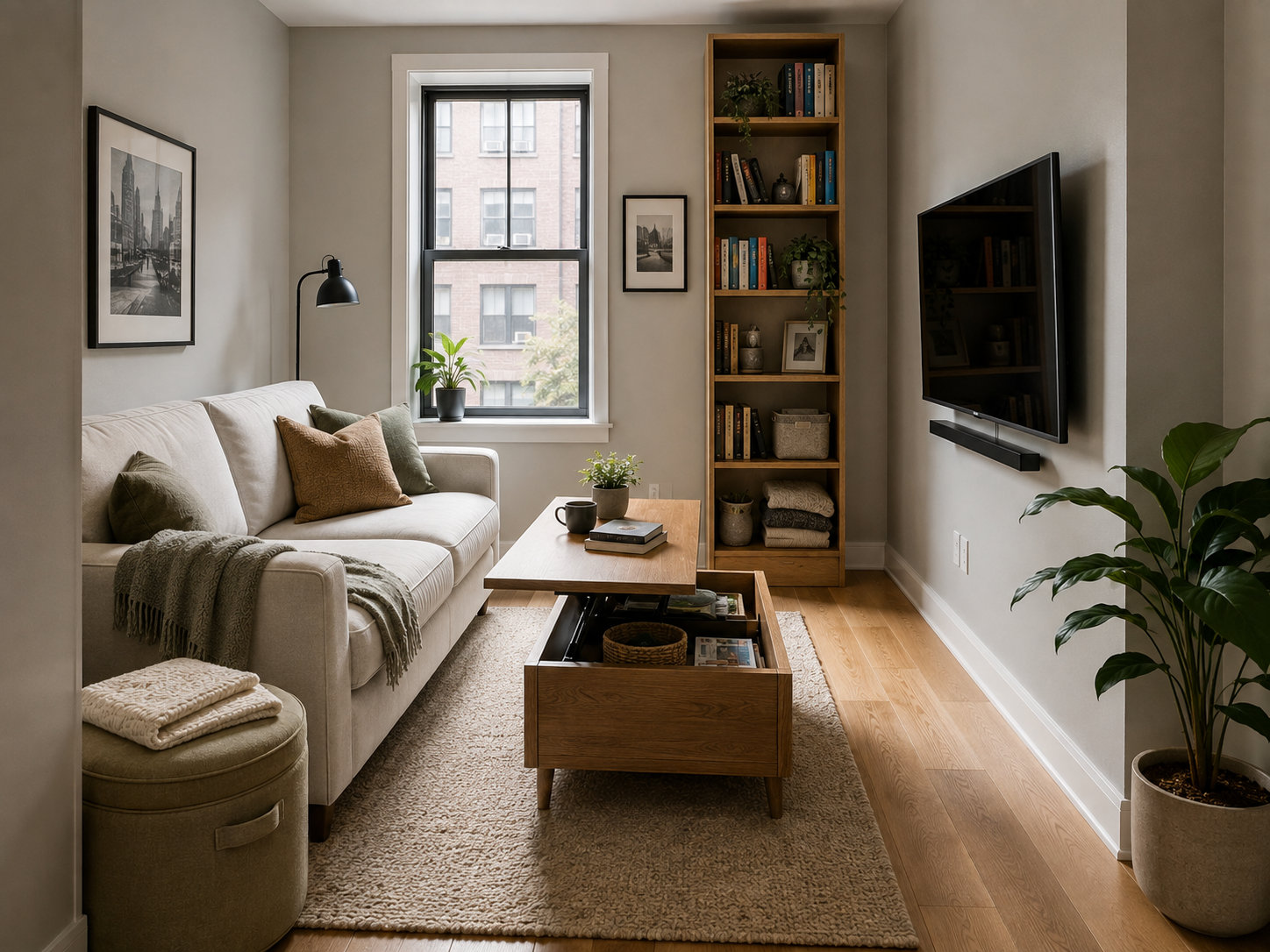
The easiest way to make a small room feel less cramped is to stop wasting floor space on furniture that does only one job.
A coffee table that also stores blankets. A bed with drawers underneath. A desk that folds against the wall. A bench that gives you somewhere to sit while hiding shoes underneath.
These pieces don’t actually add square footage. They simply make better use of the square footage you already have.
That is what I look for when choosing the best furniture for small spaces.
Small furniture isn’t automatically smart furniture. A tiny cabinet that barely holds anything is still taking up floor space. The better question is simple: What else can this piece do?
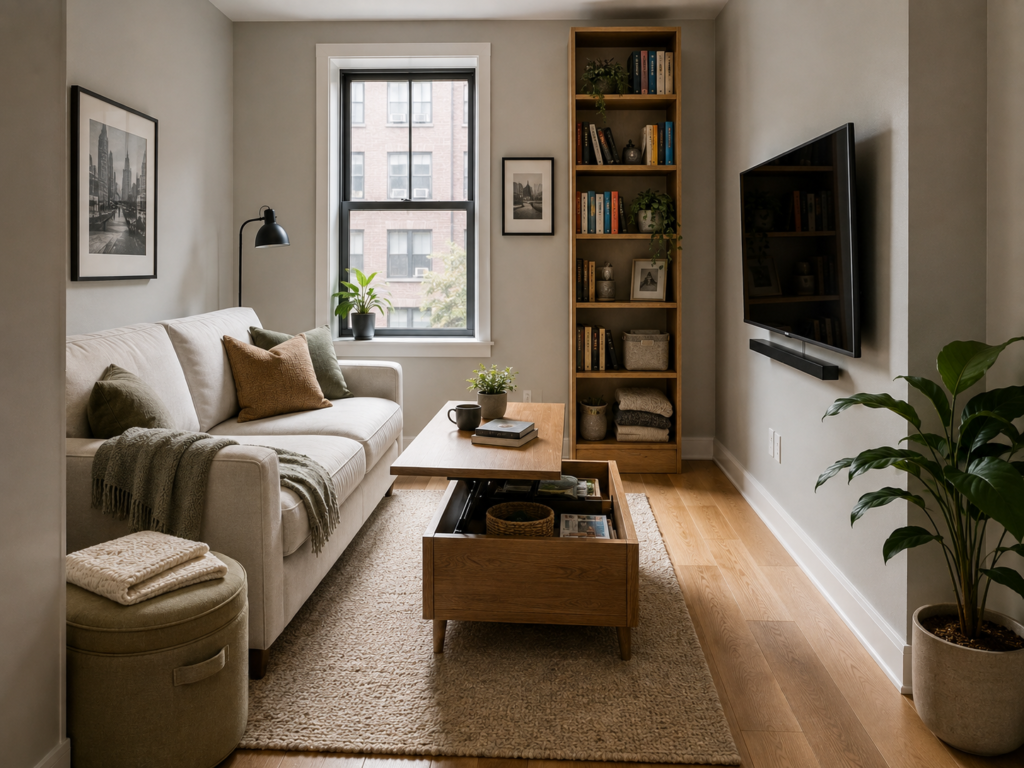
Here are 16 pieces worth considering, along with the situations where they actually make sense.
1. Storage Ottoman
The coffee table is one of the first places I’d look when a living room feels crowded.
A storage ottoman can take its place while giving you somewhere to put your feet, an extra seat when friends arrive, and hidden space for blankets, toys, or books.
Add a firm tray to the top and it becomes a practical surface for drinks and everyday items.
A rectangular ottoman makes sense in front of a sofa because you get more usable surface without adding another piece of furniture.
What I’d look for: A firm top, a removable lid, and enough storage space to hold something you actually use.
2. Tall, Narrow Bookcase
When floor space is limited, look at the walls.
A tall bookcase gives you storage without spreading furniture across the room. Books can take the middle shelves, baskets can handle smaller items, and the top can hold a few decorative pieces.
A unit around 10–12 inches deep is useful in a narrow hallway or cramped living room.
The mistake is filling every shelf. A little empty space makes the entire bookcase feel lighter.
3. Storage Bed With Drawers
The space underneath your bed is already being occupied, so it makes sense to use it.
A storage bed with drawers gives you somewhere for spare bedding, winter clothes, shoes, or luggage without requiring another dresser.
This matters in a bedroom around 10 × 10 feet, where a bed and full-size dresser can leave surprisingly little floor space.
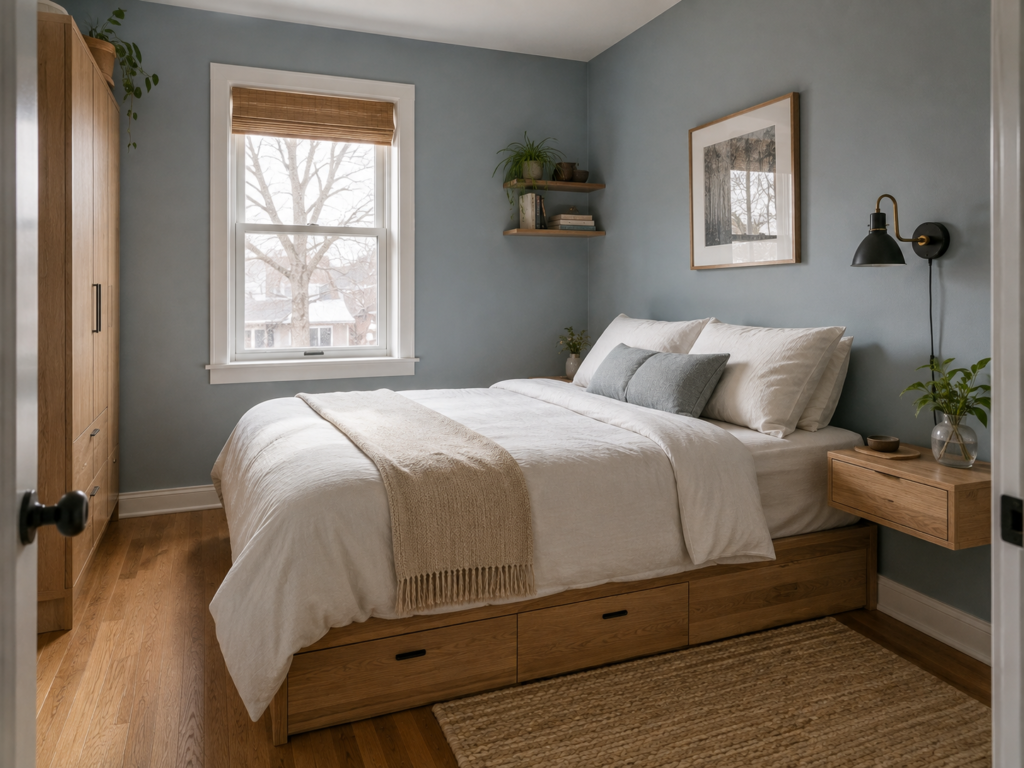
Before buying one, check where the drawers open. A beautiful storage bed is a poor choice if the wall or nightstand blocks half of its storage.
4. Wall-Mounted Folding Desk
A traditional desk permanently claims a section of the floor.
A wall-mounted folding desk gives that space back when you’re finished working. During the day, it becomes a proper workstation; afterward, it folds against the wall.
This works well in a bedroom, hallway alcove, studio apartment, or small living room.
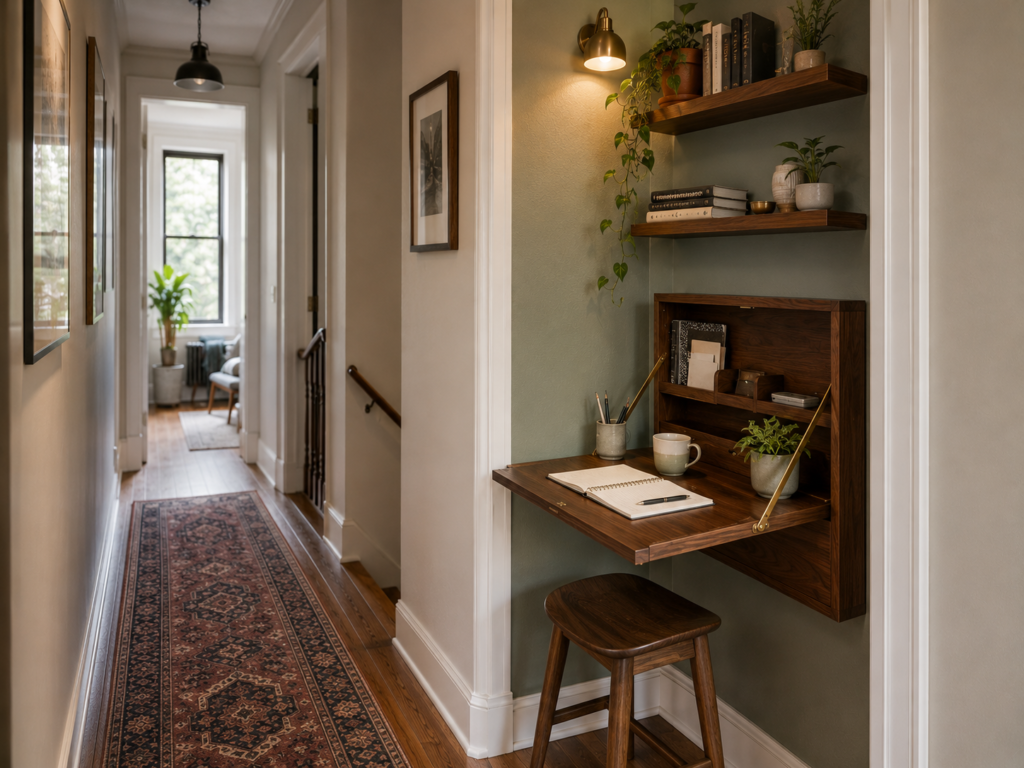
Keep a simple stool underneath instead of adding a bulky office chair.
5. Lift-Top Coffee Table
A lift-top coffee table is particularly useful when the living room also serves as your office.
Raise the surface and you have a more comfortable laptop height. Lower it and the room returns to normal.
Some models include hidden compartments underneath, which gives you another place for chargers, notebooks, remote controls, and other small items.
I prefer this solution to squeezing a permanent desk into a small living room when working from home is only an occasional need.
6. Drop-Leaf Dining Table
A normal dining table occupies the same footprint whether you’re eating alone or hosting four people.
A drop-leaf table doesn’t.
Keep the sides down during the day and open them when you need additional seating.
For a small apartment kitchen, this is one of the easiest ways to keep the dining area from taking over the room.
7. Narrow Console Table
A console table is useful when you have an empty wall but not enough room for a full cabinet.
Put one behind a sofa, in a hallway, or beside the front door for keys, mail, and a small lamp.
For a narrow passage, I’d start around 10–14 inches deep.
That measurement matters. A console that looks only slightly deeper on a product page can make a noticeable difference once you’re walking past it every day.
8. Storage Bench
A storage bench can solve several small-space problems at once.
At the entrance, it gives you somewhere to sit while putting on shoes and storage underneath for footwear or bags. At the end of a bed, it can hold spare blankets. In a dining area, baskets underneath can store table linens.
Look for storage you can actually reach without moving the entire bench.
9. Nesting Side Tables
You don’t need three side tables sitting around all week just because you occasionally have guests.
Nesting tables stack together and separate when you need additional surfaces.
Keep them beside the sofa during normal use. Pull them apart when someone needs a place for a drink, laptop, or plate.
The simpler the frame, the less bulky the stack feels.
10. Slim Shoe Cabinet
Shoes have a habit of taking over entryways because they don’t stack neatly on the floor.
A slim shoe cabinet moves that storage upward and keeps footwear behind doors.
Flip-down compartments are especially useful where the entrance is too narrow for a deep cabinet.
Measure the front-door swing before ordering. The cabinet needs to coexist with the door, not compete with it.
11. Armless Accent Chair
Sometimes you don’t need another sofa. You simply need one more comfortable seat.
An armless accent chair takes less width than many traditional lounge chairs and works well beside a sofa, near a window, or in a bedroom corner.
Don’t choose a miniature chair just because it saves a few inches. Saving space isn’t useful if nobody wants to sit in it.
I’d rather have one comfortable, properly scaled chair than two tiny decorative chairs.
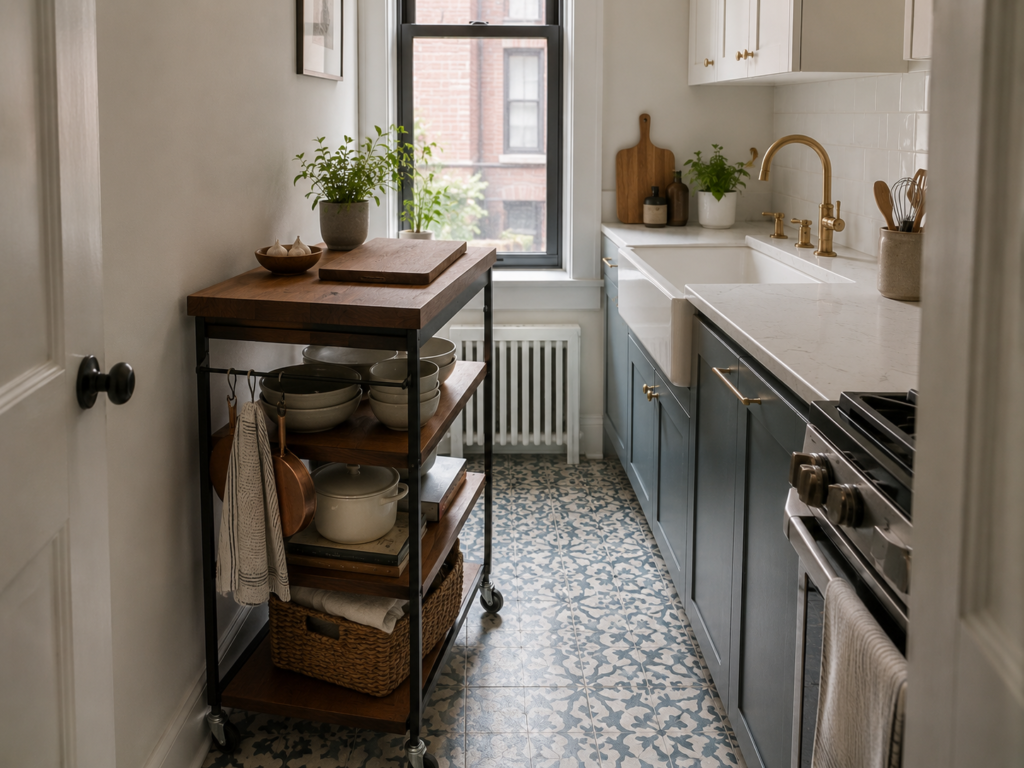
12. Rolling Kitchen Cart
A small kitchen runs out of counter space quickly.
A rolling cart gives you another work surface and storage without permanently claiming one section of the kitchen.
Roll it next to the counter when you’re cooking and move it against a wall afterward.
Look for locking casters. A cart that moves every time you lean against it becomes annoying fast.
13. Floating Nightstand
A floating nightstand removes the cabinet legs from the floor.
That sounds minor, but the open floor underneath makes the bedside area easier to clean and less visually heavy.
You don’t need a huge drawer unit. A compact drawer can handle your phone, glasses, book, charger, and other bedtime essentials.
Mount it at a comfortable height relative to the mattress rather than blindly copying a measurement from another bedroom.
14. Corner Desk
That awkward corner between two walls doesn’t have to remain empty.
A corner desk turns it into a useful workstation while leaving the middle of the room open.
This is particularly helpful in a bedroom where a regular desk would compete with the bed.
Use a floating shelf above the desk for notebooks and supplies instead of putting another storage cabinet on the floor.
15. Cube Storage Bench
Children’s rooms need storage that is easy for children to reach.
A cube storage bench provides a place to sit while baskets underneath handle toys, books, stuffed animals, and craft supplies.
Use baskets inside the cubes. Without them, open compartments quickly turn into piles of random toys.
Choose a sturdy model with a weight capacity appropriate for seating.
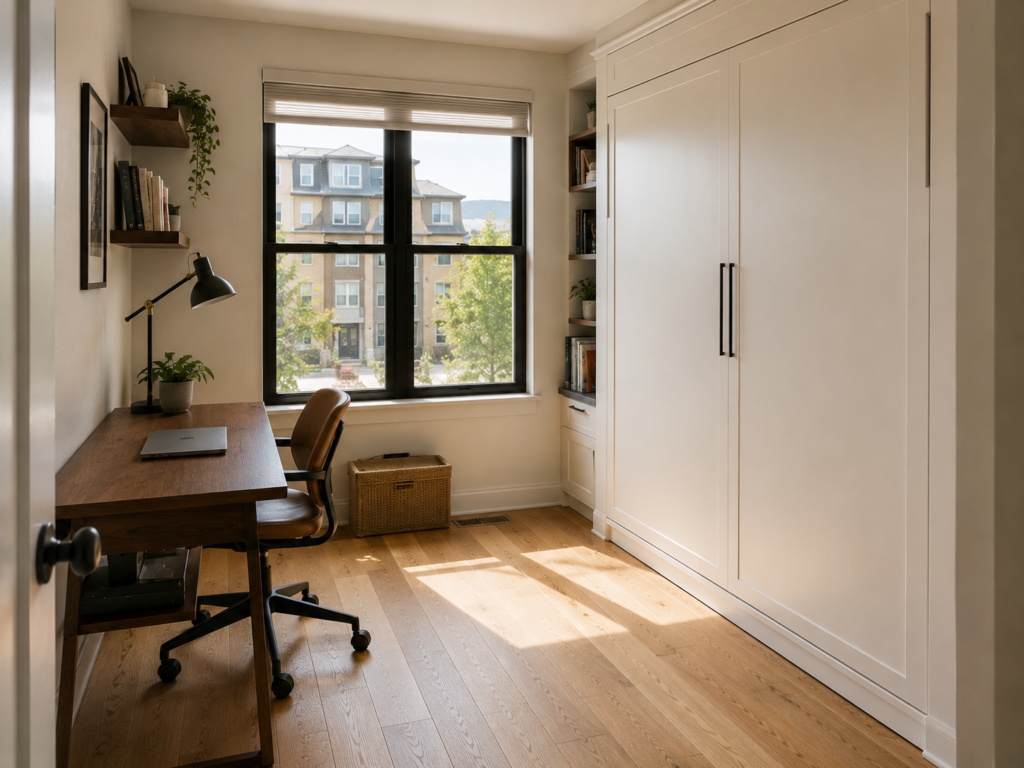
16. Murphy Bed
A Murphy bed is the biggest commitment on this list, but it also creates the biggest transformation.
Fold the bed away and the room becomes available for a desk, workout area, craft table, or guest seating.
I wouldn’t install one simply because a bedroom is small. The installation and cost make more sense when the room genuinely needs to perform two jobs.
For a guest room that doubles as a home office, though, it is difficult to beat.
Which Furniture Makes the Biggest Difference?
Don’t choose furniture based only on the room name.
Choose it based on the problem.
| Problem | Furniture worth considering |
|---|---|
| Not enough hidden storage | Storage ottoman |
| No room for a home office | Folding wall desk |
| Small bedroom storage | Storage bed |
| Empty vertical wall space | Tall bookcase |
| Tight dining area | Drop-leaf table |
| Narrow entrance | Slim shoe cabinet |
| Need occasional seating | Nesting tables or armless chair |
| Small kitchen | Rolling cart |
| Awkward corner | Corner desk |
| Guest room needs another purpose | Murphy bed |
This approach prevents a common mistake: buying furniture first and trying to figure out its purpose afterward.
Measure Before You Order
This is the part nobody gets excited about, but it saves the most frustration.
Measure:
- Furniture width
- Furniture depth
- Furniture height
- Door swing
- Drawer clearance
- Walking space
- Distance from nearby furniture
Then mark the furniture footprint on the floor with painter’s tape.
Walk around it.
Open the closet. Pull out a chair. Open the drawers. Carry a laundry basket through the room.
You’ll know very quickly whether the piece actually fits your life.
A Realistic Small-Apartment Example
Imagine a 650-square-foot one-bedroom apartment where the living room also needs to handle occasional remote work.
A separate sofa, desk, coffee table, storage cabinet, and guest bed would consume a lot of valuable floor space.
Instead, a compact sofa handles everyday seating. A lift-top coffee table provides a temporary workspace. A storage ottoman hides blankets and provides an extra seat. A tall bookcase uses the vertical wall.
The room hasn’t gained a single square foot.
But fewer pieces are fighting over the same space.
That’s the real advantage of choosing furniture carefully.
What I Would Skip
I’d skip oversized sectional sofas in genuinely small living rooms unless there is enough clearance around them.
The sofa itself isn’t the only issue. Think about the space needed to walk around it, open doors, pull out chairs, and reach windows.
I’d also avoid buying several tiny storage pieces simply because each one looks compact.
Four small cabinets can create more visual clutter than one well-designed storage unit.
Small furniture isn’t automatically space-saving furniture.
The useful question is how much function you get from the footprint.
Make Small Furniture Look Intentional
A small room doesn’t need to look like a collection of space-saving gadgets.
Repeat a few finishes throughout the room. Light oak, cream upholstery, black metal, and natural woven materials work well together without making everything match.
For walls, Benjamin Moore Pale Oak OC-20 gives a soft neutral backdrop. Sherwin-Williams Alabaster SW 7008 is another warm off-white option.
You can also use a deeper color behind a desk or storage cabinet to visually define that area.
Keep the decorations selective.
A small room feels better when furniture has some breathing room around it.
Where Amazon Makes Sense
Amazon is useful for finding compact furniture, but don’t buy a piece simply because it has thousands of reviews.
Check the actual dimensions first.
Then look at customer photographs, materials, weight capacity, assembly requirements, and the return policy.
A product photograph taken in a huge studio tells you very little about how a 36-inch-wide cabinet will feel in your 9-foot-wide room.
Prices and availability change too, so check the current Amazon.com listing before purchasing.
FAQ
What furniture should I buy first for a small apartment?
Start with furniture that supports essential daily activities: sleeping, sitting, eating, working, and storing necessary belongings. Decorative pieces should come later. This prevents you from filling the room before solving its practical problems.
Does furniture with exposed legs make a room look bigger?
It creates a lighter visual effect because you can see more of the floor underneath the furniture. The room isn’t physically larger, but the uninterrupted flooring makes the furniture feel less heavy.
Is IKEA good for small spaces?
IKEA has many compact and modular pieces, but the brand itself doesn’t guarantee a good fit. Compare the exact dimensions, storage capacity, materials, and assembly requirements with your room before buying.
Should all furniture in a small room match?
No. Matching every piece can make a small room feel flat and overly coordinated. Repeating two or three finishes creates a more cohesive look while allowing different furniture styles to coexist.
Final Takeaway
The biggest mistake is buying furniture because it fits the room on paper.
Measure the depth, check the clearance, and choose pieces that perform more than one useful job. That’s how a small room starts feeling easier to live in.