
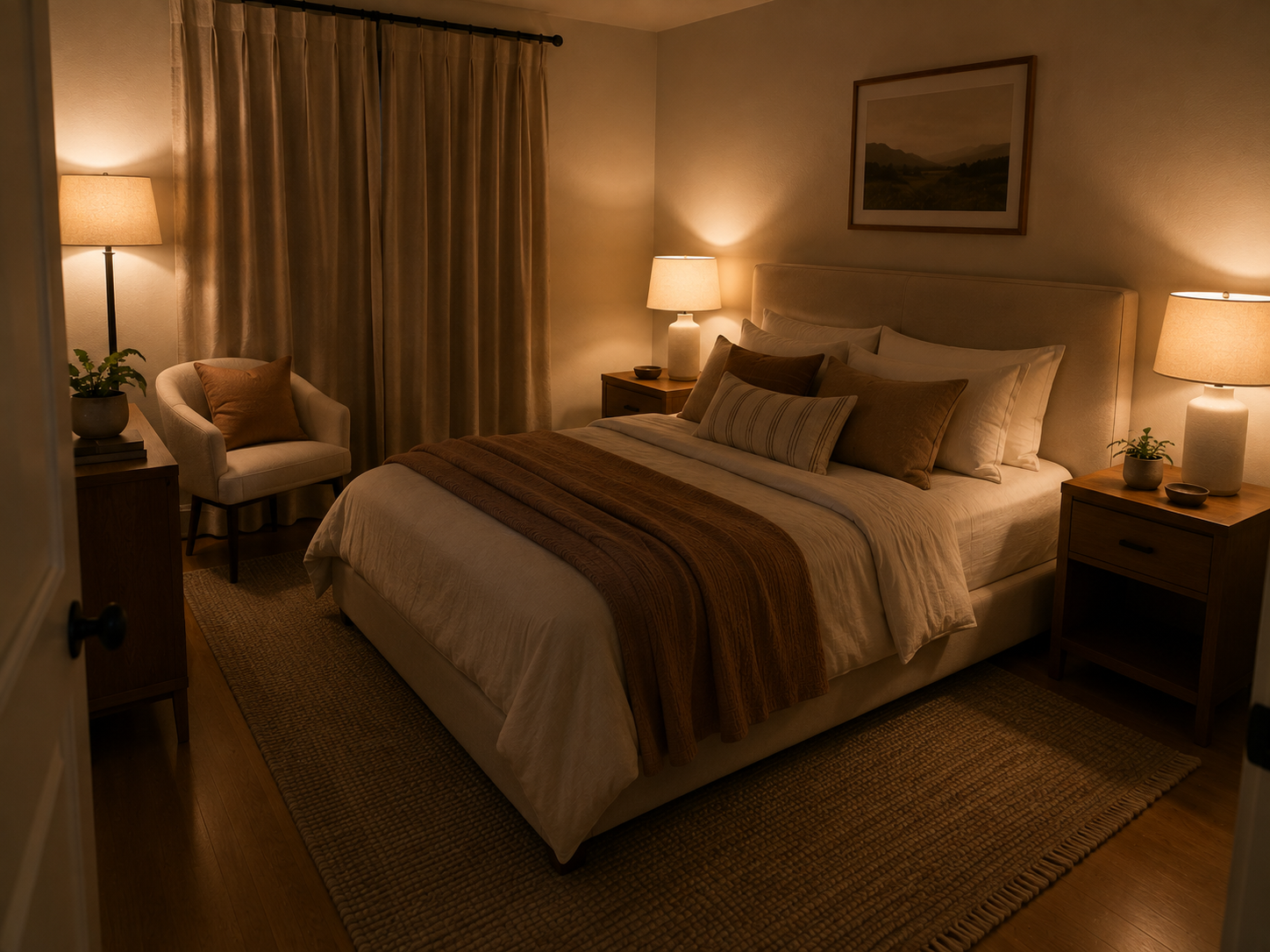
A warm aesthetic cozy bedroom does not require expensive furniture, a huge room, or a complete makeover. The feeling usually comes from a handful of choices working together: warm colors, soft lighting, layered bedding, natural textures, and a layout that leaves enough breathing room around the bed.
The mistake is trying to make everything “cozy” at once. Too many pillows, dark colors, bulky furniture, and decorative objects can make a bedroom feel crowded rather than comfortable.
The better approach is to build warmth in layers. Start with the bed and lighting, then add texture, color, and a few personal details.
Quick Answer: What Makes a Bedroom Feel Warm and Cozy?
A warm aesthetic cozy bedroom usually combines:
- Warm neutrals such as cream, beige, taupe, camel, soft brown, and muted terracotta
- Layered bedding rather than one flat comforter
- Warm, diffused lighting instead of relying only on an overhead fixture
- Natural-looking materials such as wood, linen, cotton, wool, rattan, and woven fibers
- Curtains or window treatments that soften the room
- A rug that adds softness underfoot
- Furniture that fits the room without blocking walking paths
- A small number of meaningful decorative pieces
You do not need every element. If the room already has good flooring and furniture, changing the lighting, bedding, and window treatments can make a surprisingly large difference.
Start With a Warm, Restrained Color Palette
The easiest way to create warmth is to control the color palette.
Instead of choosing several unrelated shades of brown and beige, pick one main neutral and two or three supporting colors. For example, a cream bedroom can use warm beige bedding, medium-oak furniture, and small accents in muted rust or caramel. This same restrained-palette approach is what makes a neutral living room feel warm rather than sterile, so the two rooms can share a color story if they’re visible from each other.
Good Colors for a Warm Bedroom
| Base color | Supporting colors | Overall feeling |
|---|---|---|
| Warm white | Beige, oak, camel | Light and relaxed |
| Cream | Taupe, brown, terracotta | Soft and earthy |
| Greige | Walnut, ivory, muted green | More sophisticated |
| Light beige | Chocolate brown, cream | Cozy and grounded |
| Soft taupe | Rust, oatmeal, natural wood | Warm and collected |
Be careful with cool gray. It is not automatically wrong, but a room dominated by blue-gray walls, cool white bedding, and silver finishes can work against the warm atmosphere you’re trying to create.
You also do not need to paint the walls dark. A warm off-white can feel just as cozy when the room has enough texture and layered lighting.
Make the Bed the Softest Part of the Room
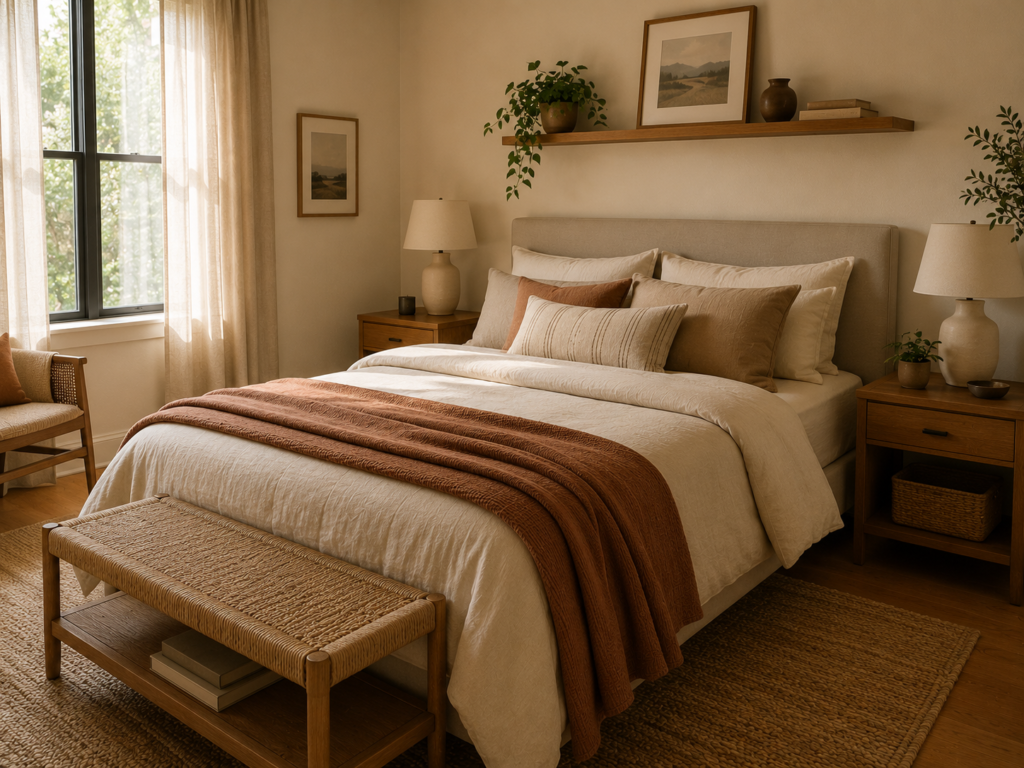
The bed is usually the largest visual element in a bedroom, so it has more influence on the atmosphere than small decorative accessories.
Instead of putting a single comforter on the mattress and stopping there, create a few distinct layers. Start with comfortable sheets, add a duvet or quilt, then place a folded throw near the foot of the bed.
The layers should have slightly different textures rather than simply different colors. For example, smooth cotton sheets can sit underneath a relaxed linen duvet and a chunky woven throw.
You also don’t need a mountain of pillows. Two sleeping pillows per person plus a couple of decorative pillows or a lumbar pillow is often enough for a polished bed that is still practical to use every night.
For a queen bed, make sure the bedding is large enough to provide adequate side coverage. A duvet that barely reaches the mattress edges can make an otherwise beautiful bedroom look unfinished.
Choose Bedding for How You Actually Sleep
Linen is attractive and breathable but has a naturally relaxed, slightly wrinkled appearance. Cotton can be easier to maintain and comes in many different weaves. A quilt or coverlet is useful when you want a lighter top layer instead of a very thick duvet.
If you tend to sleep hot, avoid building the entire bed around heavy layers simply because they look cozy in photographs. A bedroom should feel comfortable when you’re actually sleeping in it, not just when you’re looking at it.
Use Lighting to Create the Warmth
Lighting can completely change how the same bedroom feels.
If you use one bright ceiling fixture at night, the room may look flat and clinical even if the furniture and bedding are warm. Instead, create several lower sources of light around the room.
A bedside lamp is the obvious starting point. If space allows, add another light source on the opposite side of the room or use a floor lamp near a reading chair.
A dimmable lamp is particularly useful because you can use brighter light while getting dressed and lower the intensity when you are winding down.
Warm-toned bulbs generally work better for this style than very cool, daylight-looking bulbs. The important thing is not simply choosing the “warmest” bulb available; the light should also be comfortable and useful for the task.
For a small bedroom, wall-mounted or plug-in sconces can free the nightstand surface and make the bed area feel less cluttered.

Add Texture Instead of More Decoration
Texture is one of the most effective ways to make a neutral bedroom feel interesting.
Think about how many different surfaces you can comfortably introduce:
- Linen or cotton bedding
- A woven or wool-style rug
- A textured throw
- Wood furniture
- Woven baskets
- A fabric or upholstered headboard
- Soft curtains
- A matte ceramic lamp or vase
The goal is contrast. If everything is the same smooth beige fabric, the room can look flat. If everything is heavily textured, it can become visually noisy.
A good combination might be smooth cotton sheets, slightly rumpled linen bedding, a woven rug, natural wood, and one chunky throw.
You can also use texture to make a budget bedroom look more finished without buying lots of accessories.
Choose a Rug Based on the Bed and Room Size
A rug can make the bedroom feel considerably warmer, but the wrong size can make the room look awkward.
For a queen or king bed, a larger rug extending beyond the sides and foot of the bed usually looks more intentional than a tiny rug placed directly underneath the center of the bed.
In a smaller bedroom, you can also use two smaller runners along the sides of the bed when a large area rug would interfere with doors, drawers, or walking space.
Before buying a rug, measure the available floor area and check where doors swing open. A thick rug that prevents a closet or bedroom door from opening properly is not a good design choice, no matter how attractive it looks.
For a warm aesthetic, wool, cotton, jute-style, and other tactile natural-looking materials can work well. If you have pets or expect frequent spills, prioritize easy cleaning over a delicate material.
Soften the Windows
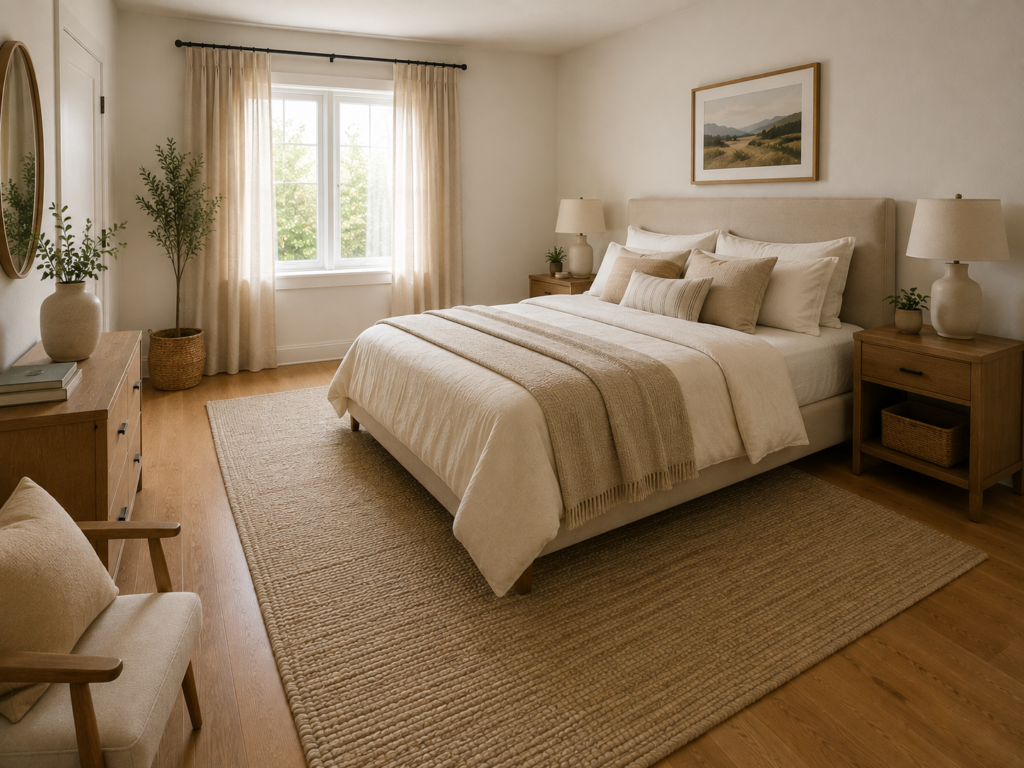
Bedrooms often become warmer simply by replacing bare windows with fabric.
Linen-look or cotton curtains can soften hard window frames and filter daylight without making the room feel heavy. For a more relaxed look, choose curtains in cream, oatmeal, warm white, or a subtle natural tone.
Hang the curtain rod high enough to make the window feel taller, but don’t choose curtains so long that they constantly drag across the floor.
If your bedroom gets strong morning sun, consider combining decorative curtains with a functional shade or blackout layer. A beautiful bedroom still needs to work for sleeping.
Renters can use tension rods, removable hardware, or other non-permanent solutions depending on the window and lease restrictions.
Pick Bedroom Furniture That Leaves Room to Breathe
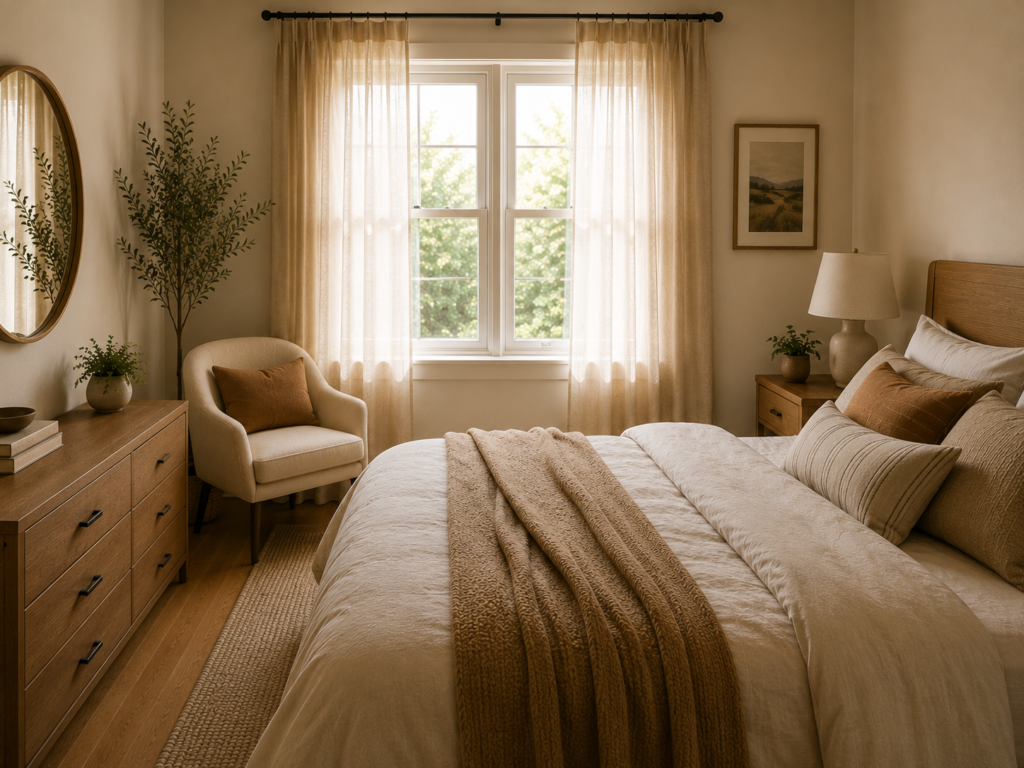
A cozy bedroom should not feel packed with furniture.
Measure the room before buying another nightstand, bench, dresser, or accent chair. Pay particular attention to the walking route between the bed, bedroom door, closet, and bathroom. These are the same measuring habits covered in more depth in our room-by-room guide to furnishing a small apartment.
A large upholstered bench may look beautiful at the foot of a bed, but it is unnecessary if it leaves only a narrow path around the room. In a small bedroom, the extra floor space is often more valuable.
Nightstands should also be proportionate to the bed. A tiny table beside a large bed can look visually lost, while oversized nightstands can make a narrow bedroom feel crowded.
When possible, choose furniture that performs more than one job. A storage bench, nightstand with drawers, or dresser with a useful top surface can reduce the need for additional pieces.
Add Warmth With Natural Wood
Wood is especially useful when a bedroom has a lot of white, cream, or fabric surfaces.
Oak creates a lighter, relaxed feeling, while walnut and darker wood can make the room feel deeper and more traditional. You don’t need every piece of furniture to match perfectly.
For example, a warm white bedroom can combine an oak bed, walnut-toned nightstand, and small natural-wood accessories. Keeping the undertones compatible is more important than buying an identical furniture set.
If you already have cool-toned furniture, don’t replace everything just to create a warmer aesthetic. Add warmth gradually through a wood-framed mirror, nightstand, picture frames, woven storage, or a small stool.
That approach is cheaper and usually produces a more collected room.
Keep Decor Personal but Controlled
A cozy bedroom should feel like someone’s bedroom, not a furniture showroom.
Choose a few things that actually mean something to you: framed artwork, a photograph, books, a small ceramic piece, a plant that suits the room’s light, or a decorative object picked up while traveling.
The important part is restraint.
A nightstand covered with five decorative objects may look styled for a photograph but become annoying when you need somewhere to put your phone, glasses, or a glass of water.
Try leaving some surfaces intentionally empty. Empty space is part of good bedroom design.
Make a Small Bedroom Feel Cozy Without Making It Crowded
Small bedrooms benefit from the same principles, but scale matters more.
Use a bed that fits the room rather than buying oversized furniture because it looks luxurious online. Choose narrow nightstands, wall-mounted lighting, and storage that uses vertical space. If you’re still deciding between a studio and a one-bedroom layout, our average master bedroom size guide can help you set realistic expectations for the room before you start decorating it.
A mirror can also help reflect light and make a small room feel more open, although it should be positioned intentionally rather than simply added because “mirrors make rooms bigger.”
Keep the floor as clear as possible. If you have limited storage, use under-bed containers, baskets on an upper shelf, or a dresser with deeper drawers rather than filling the walking area with extra furniture.
The goal isn’t to make a small bedroom look enormous. It is to make it feel comfortable and easy to move through.
Easy Renter-Friendly Changes
You don’t need to own the home to create a warm bedroom aesthetic.
Focus on changes that can move with you:
- Bedding
- Rugs
- Curtains
- Lamps
- Artwork
- Mirrors
- Throw blankets
- Decorative pillows
- Freestanding storage
- Removable hooks and picture-hanging solutions
If painting is not allowed, warm colors can still come from textiles and furniture. A cream duvet, caramel throw, natural wood nightstand, and warm lamp can shift the atmosphere considerably without touching the walls.
For rental bedrooms with harsh overhead lighting, a combination of bedside lamps and floor lamps can also make a major difference.
A Practical Order for Decorating Your Bedroom
If you’re starting from scratch, don’t buy everything at once.
A sensible order is:
1. Measure the room.
Record the wall lengths, window position, door swing, closet location, and usable floor space.
2. Decide on your base colors.
Choose one warm neutral and two or three supporting shades.
3. Get the bed right.
Choose the mattress, bed frame, bedding, and pillows before buying decorative accessories.
4. Fix the lighting.
Add bedside lighting and another useful light source if necessary.
5. Add the rug and curtains.
These soften the larger surfaces of the room.
6. Add storage where you actually need it.
Don’t buy storage simply because it looks attractive.
7. Finish with personal details.
Artwork, books, plants, and small decorative pieces should come last.
This order prevents a common decorating mistake: buying accessories before solving the room’s basic comfort and layout.
What to Avoid in a Warm Cozy Bedroom
A warm aesthetic can go wrong when every element is pushed too far.
Avoid:
- Too many shades of beige with no contrast
- Oversized furniture in a small room
- Excessive decorative pillows
- Bright overhead lighting as the only light source
- Rugs that are too small for the bed
- Furniture that blocks drawers or doors
- Too many decorative objects on nightstands
- Matching every piece of wood exactly
- Buying trendy pieces that don’t solve a real problem
The warmest bedroom isn’t necessarily the one with the most stuff. It is the one where the colors, materials, lighting, and furniture all support how you actually use the room.
Frequently Asked Questions
What colors make a bedroom feel warm and cozy?
Cream, warm white, beige, taupe, camel, soft brown, muted terracotta, and warm wood tones are reliable choices. You can combine them with muted green or dusty colors if you want a little more contrast.
How can I make my bedroom cozy without spending much money?
Start with the elements that occupy the most visual space. Change the bedding, improve the lighting, add a textured throw, rearrange the furniture, and use curtains or a rug if your budget allows. You don’t need to replace an entire bedroom set.
How do I make a beige bedroom look less boring?
Add contrast through texture and a few darker accents. Natural wood, brown, muted terracotta, black metal, woven materials, and artwork can give beige more depth without abandoning the warm palette.
Is a dark bedroom better for a cozy aesthetic?
Not necessarily. Dark walls can create an intimate atmosphere, but a light bedroom can feel equally cozy through warm lighting, layered textiles, and natural materials. Choose based on the amount of natural light and the feeling you want rather than assuming darker always means cozier.
How do I make a small bedroom feel warm without making it crowded?
Prioritize the bed, lighting, and textiles. Use slim furniture, wall-mounted lighting, vertical storage, and a clear walking path. Keep decorative accessories limited so the room has visual breathing space.
Conclusion
A warm aesthetic cozy bedroom is less about copying a particular Pinterest look and more about making a series of practical choices that work together.
Start with a warm neutral palette, make the bed comfortable and layered, replace harsh lighting with softer sources, introduce a few contrasting textures, and choose furniture that leaves enough room to move around.
Then stop before the room becomes crowded.
The best cozy bedrooms aren’t filled with decoration. They feel comfortable the moment you walk into them—and they still work when you have to get dressed, find your phone at night, open a drawer, or make the bed on a busy morning.