
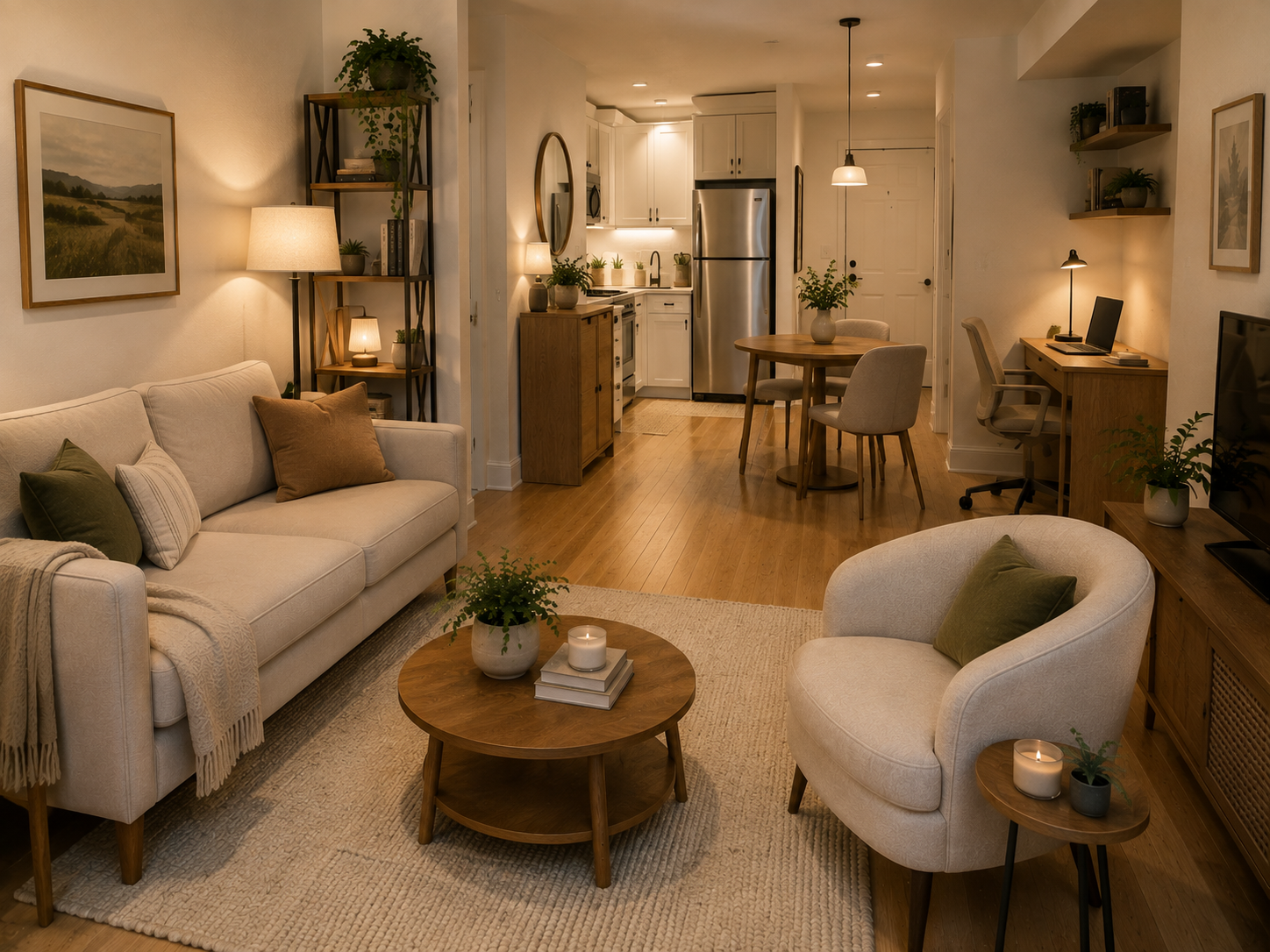
Furnishing a small apartment is less about finding the smallest furniture possible and more about choosing pieces that fit the way you actually live.
A sofa that is only a few inches too deep can make a living room feel cramped. A bed without under-bed storage can leave you short on closet space. And a dining table that permanently occupies four seats’ worth of floor space may be unnecessary if you usually eat alone or as a couple.
The best approach is to furnish the apartment room by room, starting with the largest pieces and working toward the smaller ones.
Quick Answer: How Do You Furnish a Small Apartment?
Start by measuring every room, doorway, window, and major walkway. Then buy your essential furniture in this order:
- Living room seating
- Bed and bedroom storage
- Dining or kitchen seating
- Workspace, if needed
- Storage furniture
- Lighting
- Decorative pieces
Choose furniture that serves more than one purpose whenever possible. A storage ottoman can act as seating and hidden storage. A narrow console can provide storage without taking much floor space. A swivel chair can serve different parts of an open-plan room.
Most importantly, don’t buy furniture simply because it fits the room on paper. Leave enough space to walk comfortably around it.
1. Measure the Apartment Before Buying Furniture
This is the least exciting step, but it can save you from your biggest furniture mistakes.
Measure each room’s length and width, but don’t stop there. Record the width and height of doorways, stairways, elevators, hallways, and any tight turns the furniture has to pass through.
Also mark:
- Windows and doors
- Radiators and vents
- Kitchen counters
- Electrical outlets
- Closet doors
- Main walking routes
- Existing furniture you plan to keep
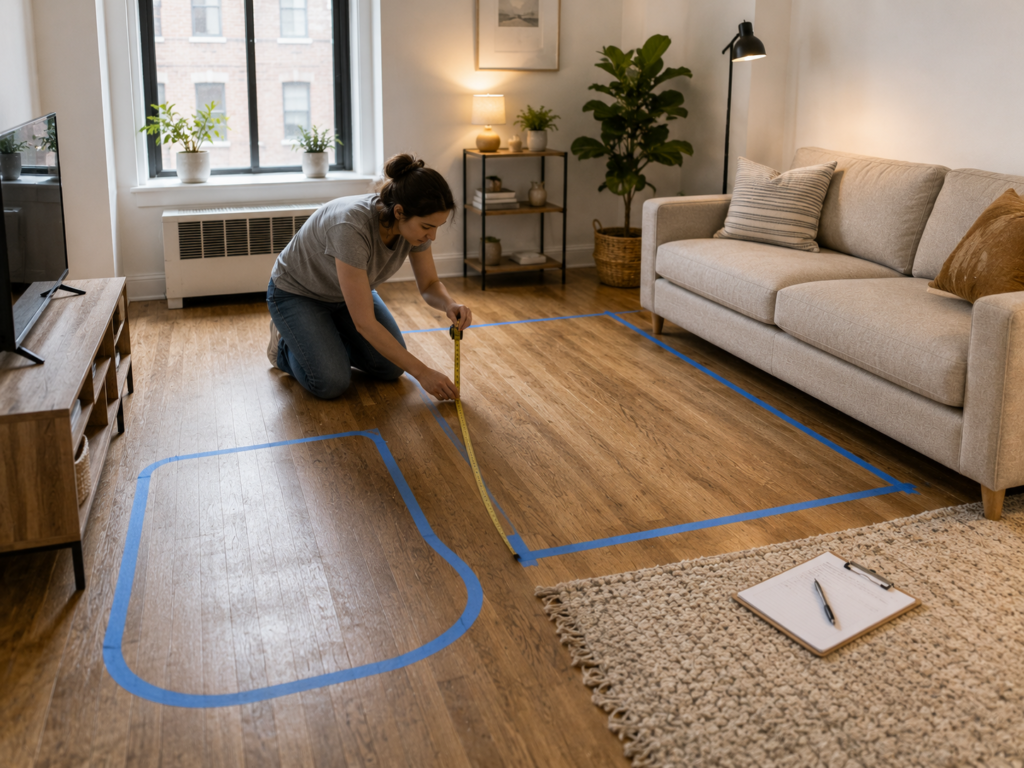
A useful trick is to mark the approximate footprint of large furniture on the floor with painter’s tape before ordering it. You can then walk around the taped area and see whether the proposed layout actually works.
This matters more than choosing a particular decorating style. A beautiful sofa that blocks the only practical route through your living room isn’t a good small-space purchase.
2. Start the Living Room With the Sofa
The sofa usually becomes the largest piece of furniture in a small apartment living room, so choose it before buying the smaller seating.
Instead of automatically choosing a large sectional, measure how much depth you can realistically spare.
A compact sofa with a relatively shallow profile can leave more room for:
- A coffee table
- An accent chair
- A walking path
- A floor lamp
- Storage furniture
If you need a sectional, consider an apartment-sized model rather than assuming a standard sectional will work.
Don’t push the sofa against the wall simply because the room is small, either. Sometimes pulling it a few inches away from the wall creates a better arrangement, although this depends on the room’s dimensions.
A simple sofa test:
Mark the sofa’s proposed footprint with painter’s tape. Then place another tape line where the coffee table would sit.
Walk through the room normally.
If you have to turn sideways every time you walk past the furniture, the layout needs to change.
3. Add One Accent Chair Instead of Two
In many small living rooms, one good accent chair is more useful than a pair of chairs.
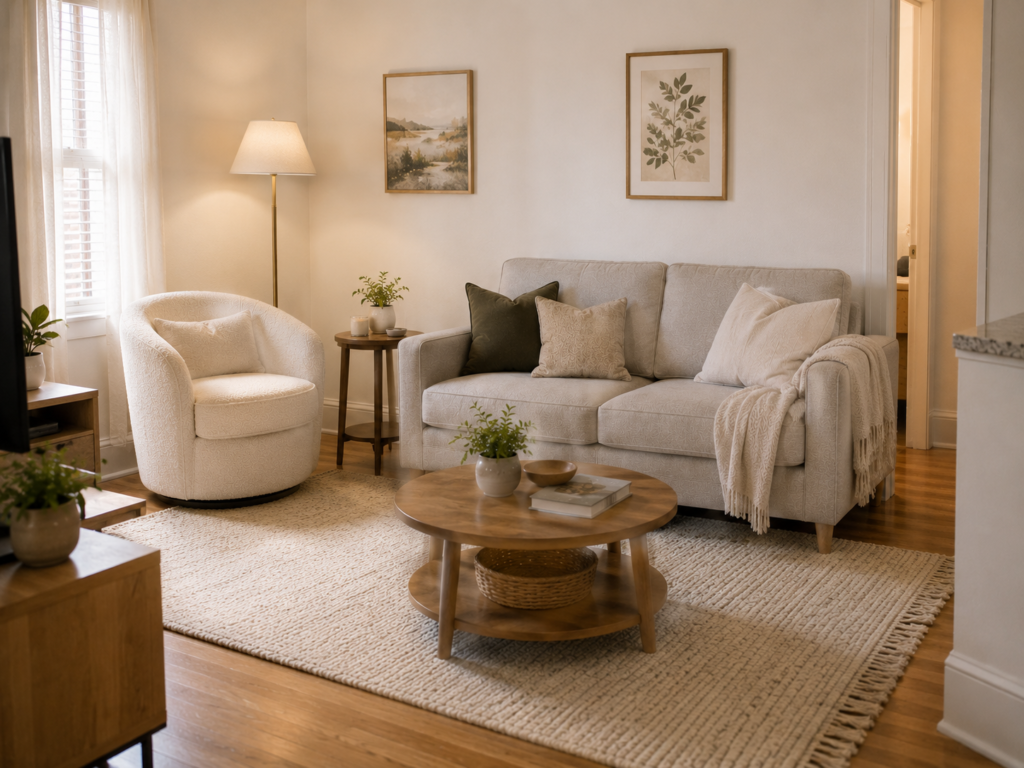
A compact barrel chair can fit into an otherwise unused corner. A mid-century chair with exposed legs can also feel visually lighter than a large fully upholstered armchair. For specific options sized for tight rooms, see our roundup of the best accent chairs for small living rooms.
If the room has several focal points, consider a swivel accent chair. It can face the sofa when you’re talking and turn toward the television or window when you need it.
The important thing is to measure the entire chair footprint, including the depth.
A chair that is 27 inches wide but 34 inches deep can consume more usable space than a slightly wider chair with a shallower profile.
4. Choose a Bed That Doesn’t Waste the Bedroom
The bed is usually the largest object in the bedroom, so its placement deserves careful thought.
If a queen bed fits comfortably, you don’t necessarily need to downsize to a full. But don’t choose a larger mattress simply because you can technically squeeze it into the room.
Think about the space around it.
You still need room to:
- Open closet doors
- Walk around the bed
- Reach the nightstand
- Change bedding
- Access drawers
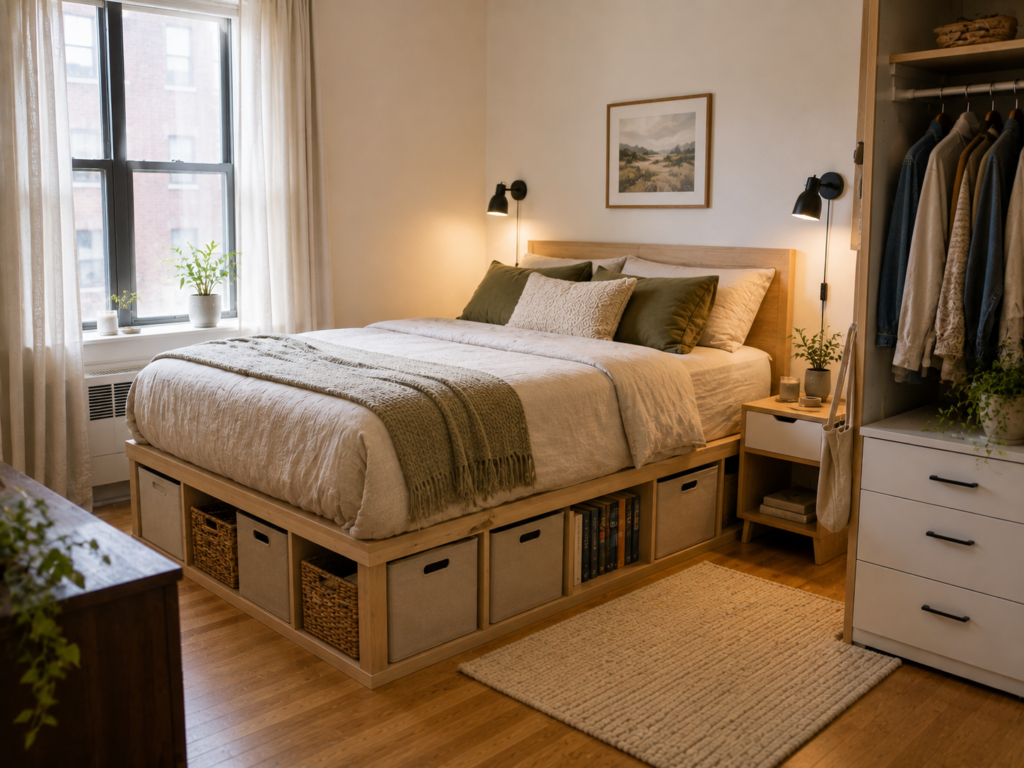
For a particularly small bedroom, under-bed storage can be more useful than a bulky dresser. Once the layout is sorted, our guide to a warm aesthetic cozy bedroom covers how to make the finished room feel inviting rather than just functional.
One Amazon-listed option is the Zinus 14-Inch SmartBase Mattress Foundation, which is designed as a platform-style mattress foundation and provides under-bed storage space.
5. Use the Space Under the Bed
If your bed frame leaves usable clearance underneath, don’t automatically fill the area with random boxes.
Use matching low-profile storage containers so the space remains organized.
Store things you don’t need every day, such as:
- Seasonal clothing
- Extra bedding
- Shoes
- Luggage accessories
- Spare towels
The goal isn’t to turn every empty space into storage. It’s to use hidden areas for things that would otherwise require another piece of furniture.
6. Pick a Dining Table Based on How You Actually Eat
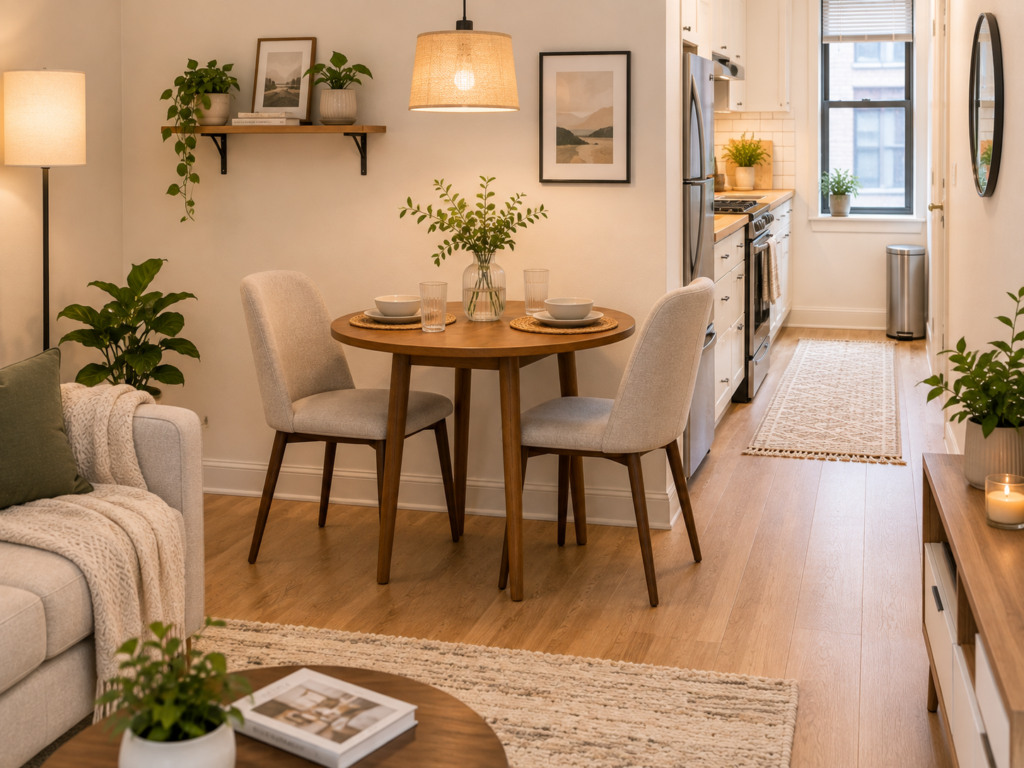
A four-person dining table isn’t automatically the right choice for a two-person apartment.
If you rarely host large dinners, a smaller round table may make more sense. A round shape can also make a compact dining area easier to move around because there are no sharp corners projecting into the walkway.
For extremely limited space, a drop-leaf or folding table can be useful because you can reduce its footprint when you’re not eating.
Don’t buy a dining table based only on its tabletop dimensions. Measure the chairs too.
A table that fits perfectly may become impractical once chairs are pulled out.
7. Make the Kitchen Work With Less Furniture
Small apartment kitchens often don’t need additional freestanding furniture.
Before buying a kitchen cart, island, or cabinet, look at the surfaces and storage you already have.
If you do need extra storage, prioritize a narrow piece with a specific job rather than adding another large cabinet.
For example, a slim rolling cart can hold frequently used kitchen items while remaining movable.
Keep the floor area around the refrigerator, oven, sink, and main work surfaces open. A few extra inches of clearance can make a small kitchen noticeably easier to use.
8. Create a Small Workspace Instead of a Full Home Office
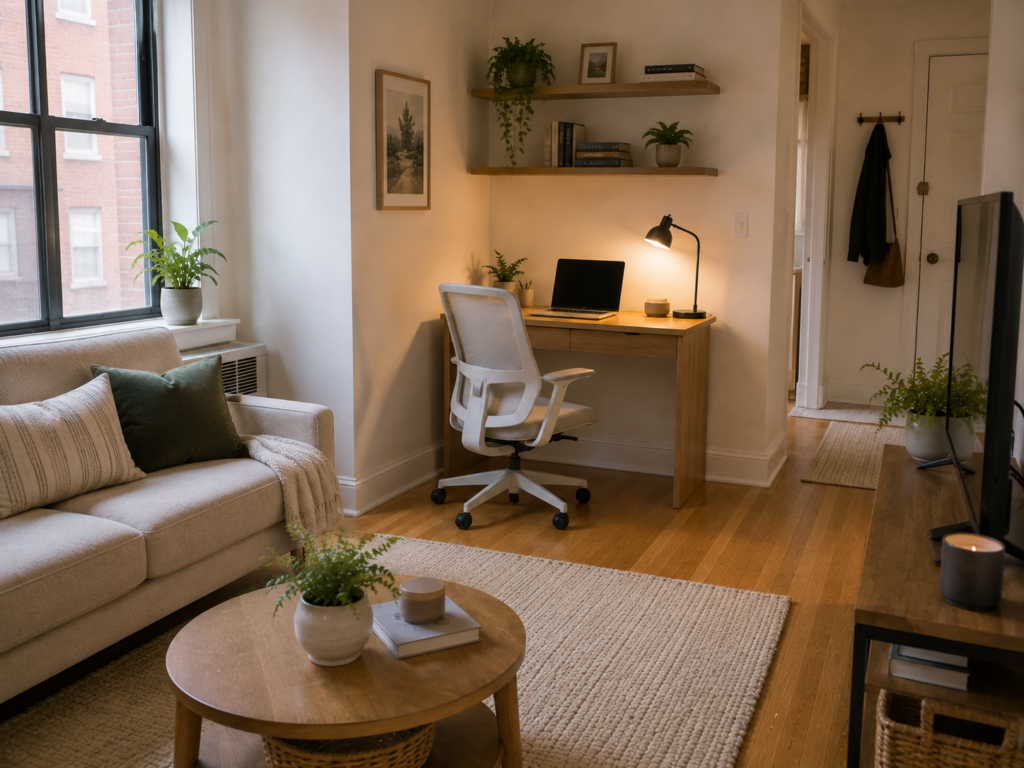
If you work from home, you don’t necessarily need a dedicated office.
A small desk can fit against a living-room wall, inside a bedroom corner, or beside a window.
Look for a desk that is deep enough for your laptop and everyday equipment but doesn’t extend unnecessarily far into the room.
A wall-mounted desk can be useful in extremely tight apartments, but it sacrifices some flexibility. A small freestanding desk is easier to move if you rearrange the room later.
The best location is often the one that allows you to work without turning the rest of the apartment into an office.
9. Use Vertical Space for Storage
When floor space is limited, look upward.
Tall shelving can provide considerably more storage without extending far into the room. For more ideas along these lines, our guide to storage solutions for small apartments covers vertical shelving, multifunctional furniture, and overlooked corners in more depth.
Use vertical storage for:
- Books
- Baskets
- Decorative objects
- Kitchen supplies
- Office materials
- Folded linens
But don’t fill every shelf.
Leaving some open space keeps the room from looking like a wall of storage.
For renters, freestanding shelves are often easier than permanent built-ins because they can be removed or relocated later.
10. Choose Furniture That Does More Than One Job
Multifunctional furniture earns its floor space.
A storage ottoman can work as:
- Footrest
- Extra seat
- Coffee-table surface with a tray
- Blanket storage
A bench can provide seating while also serving as bedroom or entryway storage.
A console table can provide a landing area for keys while hiding storage underneath.
The important distinction is between genuinely useful multifunctional furniture and furniture with features you will never use.
Don’t pay extra for a complicated mechanism if a simple piece solves the same problem.
11. Keep the Entryway Extremely Simple
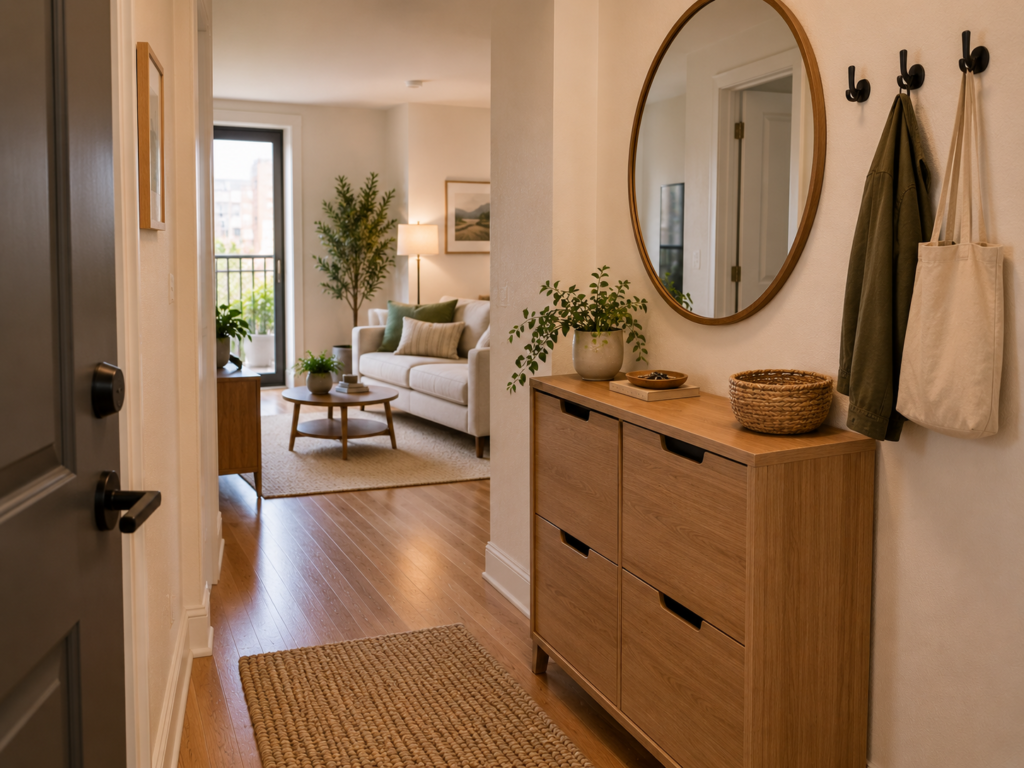
The entrance to a small apartment is easy to overcrowd.
You usually need only a few functions:
- Somewhere to hang coats
- A place for shoes
- A small surface for keys
- A mirror, if useful
A narrow console or slim shoe cabinet can work better than a large entry bench.
If the front door opens directly into the living room, keep the entry furniture shallow enough that it doesn’t make the first few feet of the apartment feel blocked.
12. Use Lighting Instead of More Furniture to Add Atmosphere
Small apartments often become cluttered when people try to create atmosphere with too many decorative objects.
Lighting can do much of that work.
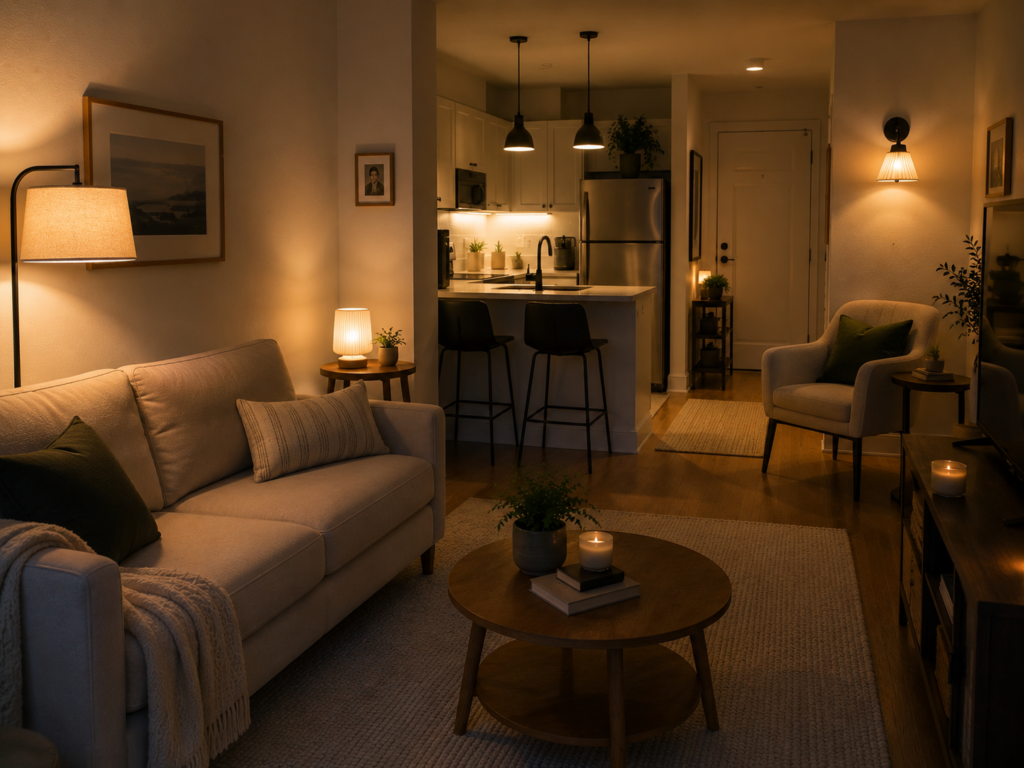
Instead of adding another cabinet or table simply to hold a lamp, consider:
- Floor lamps
- Wall-mounted lights
- Plug-in sconces
- Table lamps on existing surfaces
- Under-cabinet lighting
Layering light also helps separate zones. A floor lamp beside the sofa can visually define the living area, while a small lamp on a desk establishes a workspace.
This gives the apartment more structure without taking much additional floor space.
13. Keep Furniture Away From Important Traffic Paths
A small apartment becomes frustrating when furniture forces you to constantly walk around it.
Identify the routes you use every day:
Front door → living room
Living room → kitchen
Bedroom → bathroom
Bedroom → closet
Keep those paths as direct as possible.
You don’t need to make every walkway look like a hallway. You simply need enough clear space for people to move naturally.
This is also why buying furniture one piece at a time can be smarter than ordering an entire room set at once. Your first major purchase may change what the rest of the room can accommodate.
14. Don’t Match Every Piece of Furniture
A common mistake in small apartments is trying to make every piece match.
That can actually make the room feel more like a furniture showroom.
Instead, coordinate a few elements:
- Similar wood tones
- Repeated upholstery colors
- Complementary metals
- One consistent color palette
For example, a beige sofa can work with a natural-wood accent chair and a darker wood side table without everything being from the same collection.
The room feels more collected, while the furniture still works together.
15. Furnish in Stages Instead of Buying Everything at Once
You don’t need to finish the apartment in one shopping trip.
Start with the pieces you genuinely need.
Stage 1: Essentials
Buy the bed, sofa, dining solution, and any essential storage.
Stage 2: Function
Add an accent chair, desk, lighting, or additional storage where the room actually needs it.
Stage 3: Personality
Only after the layout works should you add artwork, plants, decorative objects, pillows, and other finishing touches.
This approach also protects your budget. You may discover that the empty corner you thought needed a cabinet actually works better with a chair and floor lamp.
A Simple Small-Apartment Furniture Checklist
Before buying any large piece, ask:
- Will it fit through my door?
- Will it fit in the room?
- Will I still have a comfortable walking path?
- What else needs to fit beside it?
- Does it solve a real problem?
- Can another piece perform the same job?
- Will I still like it if I move apartments?
- Is the material practical for how I use it?
That last question matters more than people think. A beautiful pale fabric chair may not be the smartest choice for a household that expects heavy daily use.
FAQs
What furniture should I buy first for a small apartment?
Start with the largest essential pieces: usually the bed, sofa, and dining solution. Measure the apartment before buying anything and build the rest of the room around those pieces.
How do I make a small apartment look less cluttered?
Reduce the number of large furniture pieces, keep walking paths clear, use vertical storage, and avoid filling every surface with decorations. Storage that closes away everyday clutter can also make a noticeable difference.
Should furniture be against the wall in a small apartment?
Not always. Sometimes placing furniture slightly away from a wall creates a better layout. The correct choice depends on the room’s dimensions and traffic paths.
What furniture is best for a small apartment?
Furniture that fits the room without compromising movement is the priority. Pieces with more than one useful function—such as storage ottomans, compact desks, and beds with usable under-bed space—can be particularly helpful.
Is a sectional sofa a bad idea for a small apartment?
Not necessarily. An apartment-sized sectional can work well, but a large deep sectional can quickly consume the usable floor area. Measure the complete sectional footprint before buying.
Conclusion
Learning how to furnish a small apartment is really an exercise in prioritizing space.
Start with measurements. Choose the largest essential furniture carefully. Keep major walking routes open. Use vertical and hidden storage where it makes sense, and choose multifunctional pieces only when their extra function is genuinely useful.
You also don’t have to finish the apartment immediately. A small home usually looks better when you buy fewer pieces that fit properly than when you try to fill every empty corner.
The goal isn’t to make the apartment look bigger than it is. The goal is to make every part of the space work well.