
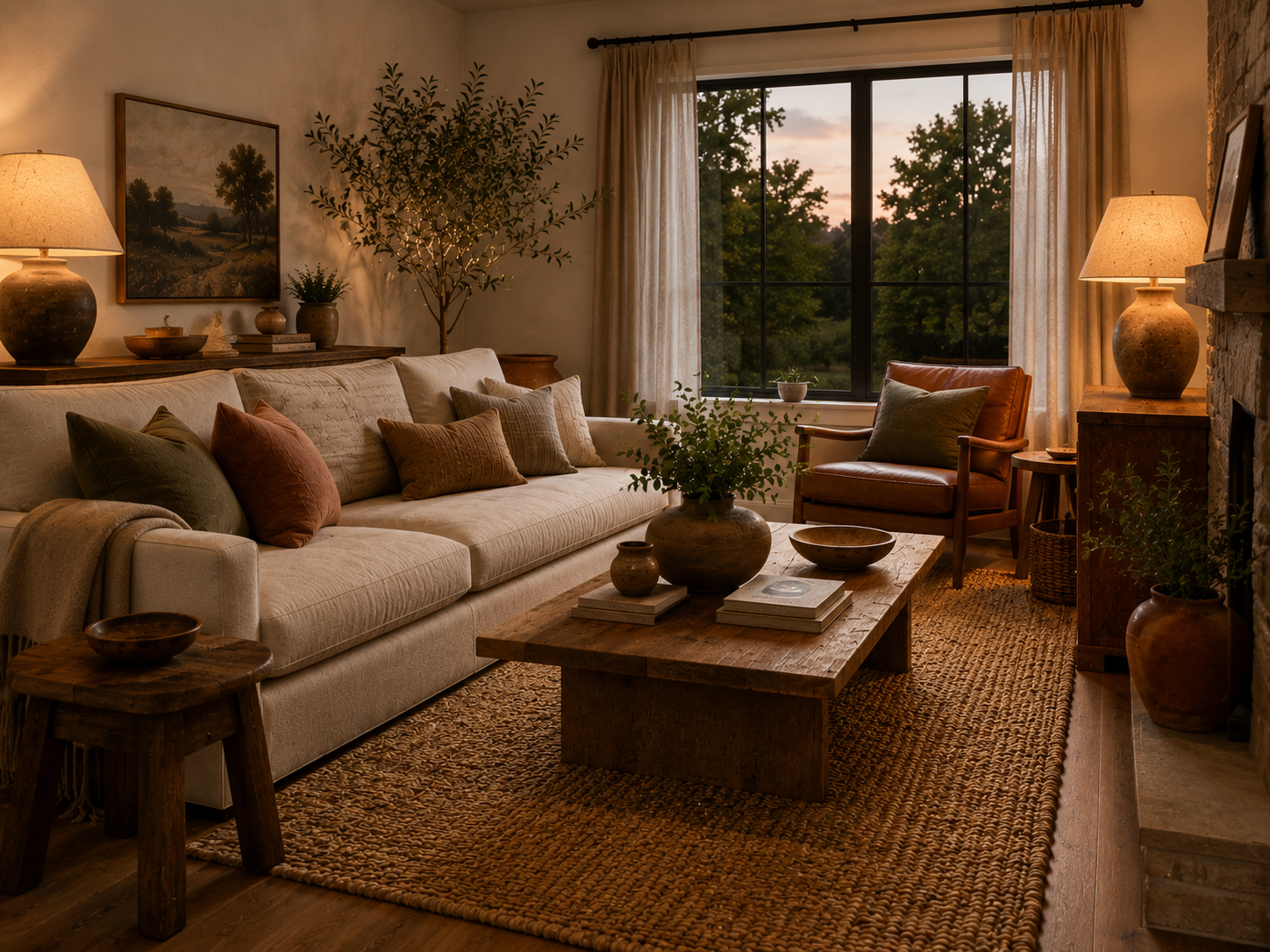
An earthy living room doesn’t have to look rustic, dark, or filled with plants.
The look works best when the room feels warm, comfortable, and natural without looking overly decorated. Think warm whites, clay and brown tones, natural wood, linen, woven textures, soft lighting, and a few pieces with visible character.
The important part is balance. Too many brown tones can make a room feel heavy, while too much beige can make it look flat.
Here’s how to create an earthy living room that still feels fresh and livable.
Quick Answer: What Makes a Living Room Feel Earthy?
An earthy living room usually combines natural materials, warm colors, comfortable furniture, and layered textures.
You don’t need to replace everything in the room. Start with the largest visual elements—the sofa, rug, walls, and flooring—then introduce smaller earthy details through wood, ceramics, woven baskets, plants, artwork, and lighting.
A simple palette might look like:
- Warm white or cream
- Beige and oatmeal
- Natural oak or walnut
- Warm brown
- Terracotta or clay
- Muted olive or sage green
- Black or dark bronze in small amounts
The goal isn’t to use every color. Pick three or four main tones and repeat them around the room.
Start With a Warm Neutral Base
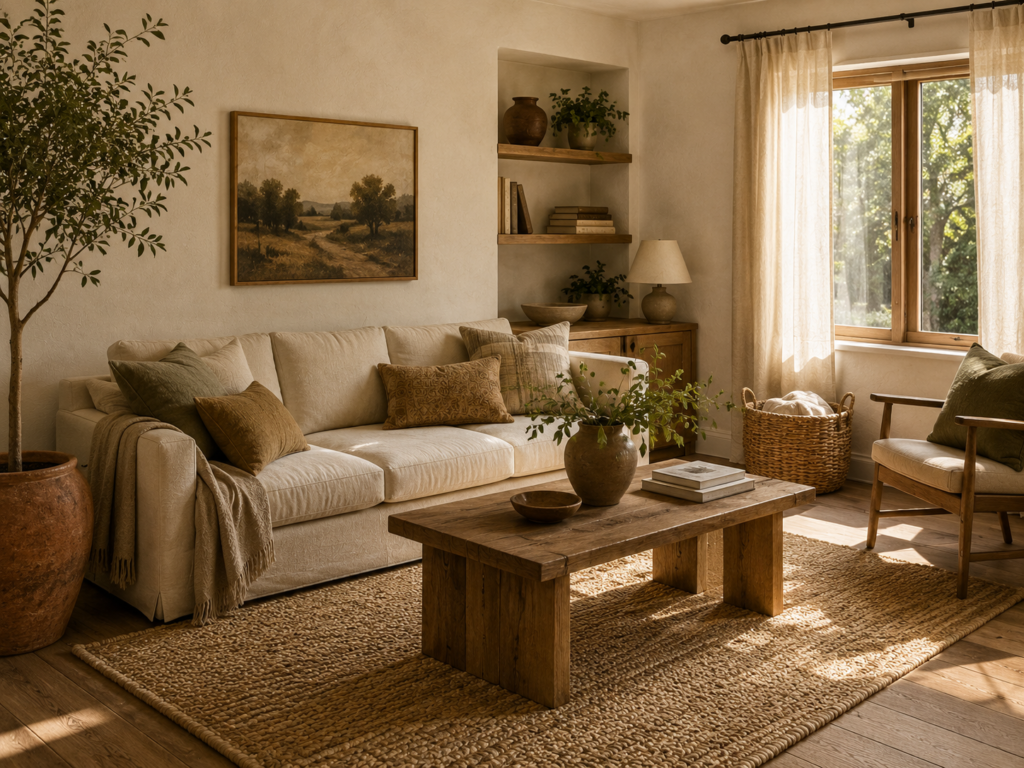
If your living room already has white or light walls, you don’t necessarily need to repaint them.
Instead, soften the room with warmer furnishings and materials.
A cream sofa, oatmeal rug, natural wood furniture, and linen curtains can make a cool-looking room feel much warmer without changing the walls.
If you’re choosing paint, avoid automatically reaching for a dark brown. A warm off-white, creamy beige, mushroom, or soft taupe can provide an earthy background while keeping the room bright.
Don’t Make Everything Beige
This is one of the easiest mistakes to make.
An earthy living room needs some contrast.
For example:
Cream sofa + oak table + brown leather chair + olive pillow
will usually feel more interesting than:
Beige sofa + beige rug + beige curtains + beige walls.
Use darker wood, muted green, terracotta, charcoal, or aged metal in small doses to give the room some definition.
Bring in Natural Wood
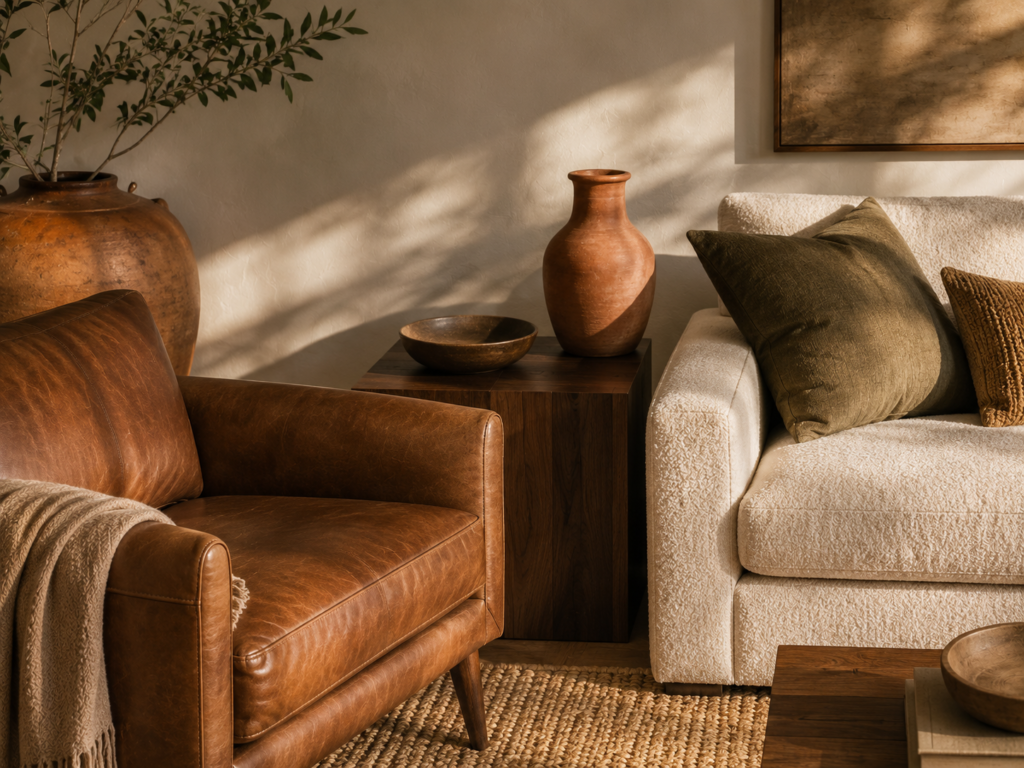
Wood is one of the easiest ways to make a living room feel more connected to nature.
You don’t need matching wood furniture everywhere.
In fact, mixing wood tones can make the room feel more collected and less like a furniture showroom.
Try combining:
- Light oak coffee table
- Medium-toned wood console
- Darker walnut accent piece
- Woven rattan basket
Keep the finishes relatively simple. Very glossy furniture can fight against the relaxed quality you’re trying to create.
For a small living room, a wooden coffee table with a slim frame can add warmth without making the center of the room feel heavy.
Layer Texture Instead of Adding More Decor
Texture is what keeps an earthy living room from looking flat.
A room with mostly neutral colors can still feel rich if the surfaces are different.
Think:
Linen + wool + wood + jute + ceramic + cotton
rather than adding another decorative object every time the room feels empty.
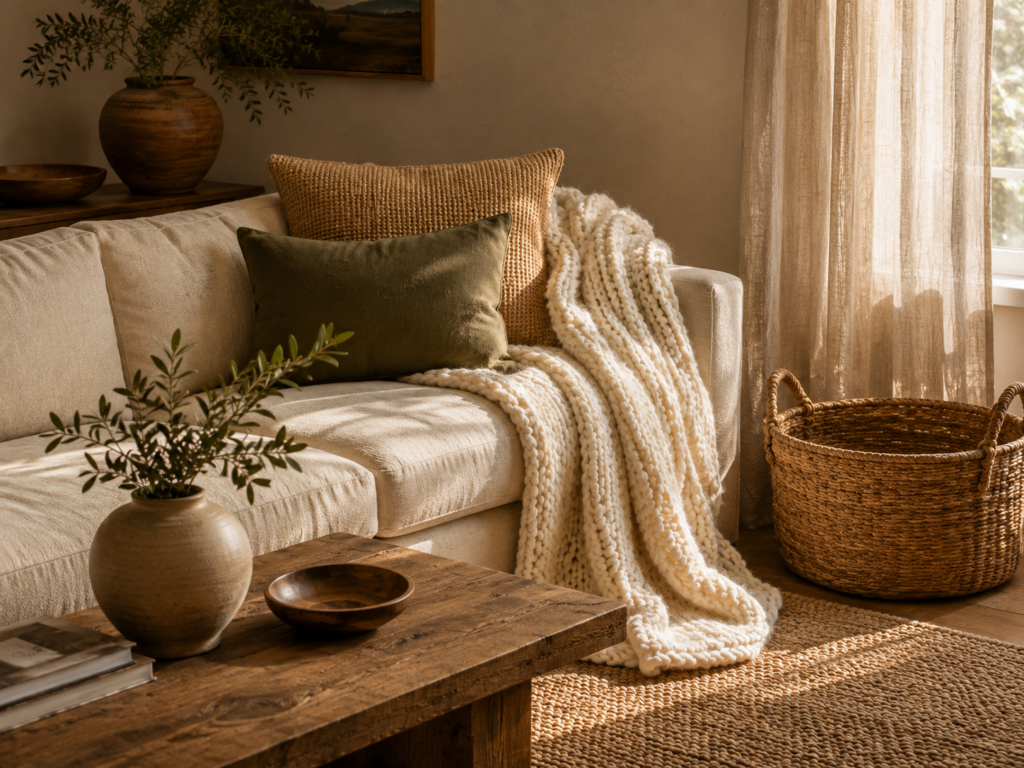
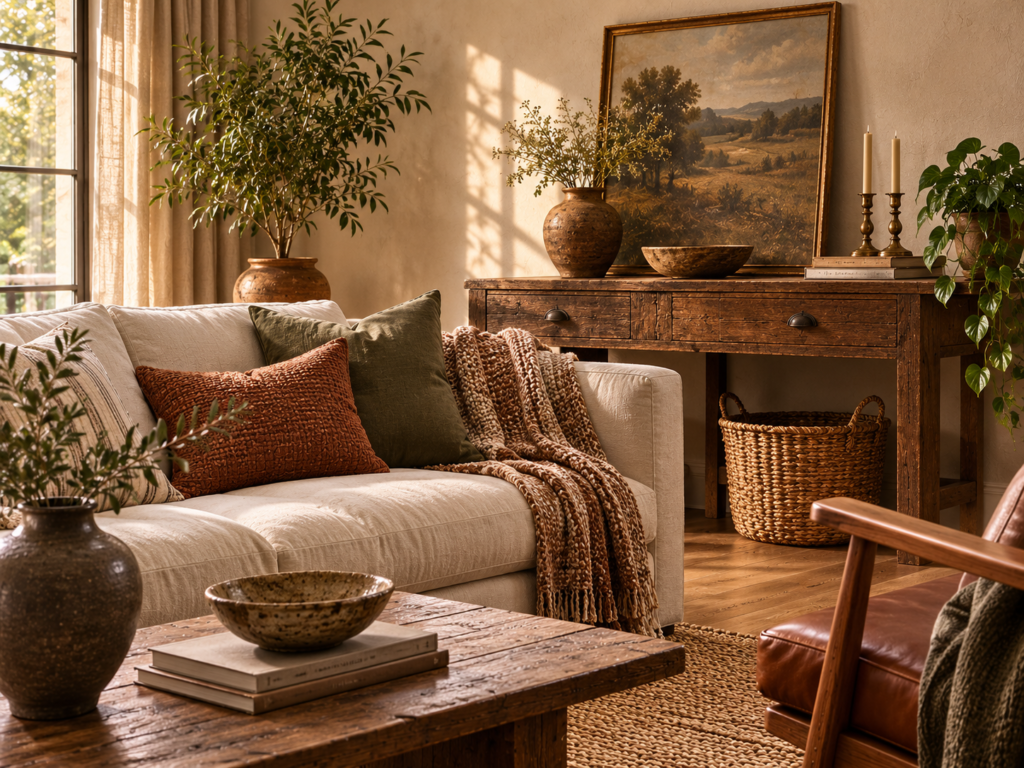
A chunky throw on the sofa, woven rug under the coffee table, linen curtains, and a ceramic vase may do more for the room than a shelf filled with small accessories.
Use Texture at Different Heights
Don’t put all the texture on the sofa.
Spread it around the room.
- Rug on the floor
- Wood at coffee-table height
- Fabric on the sofa
- Curtains around the windows
- Artwork on the walls
- Woven or ceramic accessories on shelves
This creates visual depth without making the room busy.
Choose Comfortable Furniture With Natural Materials
An earthy living room should feel comfortable enough to actually use.
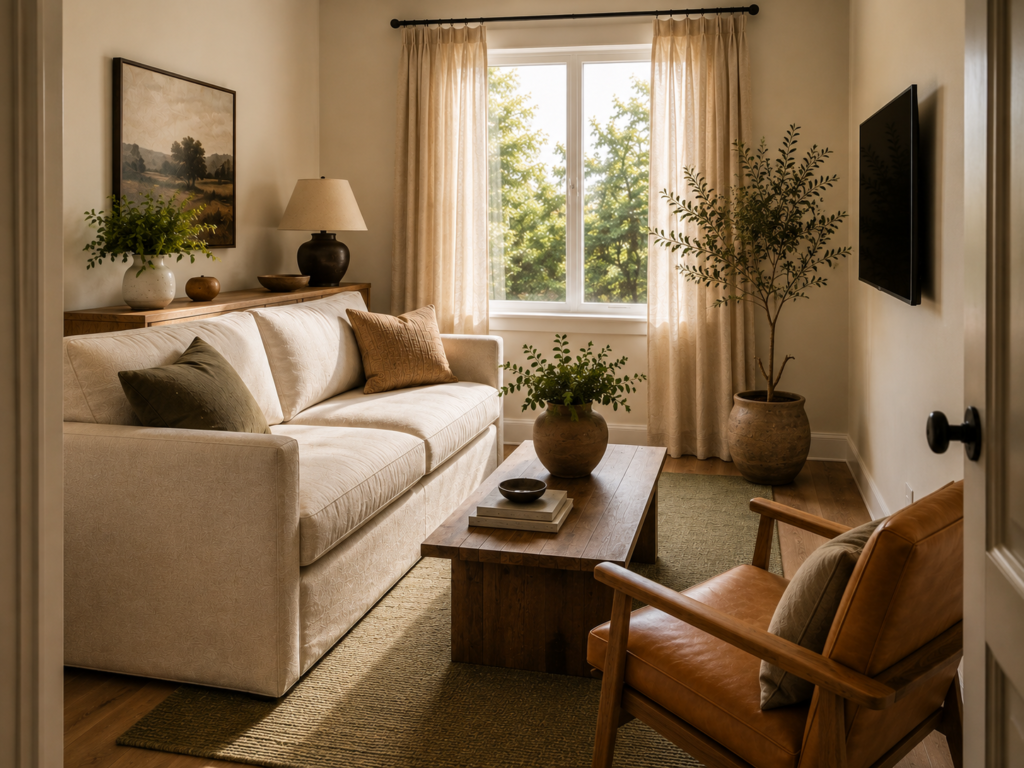
A deep sofa in linen, cotton, or a textured upholstery can work well as the main anchor.
Then add one or two contrasting pieces rather than filling the room with matching furniture.
For example:
- Cream sofa
- Natural wood coffee table
- Brown leather accent chair
- Woven ottoman
- Slim wood console
Be Careful With Oversized Furniture
Earthy style often looks beautiful in large rooms, but oversized furniture can overwhelm a smaller living room.
Leave enough space to walk naturally between the sofa, coffee table, doors, and other seating.
As a practical starting point, leave roughly 14–18 inches between the sofa and coffee table when the room allows it. The exact distance depends on the furniture and how you use the space.
In a small living room, choose a visually lighter coffee table or a compact accent chair rather than trying to squeeze in a full-size sectional and multiple chairs.
Add Greenery, But Keep It Simple
Plants work naturally with an earthy palette, but you don’t need a jungle.
One large plant beside a sofa or two smaller plants on a console can be enough.
Choose planters that continue the material story of the room:
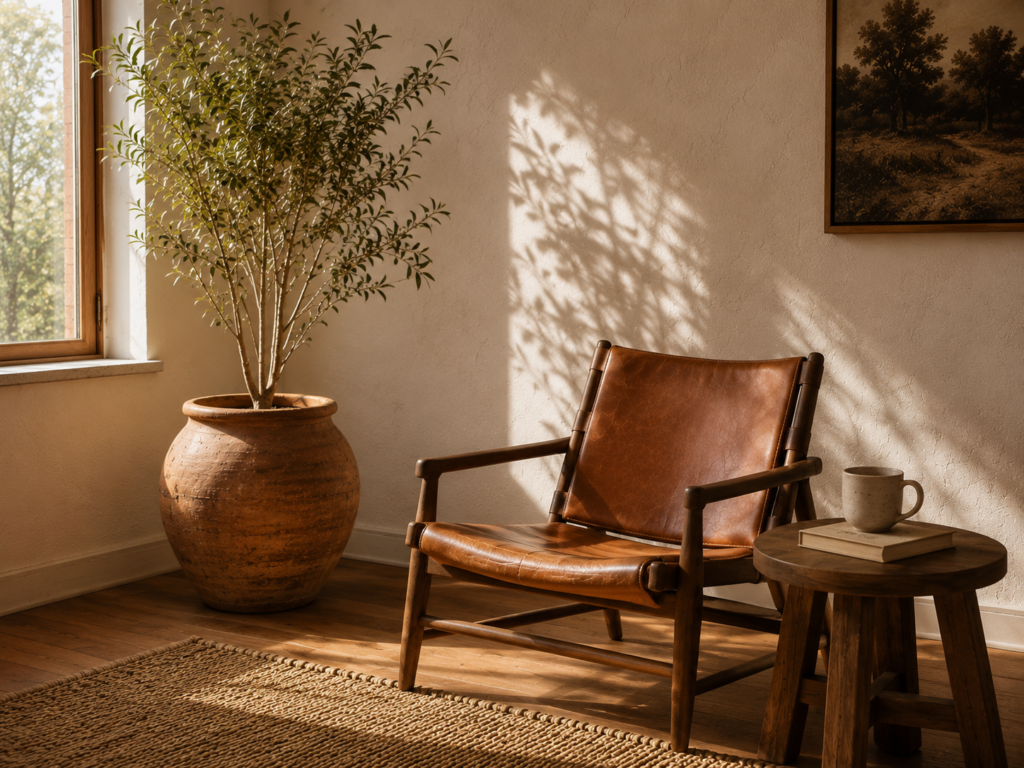
- Terracotta
- Stone
- Ceramic
- Woven baskets
If you don’t have good natural light, don’t buy plants simply because they look good in photographs. Choose varieties appropriate for the actual light conditions in your room, or skip them and use branches, dried stems, or artwork instead.
Use Warm Lighting at Night
A beautiful earthy living room can still feel cold at night if the only light comes from a bright ceiling fixture.
Use several smaller sources instead.
A simple combination is:
Floor lamp + table lamp + overhead light
This gives you more control over the mood.
Place a floor lamp beside the sofa or reading chair, and use a table lamp on a console or side table.
Warm-toned bulbs generally work better for this style than harsh, cool-looking light.
You can also use a lamp with a fabric, paper, ceramic, or natural-material shade to add another layer of texture.
Add Vintage or Handmade Pieces
Earthy rooms usually benefit from a few pieces that don’t look brand new.
A vintage wooden stool, old landscape painting, handmade ceramic bowl, antique-style mirror, or woven basket can add character.
You don’t need an entire vintage living room.
One or two imperfect pieces are often enough to make a newer sofa and coffee table feel more personal.
This is also a good way to control your budget. Instead of buying expensive decor for every surface, spend more on the pieces you use every day and look for character pieces secondhand.
Keep the Decor Edited
This style works best when the room has some breathing space.
Instead of decorating every shelf and tabletop, choose a few objects that have different shapes and textures.
A coffee table might only need:
- One ceramic bowl
- One small stack of books
- A natural object such as a branch or stone
That’s enough.
If every surface has a basket, vase, candle, plant, and decorative object, the natural aesthetic can quickly become visual clutter.
How to Create an Earthy Living Room on a Budget
You don’t need to replace the entire room.
Start with the pieces that have the biggest visual impact.
Low-cost changes:
- Add warm-toned cushions
- Replace cool curtains with linen-look curtains
- Add a textured throw
- Use a secondhand wooden side table
- Add a terracotta planter
- Change harsh lighting
- Introduce a natural woven basket
Bigger changes:
- Replace the rug
- Reupholster or replace the sofa
- Paint the walls a warmer neutral
- Replace a large coffee table with a lighter wood design
If your current sofa is comfortable and in good condition, keep it. You can often change the personality of the room around the sofa rather than replacing an expensive piece just to follow a decorating trend.

Frequently Asked Questions
What colors work best in an earthy living room?
Warm white, cream, beige, brown, terracotta, muted olive, sage, and natural wood tones all work well. You don’t need to use all of them. Choose a few colors and repeat them throughout the room.
How do I make my living room look earthy without making it dark?
Start with a light warm-neutral base and introduce darker earthy tones through furniture, pillows, artwork, and accessories. Good natural and layered lighting also helps keep the room from feeling heavy.
Can an earthy living room be modern?
Absolutely. An earthy living room doesn’t have to be rustic. Clean-lined furniture, simple shapes, warm wood, linen, stone, and restrained colors can create a modern earthy look.
How do I make a small living room earthy?
Keep the main furniture visually light, use a warm neutral base, add natural wood and textured fabrics, and avoid too many accessories. A large rug can help define the seating area, while a slim coffee table keeps the center of the room open.
Conclusion
The best earthy living room isn’t created by buying a room full of “earthy” decor.
Start with a warm color palette, add natural wood, layer a few different textures, introduce comfortable furniture, and use lighting to create warmth after dark.
Then stop before the room becomes cluttered.
A little contrast and a few imperfect, personal pieces will usually make the space feel more natural than a room where everything matches perfectly.