
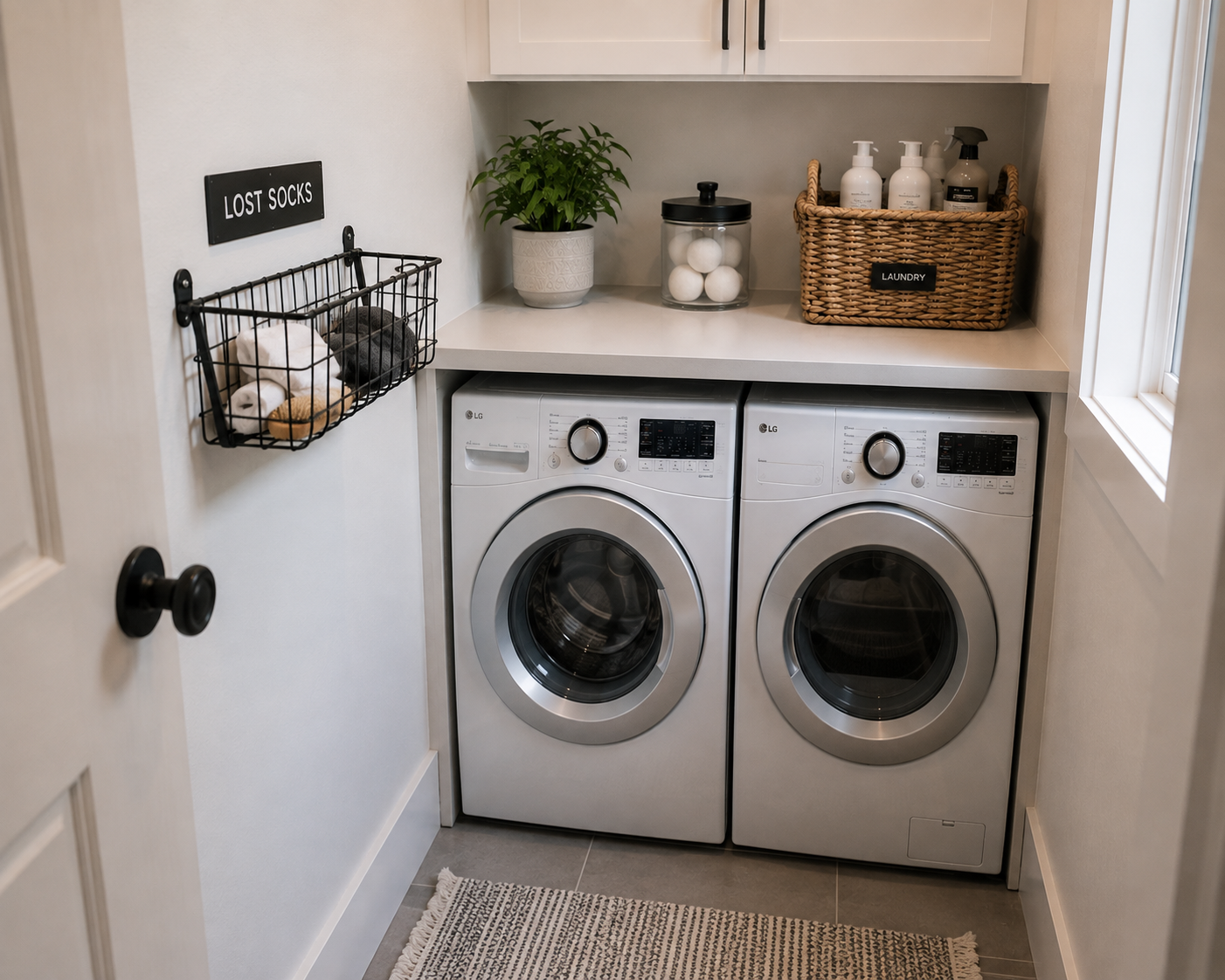
The quickest way to improve a small laundry room is to use the walls and dead spaces around the machines before replacing anything. A few shelves, hooks, better lighting, and a proper folding surface can make a cramped laundry area dramatically easier to use without a full renovation.
These DIY small laundry room ideas focus on changes you can actually complete without tearing out cabinets or moving plumbing.
1. Add a Shelf Above the Washer and Dryer
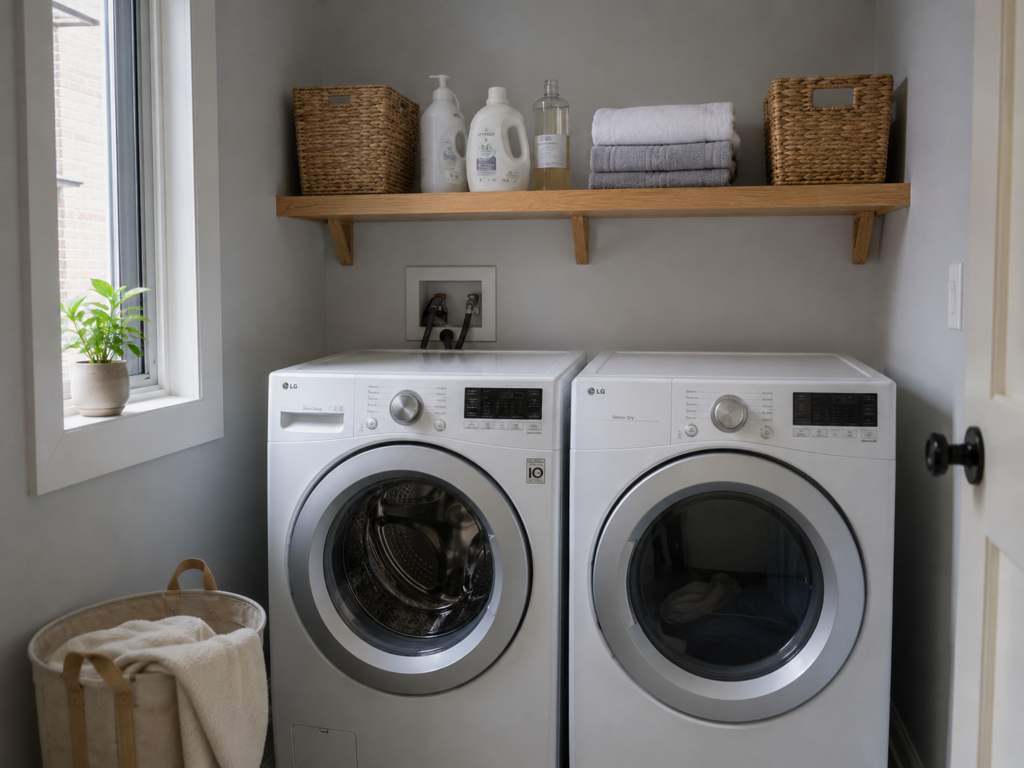
The wall above the machines is prime storage space.
Install a sturdy shelf for detergent, stain removers, baskets, and cleaning supplies. A shelf around 10–12 inches deep gives you useful storage without projecting too far into a narrow room.
For a simple ready-made option, you can browse laundry room wall shelves on Amazon.
2. Turn the Side of a Cabinet Into Storage
That narrow cabinet side doesn’t need to remain empty.
Attach a few sturdy hooks for reusable laundry bags, cleaning brushes, dusters, or a small ironing board.
A few dollars spent on hooks can solve a surprisingly annoying storage problem.
3. Install a Fold-Down Drying Rack
A wall-mounted drying rack gives you drying space without permanently occupying the floor.
Choose a folding model that closes flat against the wall. Mount it where airflow is good and where wet clothes won’t block the machines.
You can see folding wall-mounted drying racks on Amazon if you need a compact option.
4. Create a Countertop Over Front-Load Machines
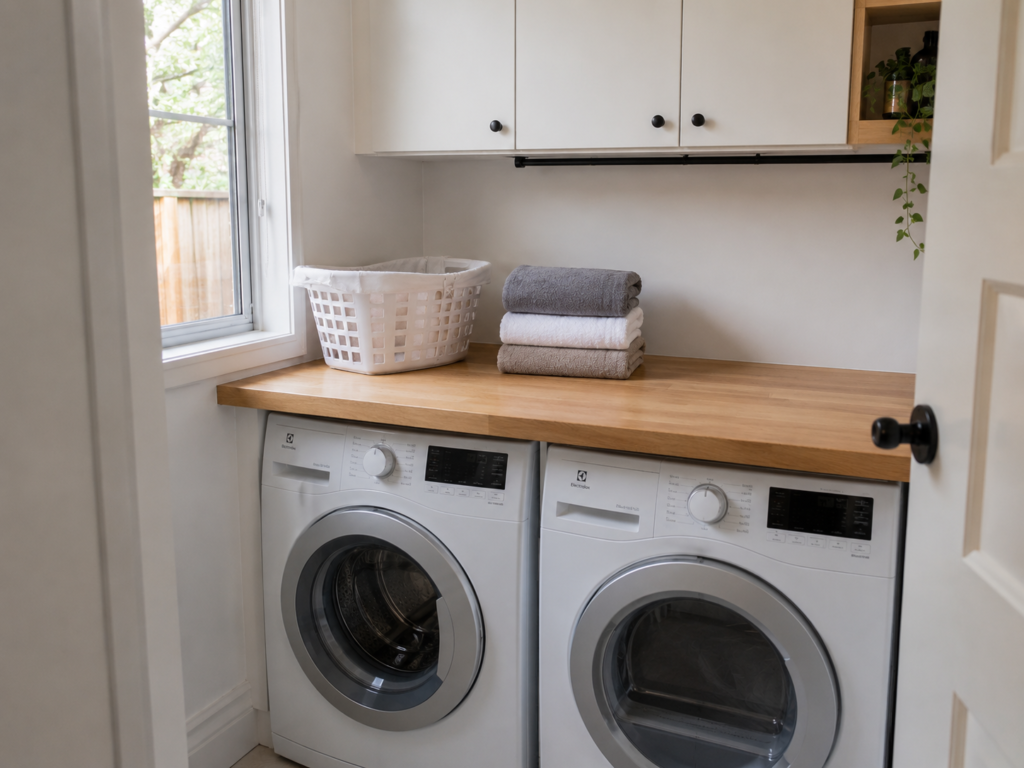
Front-load washers and dryers provide an opportunity for one of the most useful DIY upgrades: a folding counter.
A properly secured countertop above the machines gives you a place to fold clothes, sort laundry, or temporarily place baskets.
Use a removable or properly supported top rather than simply balancing a board on the appliances.
5. Add a Pegboard
A pegboard turns one empty wall into flexible storage.
Use hooks for scissors, brushes, lint rollers, reusable bags, and small cleaning tools. Add small baskets for clothespins and laundry accessories.
The biggest advantage is that you can move the hooks when your storage needs change.
6. Use the Space Behind the Door
The back of the laundry-room door is another forgotten surface.
An over-door organizer can hold stain remover, dryer sheets, cleaning cloths, and smaller supplies.
For lightweight items, browse over-the-door laundry organizers on Amazon.
Keep heavier bottles on a properly supported shelf instead of loading a lightweight fabric organizer with too much weight.
7. Make a Small Ironing Station
An ironing board doesn’t need its own floor space.
Install two strong hooks behind the door or beside the washer and hang the board vertically.
Keep the iron nearby in a heat-safe storage solution and never leave it plugged in while unattended.
8. Add Pull-Out Bins Under a Counter
Open baskets work, but pull-out bins make sorting much easier.
Use one bin for whites, one for dark clothing, and another for towels.
Label them clearly so everyone in the household follows the same system.
9. Paint the Room Instead of Remodeling It
A fresh coat of paint is one of the cheapest ways to change the room’s appearance.
For a bright laundry room, Benjamin Moore White Dove gives cabinets and walls a clean, soft look. For something more dramatic, Sherwin-Williams Evergreen Fog works well on a feature wall or lower cabinets.
Don’t automatically choose pure white. A slightly warmer color makes a utility room feel less sterile.
10. Replace the Cabinet Handles
Old handles can make perfectly usable cabinets look dated.
Replacing them requires little DIY skill and gives the room an immediate refresh.
I’d skip overly decorative handles here. Simple black, brushed nickel, or brushed brass pulls will age better than novelty hardware.
11. Install a Narrow Wall-Mounted Basket
A small basket mounted near the machines gives lost socks, cleaning cloths, or dryer accessories a temporary home.
Use a metal or ventilated basket for anything that might still be damp.
12. Create a Detergent Station
Instead of leaving multiple detergent bottles on the floor, create one dedicated shelf or tray.
Keep detergent, stain remover, measuring cups, and laundry bags together.
For a small setup, browse laundry detergent storage organizers on Amazon.
If you transfer products into containers, keep the original labels or clearly identify the contents.
13. Add Better Lighting
Laundry rooms frequently get stuck with one dim ceiling fixture.
A rechargeable or hardwired LED light under a shelf can illuminate the folding and sorting area.
Good lighting also makes it easier to spot stains before clothes go into the dryer.
14. Use the Gap Beside the Machines
A narrow gap beside the washer or dryer is perfect for a slim rolling cart.
Use the upper levels for detergent and dryer accessories and the lower section for cleaning supplies.
Measure the gap first. A cart that is even an inch too wide becomes useless.
15. Create a Small Lost-Sock Basket
This sounds minor, but it solves an annoying everyday problem.
Place a small basket or container near the dryer for unmatched socks. When its contents grow, pair them up and return them to the drawers.
It takes almost no space and prevents random socks from accumulating on top of the machines.
A Simple DIY Plan for a 5×6-Foot Laundry Room
Imagine a 5×6-foot laundry room with a washer and dryer along one wall and barely enough space to stand in front of them.
Don’t add a cabinet in the middle.
Instead, install a shelf above the machines, create a countertop over front-load units, mount a drying rack on the opposite wall, and use the door for the ironing board.
That combination adds storage, folding space, and drying capacity without reducing the walkway.
What Should You DIY and What Should You Leave Alone?
Painting, shelves, hooks, pegboards, baskets, cabinet hardware, and simple storage upgrades are reasonable DIY projects for many homeowners.
Electrical changes, plumbing modifications, gas connections, and structural work are different. Hire a qualified professional when the project involves those systems rather than treating a laundry-room makeover as a purely cosmetic job.
FAQ
How much does a DIY laundry room makeover cost?
A basic refresh using paint, shelves, hooks, baskets, and hardware can stay relatively inexpensive. The cost rises quickly once you add countertops, custom cabinetry, electrical work, or new appliances.
What is the best material for a laundry room countertop?
Choose a moisture-resistant, durable material that fits your budget. Laminate is practical and affordable, while solid wood gives a warmer DIY appearance but requires proper sealing and maintenance.
How do I hide exposed washer and dryer hoses?
A removable shallow cabinet, countertop surround, or properly designed utility panel can conceal hoses while keeping access available for maintenance. Never permanently seal off plumbing connections.
Should a laundry room have a utility sink?
A utility sink is valuable for soaking stained clothes, washing cleaning tools, and handling messy jobs. Adding one during a renovation makes more sense than forcing one into a finished room later because plumbing and drainage are involved.
Final Takeaway
The biggest DIY laundry-room mistake is filling the floor with storage furniture—use the walls, door, and space above the machines first, then add floor storage only where you still have a genuine need.