
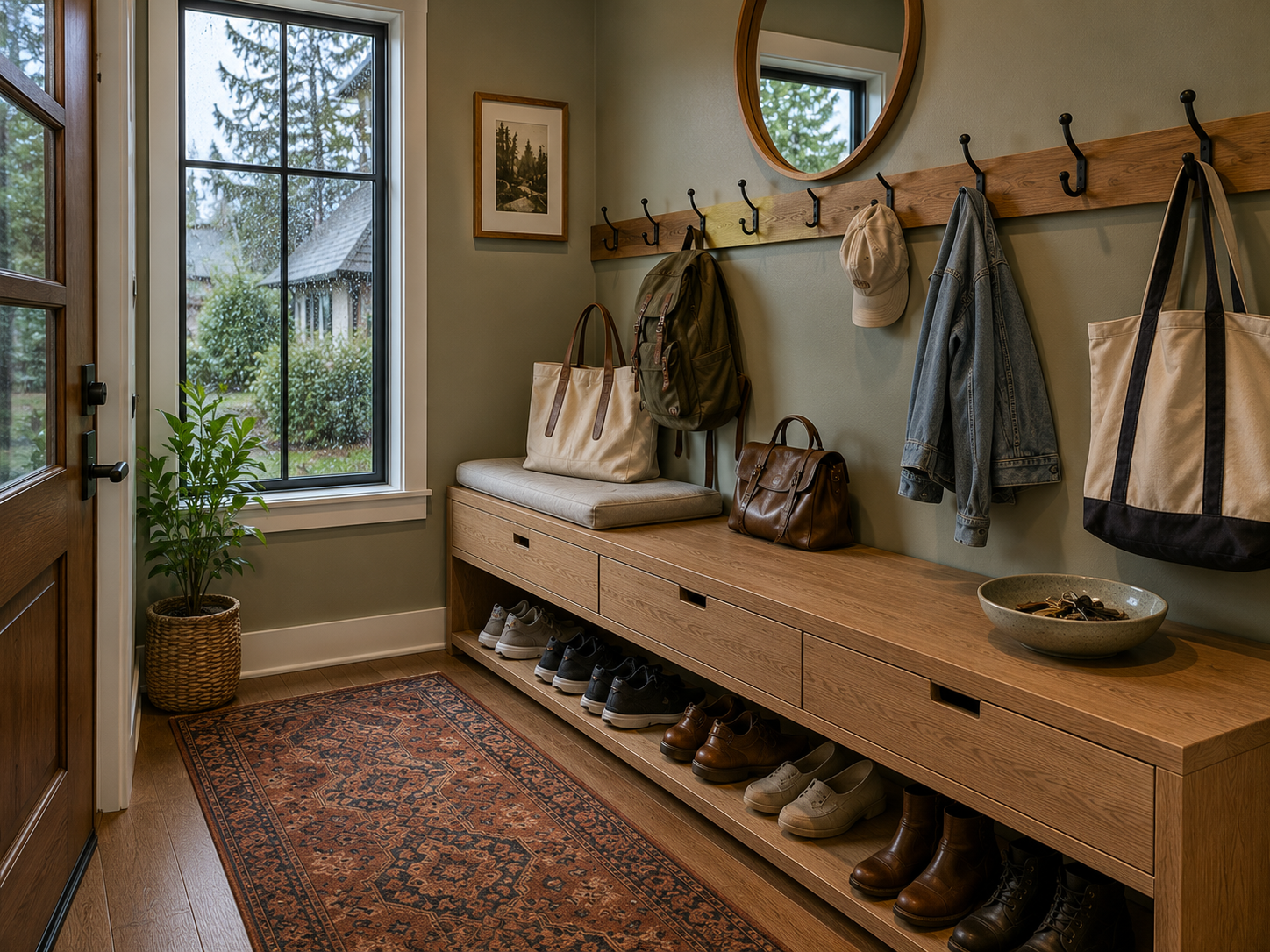
The right entryway table with shoe storage does two jobs at once: it gives you a place to drop keys and bags while keeping the shoes that normally collect by the door under control.
That sounds simple, but the wrong piece creates a new problem. A deep console eats into a narrow hallway. An open shoe rack makes the entrance look messy. A beautiful cabinet with tiny compartments becomes useless when your family wears bulky sneakers and boots.
So don’t shop by appearance alone.
For this list, I focused on different real-life situations: narrow hallways, apartments, families, renters, hidden storage, farmhouse interiors, modern spaces, and homes where shoes and bags need to live together.
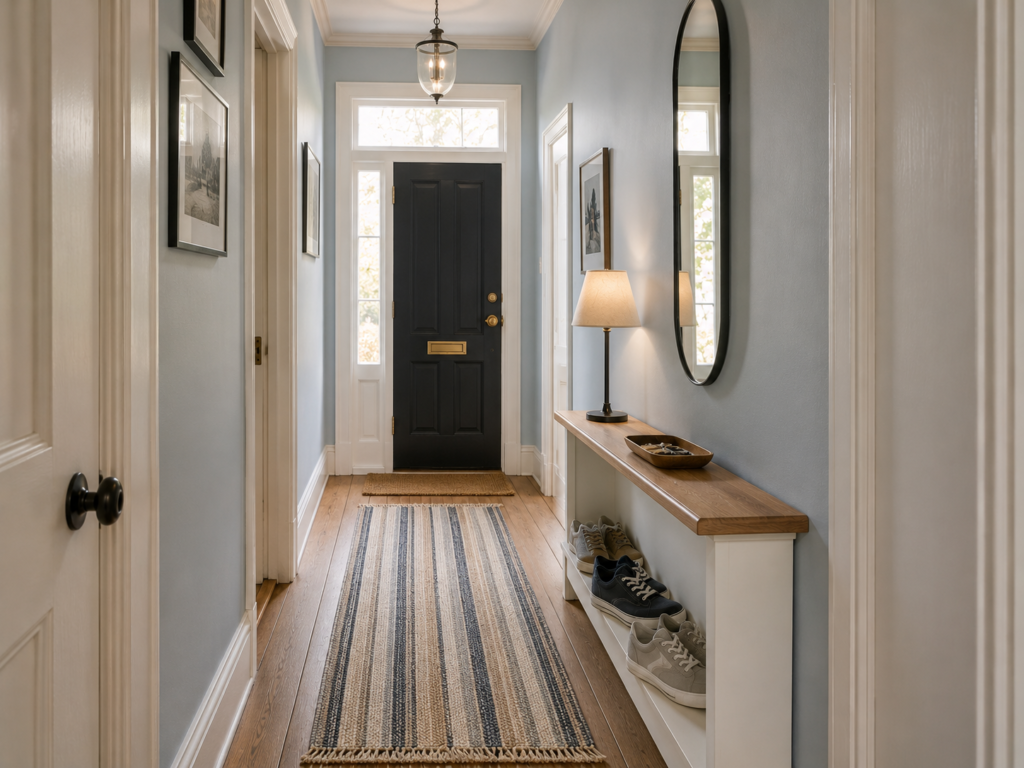
Quick sizing rule: For a narrow hallway, I’d look for an entryway piece around 10–14 inches deep before considering anything wider. You want enough room for storage without turning the entrance into an obstacle course.
Note: Amazon prices, colors, availability, and seller information change. Check the current Amazon.com listing before purchasing.
1. VASAGLE CUSTOS Shoe Storage Bench — Best for a Narrow Hallway
The VASAGLE CUSTOS is a strong choice when your entryway is long but shallow. Its approximately 11.8-inch depth makes it easier to fit against a hallway wall without creating the bulky look of a conventional console.
The useful part is the combination of seating and shoe storage. You can sit down to put on shoes while keeping everyday pairs underneath.
I like this style for apartments and older homes where every inch of hallway matters.
Why I’d pick it: The shallow footprint is more important than having a giant storage compartment when your hallway is tight.
Watch for: Measure the hallway width after accounting for doors that open into the space.
2. HOOBRO 39.4-Inch Shoe Storage Bench — Best for Families With Lots of Shoes
A family entryway has a different problem: volume.
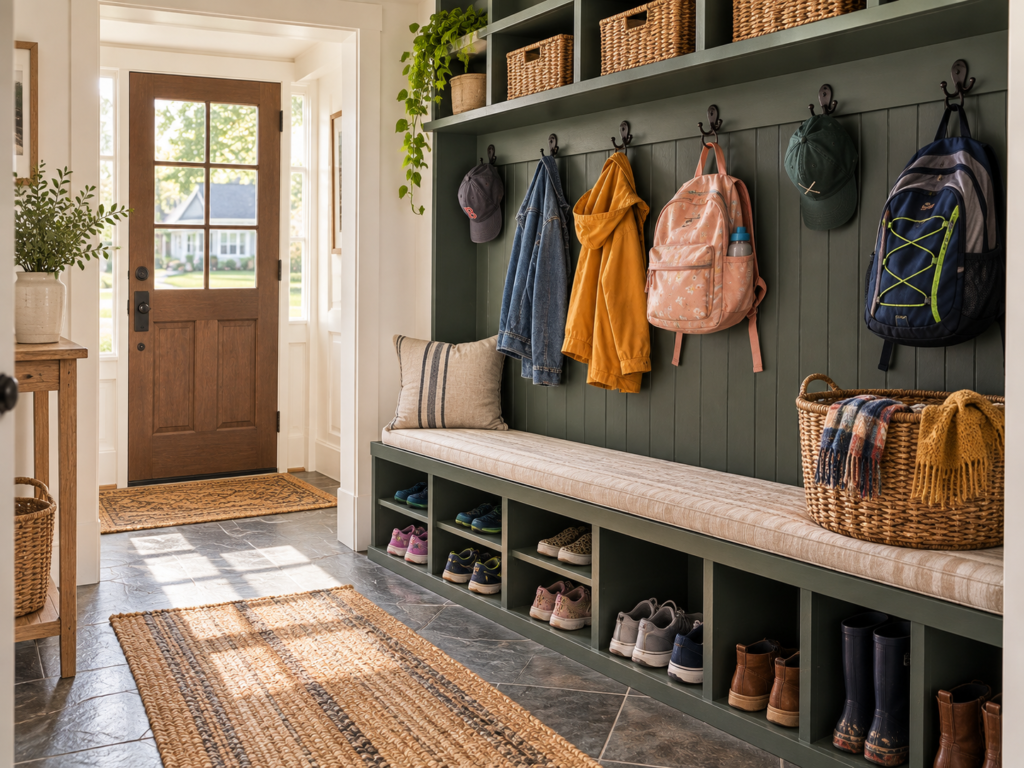
The HOOBRO model uses 12 shoe cubbies and adds hooks above the bench for coats and accessories. That makes it more useful than a simple two-shelf shoe bench when several people are dropping footwear at the same door.
The 39.4-inch width also gives it enough presence to work as a dedicated family drop zone.
Think of it as a mini mudroom rather than just a shoe rack.
Best setup: Assign each section to a family member instead of letting everyone throw shoes into whichever cubby is closest.
3. SONGMICS Shoe Bench With Cushion — Best for an Apartment
Apartment entryways rarely have room for a full console, coat cabinet, and shoe cabinet.
A compact bench solves more than one problem.
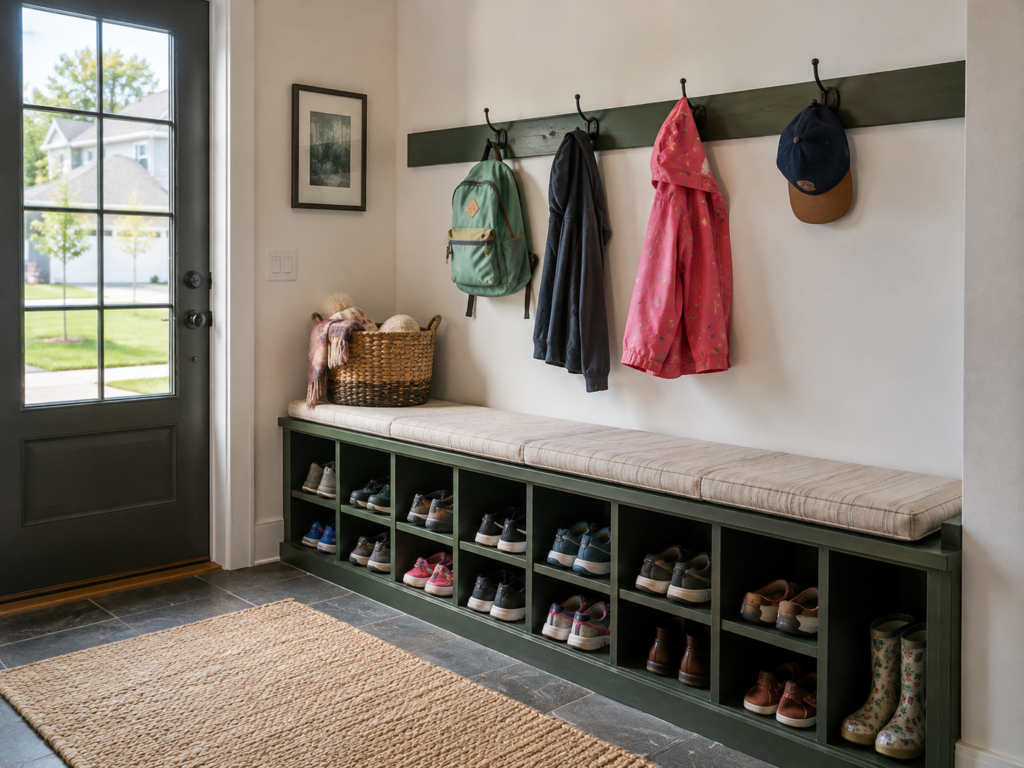
The SONGMICS shoe bench gives you a place to sit while changing shoes and a dedicated lower storage area. Its straightforward shape also works against a wall without visually overwhelming a small foyer.
For a rental apartment, this is the type of furniture I’d consider before installing wall-mounted storage.
You get useful organization without permanently changing the property.
4. A Hidden Shoe Cabinet — Best for Keeping Shoes Out of Sight
Open shelves are convenient, but they expose every sneaker, sandal, boot, and pair of slippers to anyone walking through the front door.
A closed shoe cabinet gives the entryway a much cleaner appearance.
Look for flip drawers or slim vertical compartments rather than a deep cabinet. Those designs preserve floor space while hiding the visual clutter.
This is particularly useful in an entryway that opens directly into a living room.
The cabinet should look like furniture first and shoe storage second.
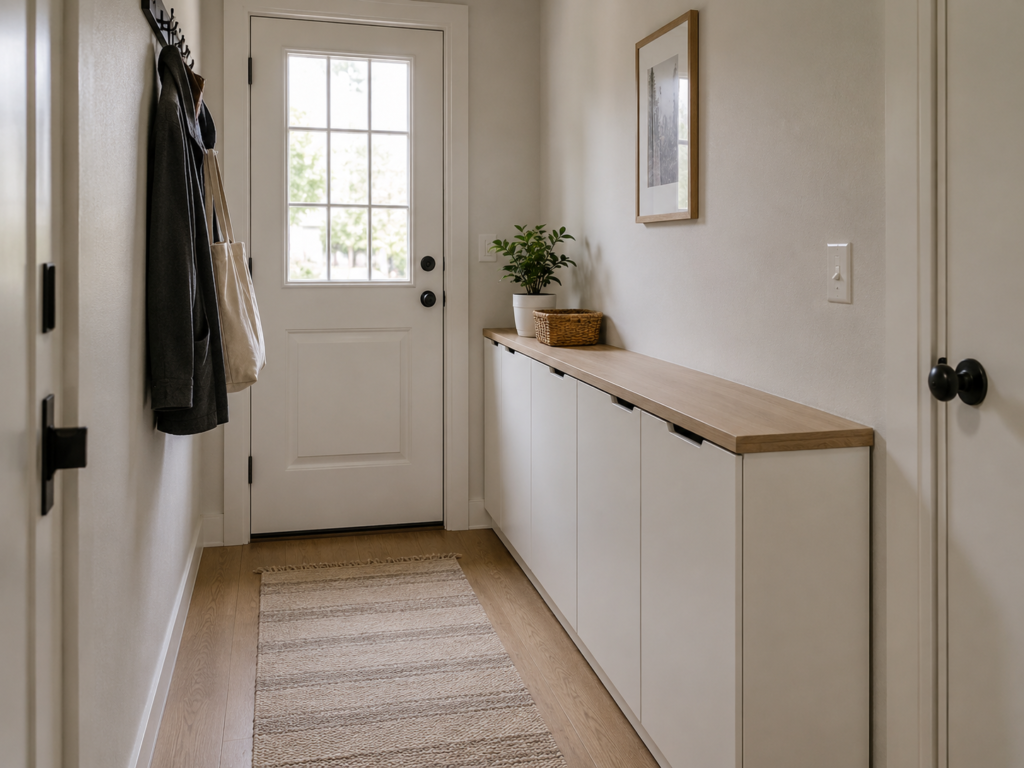
5. A Budget Shoe Storage Bench — Best Under a Modest Budget
You don’t need to spend several hundred dollars to solve a shoe pile.
A simple metal-frame or engineered-wood bench with two or three shelves gives you the basic functions: seating, shoe storage, and a surface for a small basket.
The trick is choosing a design that doesn’t look temporary.
I’d skip flimsy fabric organizers here. They save money initially but don’t give you a useful surface for keys, bags, or decor.
A sturdy bench with a real top provides much more value.
6. A Farmhouse-Style Shoe Bench — Best for a Warm Entryway
For a farmhouse interior, look for painted wood, natural wood grain, beadboard details, or a simple X-frame construction.
The furniture should have enough visual weight to work with other farmhouse elements without turning the entryway into a themed display.
Pair it with a woven basket for hats and gloves, a simple brass hook rail, and one ceramic lamp or vase.
The shoe storage stays practical while the styling gives the entrance personality.
7. A Modern Minimalist Shoe Cabinet — Best for Contemporary Homes
Modern entryways benefit from furniture with fewer visual interruptions.
A slim cabinet with flat fronts, simple hardware, and a restrained finish keeps shoes hidden while creating a clean horizontal line along the wall.
White works well in bright apartments, while black or walnut finishes create more contrast.
Don’t overload the top with decorative objects. One mirror, a small tray, and perhaps a compact lamp are enough.
The storage should do the visual heavy lifting.
8. A Renter-Friendly Freestanding Shoe Rack — Best for Renters
Renters have a different set of constraints.
A freestanding shoe-storage console or bench avoids drilling into walls and makes it possible to take the organization system with you when you move.
Choose something stable enough to use every day and narrow enough to sit comfortably against the entry wall.
For a rental, I’d spend money on furniture that can move with you rather than custom storage that belongs to the property.
9. A Slim Shoe Cabinet — Best for a Tiny Entryway
Tiny entryways require a different approach.
Instead of searching for a traditional console, look for an ultra-slim shoe cabinet with vertical or flip-door storage.
Measure the available wall first. A cabinet around 8–12 inches deep has a much better chance of working in a cramped entrance than a standard furniture piece.
The important measurement isn’t the cabinet width alone. Check how far it projects into the walking route.
10. A Shoe Bench With Hidden Storage — Best for a Cleaner Look
A hidden compartment gives you somewhere to put less attractive items such as winter accessories, shoe-care supplies, slippers, and reusable shopping bags.
That makes this style particularly useful for homes where the entryway is visible from the main living space.
Choose a hinged lid or doors that open without blocking the main walkway.
For everyday shoes, open storage remains quicker. For visual clutter, hidden storage wins.
11. A Shoe Bench With Coat Hooks — Best for a Mini Mudroom
When there is no dedicated mudroom, combine the functions.
A bench with hooks gives you a place for shoes below and jackets above. Add a basket on the seat or a small tray for keys and the furniture becomes a compact command center.
This works particularly well beside a garage entrance where coats, backpacks, and outdoor shoes already converge.
Keep the number of hooks proportional to the household. Six hooks on a tiny wall simply creates another visual mess.
12. A Bamboo Shoe Storage Bench — Best for a Natural Look
Bamboo brings warmth without the visual heaviness of dark wood or metal.
A bamboo bench with open shelves works particularly well in coastal, Scandinavian, Japandi, and casual interiors.
One SONGMICS bamboo shoe bench design uses two shelves for everyday footwear and a top surface for bags and grab-and-go items.
Use a washable runner underneath if the entrance receives wet or muddy shoes.
13. A Long Storage Bench — Best for Shoes Plus Bags
A longer bench becomes more useful when your entryway needs to handle more than shoes.
Look for a piece with enough surface length for a handbag or backpack while keeping shoes underneath.
For a household with two adults and children, a 40-inch-plus bench gives you more usable landing space than a tiny 24-inch stool.
Add a wall mirror above it and a tray on one side for keys.
Now the furniture handles three daily tasks: sit, store, and drop.
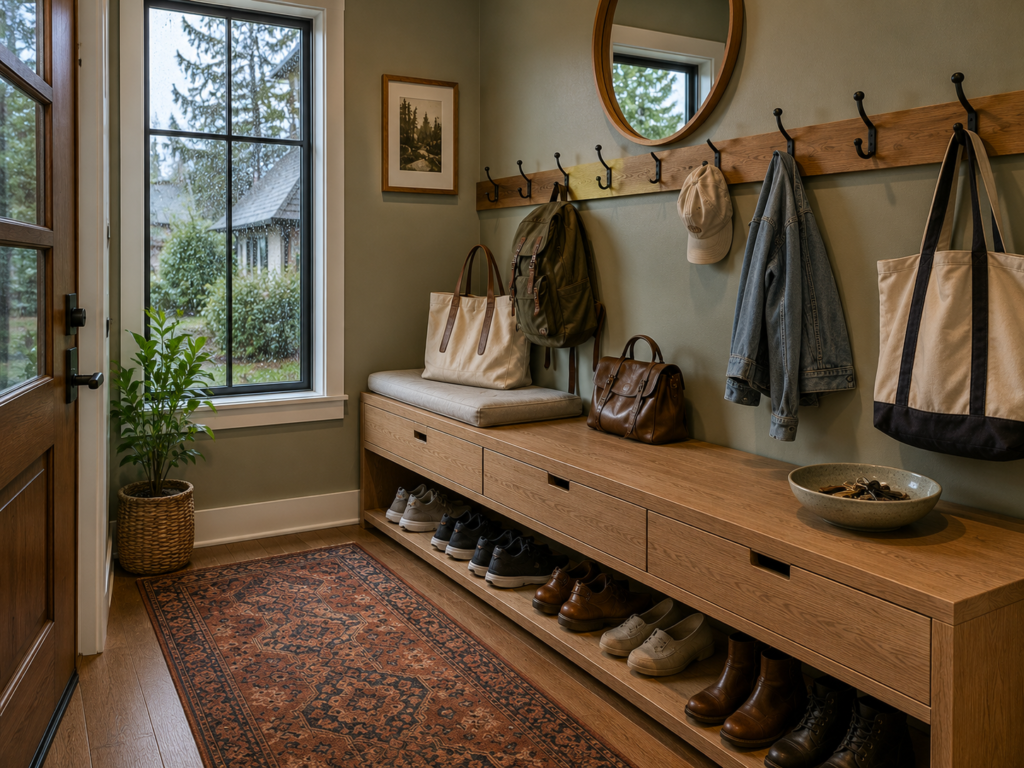
14. A Shoe Cabinet With Doors — Best for Pet Owners
Open shoe racks are easy to access, but they also expose shoes to dust, pet hair, and curious pets.
A cabinet with doors creates a cleaner barrier.
Choose compartments with enough vertical clearance for the footwear your household actually wears. Check for ventilation features when the cabinet design provides them, particularly when storing shoes that have been worn outdoors.
Keep frequently used footwear in the easiest-to-reach compartments and reserve the upper sections for occasional shoes.
15. A Console-Style Shoe Storage Table — Best for a Traditional Entryway
Some homes need the furniture to look more like a traditional console than a shoe bench.
A console-style piece with drawers, shelves, or concealed compartments gives you a proper tabletop for a lamp, artwork, keys, and mail while keeping footwear below.
This is the strongest choice when the entryway is part of the home’s decorative architecture rather than a separate mudroom.
Use a large mirror above it and keep the tabletop relatively sparse.
How to Choose the Right Entryway Table With Shoe Storage
Before clicking Add to Cart, measure these five things:
1. Wall width: Measure the usable wall rather than the entire wall.
2. Maximum depth: Mark the furniture’s projected depth on the floor with painter’s tape.
3. Door swing: Open the front door fully and check whether the furniture interferes.
4. Shoe capacity: Count the pairs that actually live near the entrance.
5. Bag storage: Decide whether backpacks, purses, umbrellas, or dog accessories also need a home.
That last point matters more than people expect.
A table that stores 12 pairs of shoes but leaves six backpacks on the floor hasn’t solved the entryway problem.
What Size Entryway Table With Shoe Storage Should You Buy?
For a typical hallway, start with the available depth rather than the table width.
A piece around 10–14 inches deep works well for narrow entrances. Larger rooms give you more freedom to use a deeper bench or console.
Height depends on the design. A traditional console sits higher than a shoe bench, while a storage bench is designed around comfortable seating.
Don’t force a bench into a space where you really need a tabletop.
The furniture should match what you actually do at the door.
How to Keep the Entryway From Looking Cluttered
Even the best shoe-storage furniture becomes messy when everything is left exposed.
Use three simple zones:
Daily shoes: Keep the pairs used every day in the easiest-access compartments.
Occasional shoes: Move dress shoes and seasonal footwear into closed storage.
Grab-and-go items: Give keys, wallets, sunglasses, and bags one dedicated landing spot.
A small tray on top of the table handles tiny objects. A basket handles soft accessories. The shoe compartments handle shoes.
Don’t turn the tabletop into another storage shelf.
A Realistic Small-Entryway Example
Imagine a 36-inch-wide apartment entrance with a door opening directly into the hallway.
A traditional 18-inch-deep console would make the passage feel tight.
Instead, use a shallow shoe bench around 12 inches deep. Put the two or three pairs of everyday shoes underneath, place a small tray on top for keys, and install a mirror above it if the rental allows wall mounting.
The result isn’t dramatic furniture.
That’s exactly why it works.
The shoes have a home, the keys have a home, and the walking path remains open.
What I Would Buy for Different Homes
| Situation | What I’d Choose | Why |
|---|---|---|
| Narrow hallway | Shallow shoe bench | Protects walking space |
| Large family | Cubby bench with hooks | Handles multiple people’s gear |
| Apartment | Compact shoe bench | Combines seating and storage |
| Shoes need hiding | Closed cabinet | Removes visual clutter |
| Tight budget | Open shelf bench | Simple and inexpensive |
| Farmhouse home | Wood shoe bench | Matches warmer finishes |
| Modern home | Flat-front cabinet | Cleaner visual line |
| Rental | Freestanding unit | No permanent installation |
| Tiny entrance | Slim vertical cabinet | Uses wall space efficiently |
| Shoes + bags | Long storage bench | Creates a larger landing zone |
Don’t Buy Before Checking These Details
Amazon product photos rarely communicate how large furniture feels inside your actual hallway.
Check the assembled dimensions, not just the product image.
Then look at the shelf height. A compartment that fits low-top sneakers might not fit ankle boots.
Finally, check the return policy and assembly requirements before ordering. Large furniture is much more annoying to return than a small organizer, particularly when the box has already been opened.
Product availability and prices also change, so treat the Amazon listing as the final source for current specifications.
FAQ
How many pairs of shoes should an entryway shoe cabinet hold?
That depends on how many people use the entrance and whether seasonal shoes are stored elsewhere. For a two-person household, 8–12 everyday pairs is a practical starting point. Families with children need more capacity or a separate seasonal shoe-storage area.
Should shoes be stored in a closed cabinet?
Closed storage is useful for shoes that are clean and dry. Wet footwear should dry completely before being placed inside an enclosed cabinet. For frequently worn shoes, airflow and easy access matter more than hiding every pair.
What should I put above an entryway table?
A mirror is the most useful option because it adds function without consuming floor space. Artwork, a narrow shelf, or a wall-mounted light also works. Keep the wall treatment proportional to the table so the entrance doesn’t feel visually crowded.
How do I stop an entryway shoe bench from sliding?
Use non-slip furniture pads under the legs, especially on smooth tile or hardwood. For a tall or heavy unit, an anti-tip bracket secured according to the manufacturer’s instructions provides additional stability. This matters even more in homes with children or pets.
Final Takeaway
The biggest entryway mistake is buying the largest shoe-storage table that fits the wall—measure the walking path first, then choose the smallest piece that comfortably handles your household’s daily shoes and bags.