
The easiest way to add seating to a small bedroom is to use a spot that is already difficult to use—beside the bed, beneath a window, or inside an unused corner—rather than pushing another bulky chair into the middle of the room.
Good small bedroom seating should give you a place to sit without creating a new obstacle. The right chair can become a reading spot, dressing seat, place to put on shoes, or even extra storage.
Here are 11 practical ways to make it work.
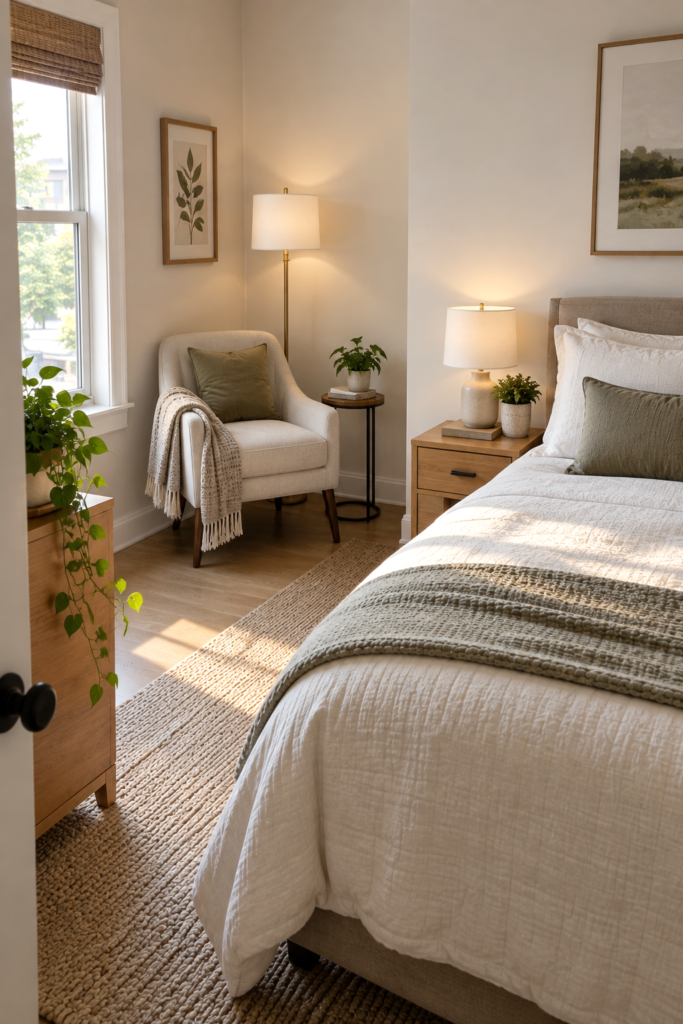
1. Tuck a Small Accent Chair Into the Bedroom Corner
An empty corner is the first place I’d check.
A compact accent chair with a narrow frame gives you a proper seat without taking over the room. Look for a chair with a footprint around 24–28 inches wide rather than a deep lounge chair designed for a large living room.
Place it diagonally into the corner rather than pushing it directly against both walls. That small gap makes the arrangement look intentional and leaves room to pull the chair out.
For a bedroom with a reading lamp nearby, this becomes a useful little reading zone instead of wasted floor space.
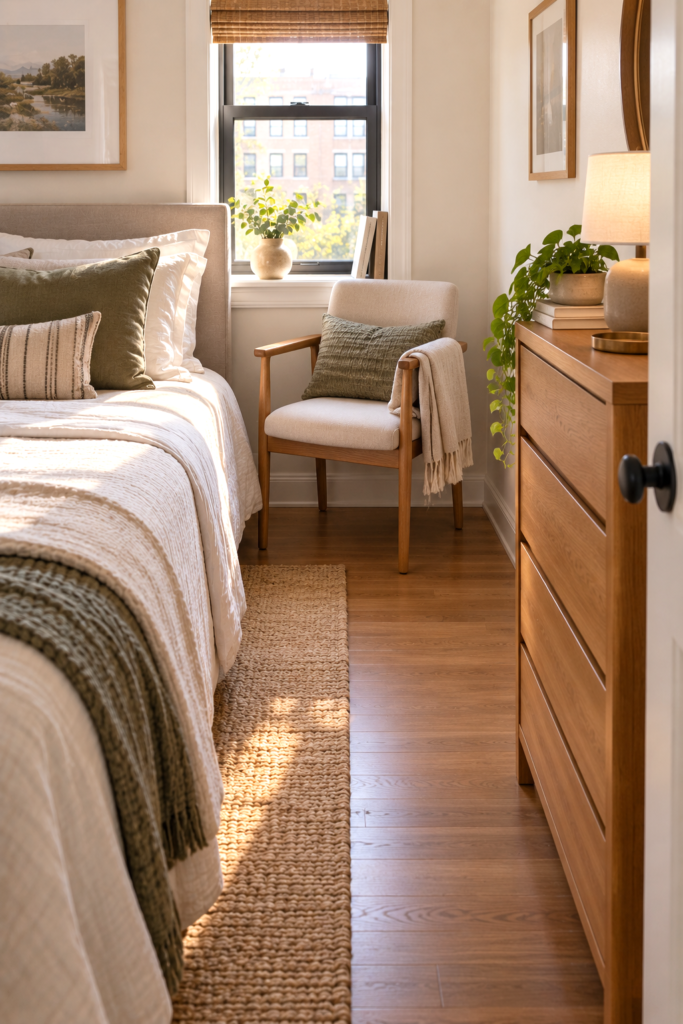
2. Use a Narrow Chair Beside the Window
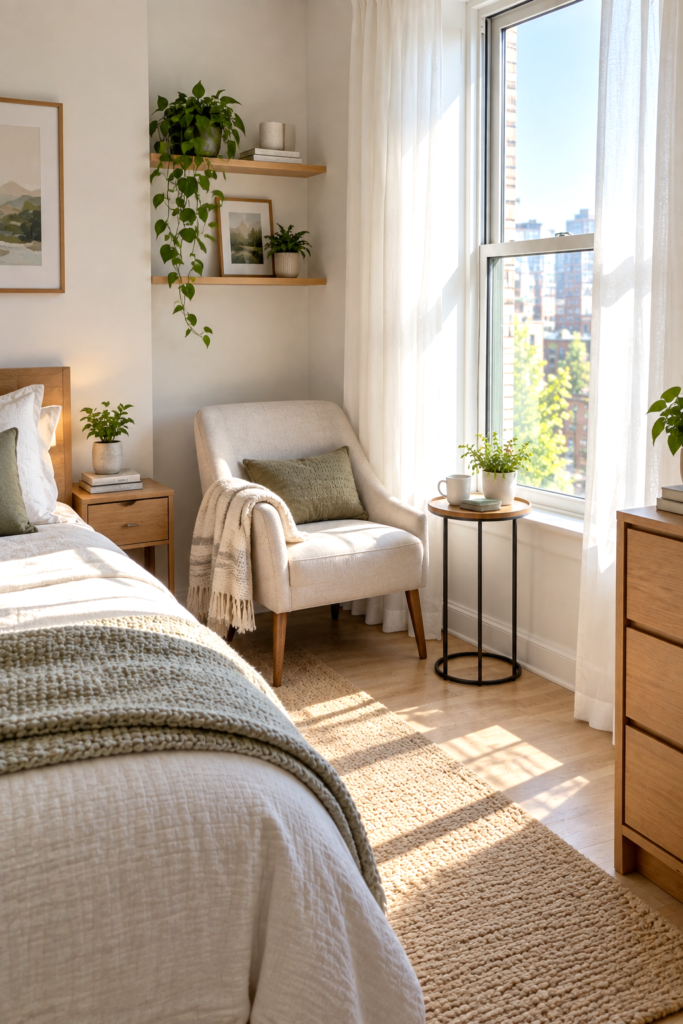
A window corner often has limited furniture options, which makes it a natural seating location.
Choose a chair with a slim profile and position it beside the window rather than directly in front of it. This creates a small sitting area while preserving the main walking path around the bed.
A light-colored chair also keeps the area visually open. For a modern bedroom, something similar to a Yaheetech accent chair works as a reference point when shopping for a compact upholstered design.
3. Put a Small Bench at the Foot of the Bed
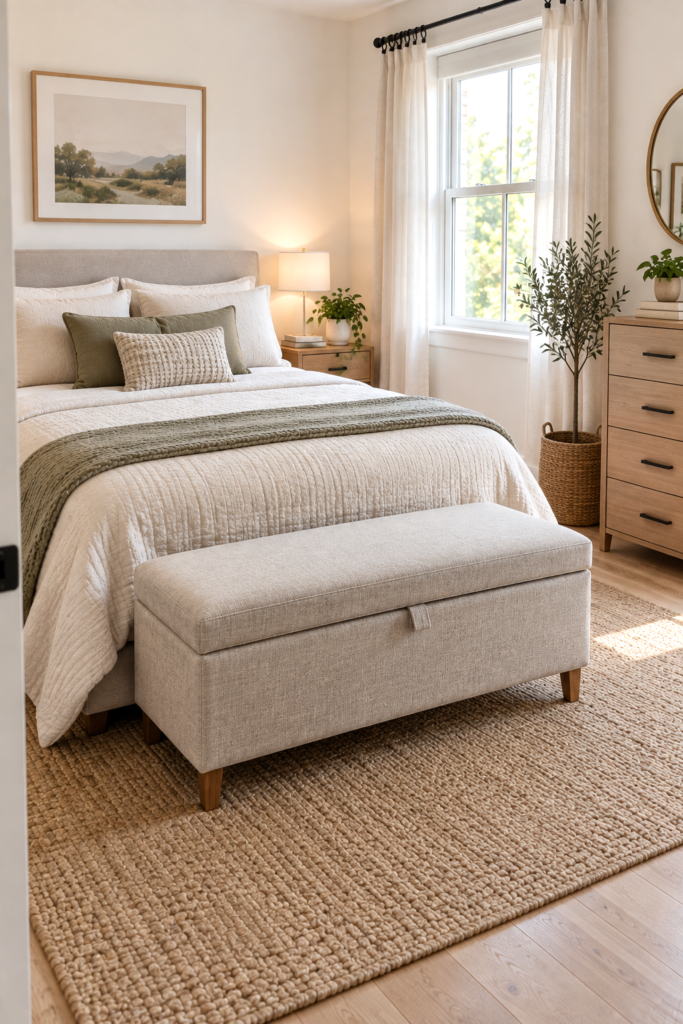
A bench is one of the most useful pieces of small bedroom seating because it occupies space that is already part of the bedroom layout.
Instead of adding a chair somewhere along the wall, place a narrow bench at the foot of the bed.
Keep the depth modest. A bench around 12–16 inches deep provides a useful seat without turning the end of the bed into a blockage.
Choose a storage bench if you need somewhere to keep spare blankets, pillows, or seasonal clothing.
4. Choose a Backless Stool for the Dressing Area
Not every bedroom needs a full chair.
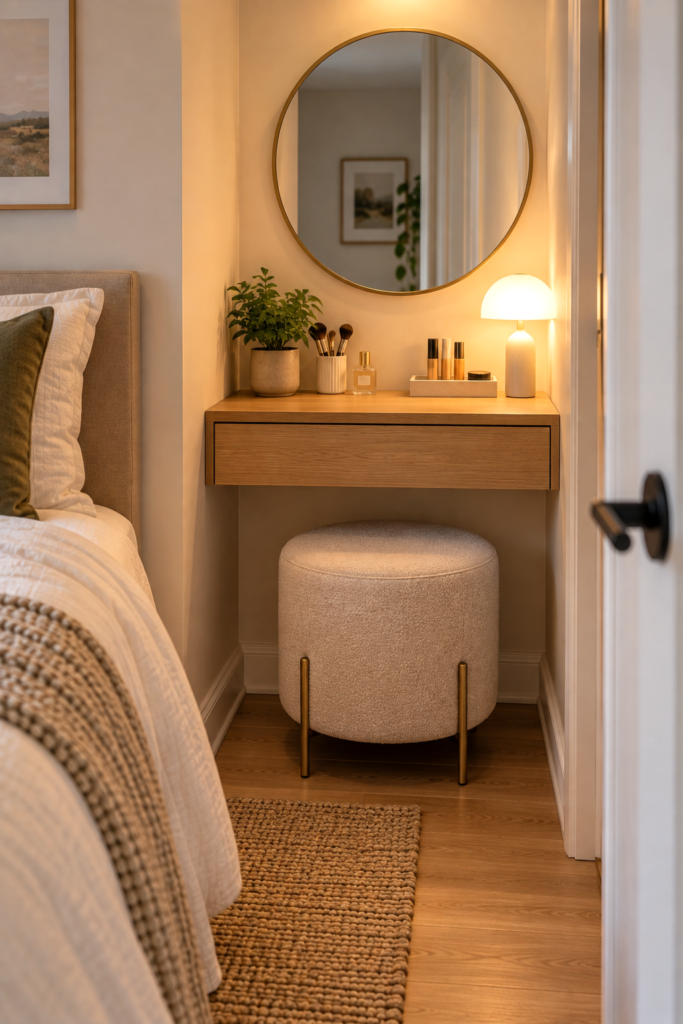
A small stool works especially well beside a compact vanity or dressing table because you can push it completely underneath when you’re finished.
This is one of my favorite solutions for very small bedrooms. I’d choose a backless stool over a bulky vanity chair when floor space is tight. You get a real seat without sacrificing permanent walking space.
A round stool with a diameter around 14–18 inches is enough for many dressing areas.
5. Slide a Chair Between the Bed and Dresser
That awkward gap between furniture is another opportunity.
Measure the space first. If there is enough room to pull a chair out without blocking the dresser drawers or bedroom doorway, use a slim chair with a shallow seat.
This arrangement works particularly well in bedrooms where one wall already contains the bed and another contains storage.
Don’t force a chair into a gap that is only technically large enough. You need enough clearance to sit down and stand up comfortably.
6. Try a Folding Chair You Can Put Away
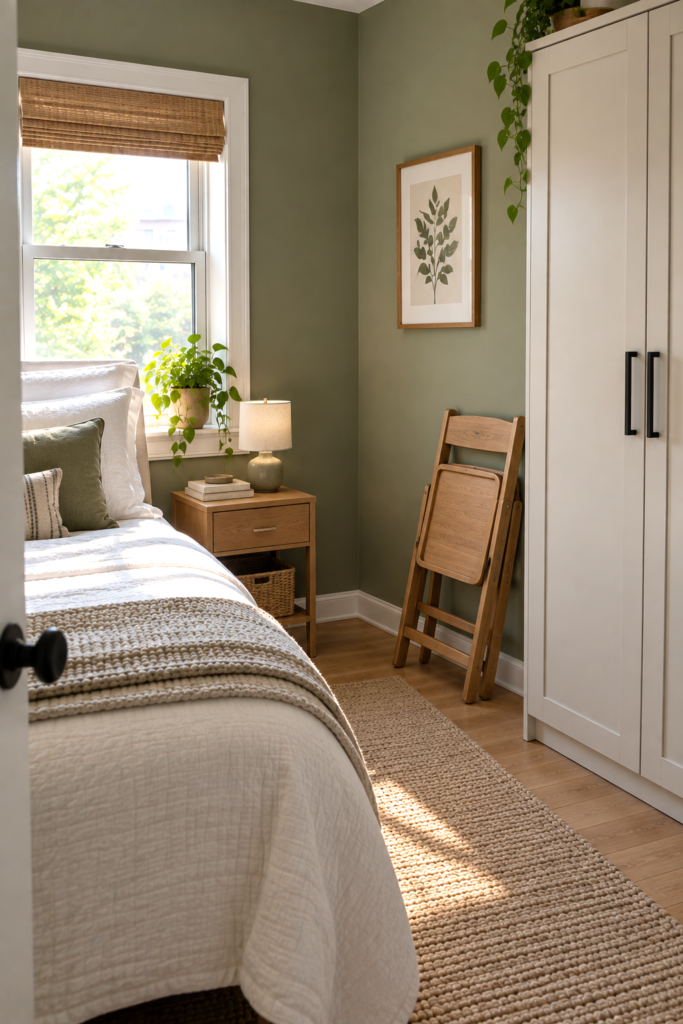
A folding chair solves a different problem: you don’t need permanent seating.
Keep it beside the wardrobe or behind the bedroom door when you aren’t using it. Pull it out when you want to read, work, fold clothes, or get dressed.
This approach works particularly well in guest bedrooms and multipurpose rooms.
A simple wooden folding chair also gives you more flexibility than a permanent accent chair because the floor becomes completely open when the chair is stored.
7. Use an Ottoman That Doubles as Storage
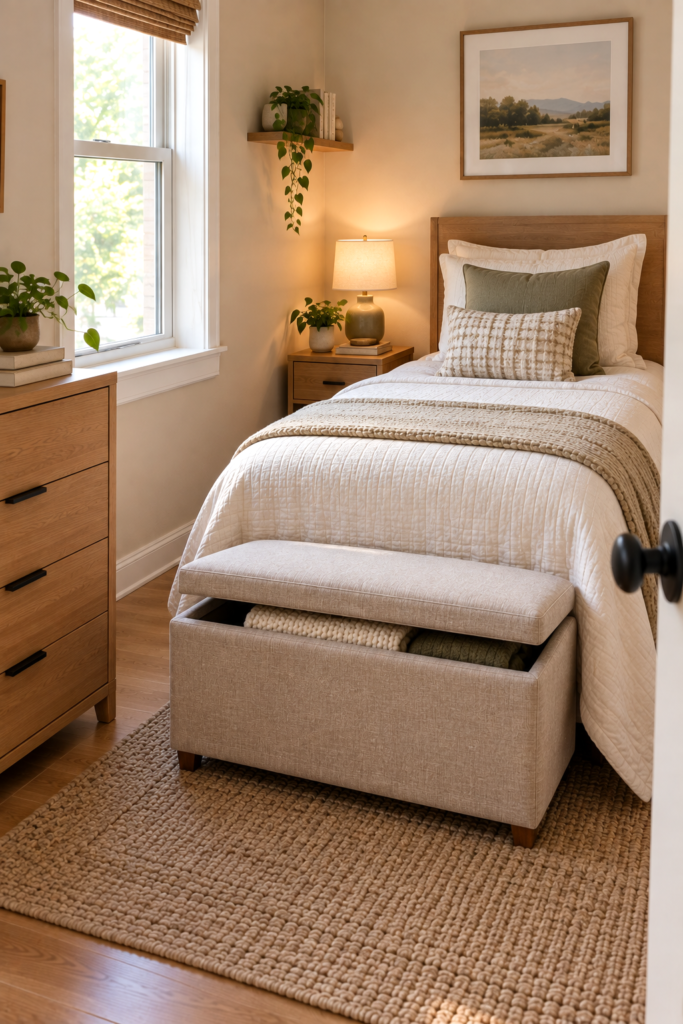
A storage ottoman gives you seating and organization in one piece.
Place it near the foot of the bed, under a window, or beside a dresser. Choose one with a hinged or removable lid so it can hold blankets, extra bedding, or clothing.
The key is choosing a compact shape. A large square ottoman can consume more visual space than expected.
For small bedrooms, I’d skip oversized tufted ottomans. They look impressive in showroom photos but eat up valuable floor area. A simple rectangular storage ottoman is more practical.
8. Turn a Window Ledge Into a Seating Spot
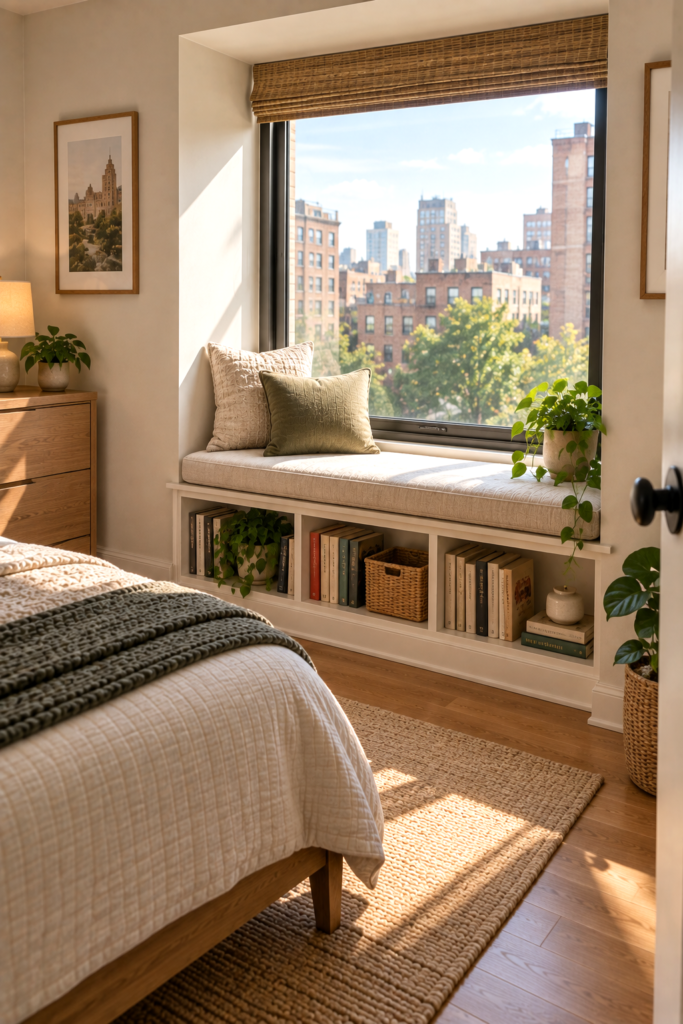
A deep window ledge can become useful seating without adding another piece of furniture.
Add a fitted cushion and a couple of slim pillows, provided the ledge is structurally suitable for sitting.
This works particularly well in older homes and apartments with deep window recesses.
The advantage is obvious: the seating occupies architectural space instead of taking up the center of the bedroom.
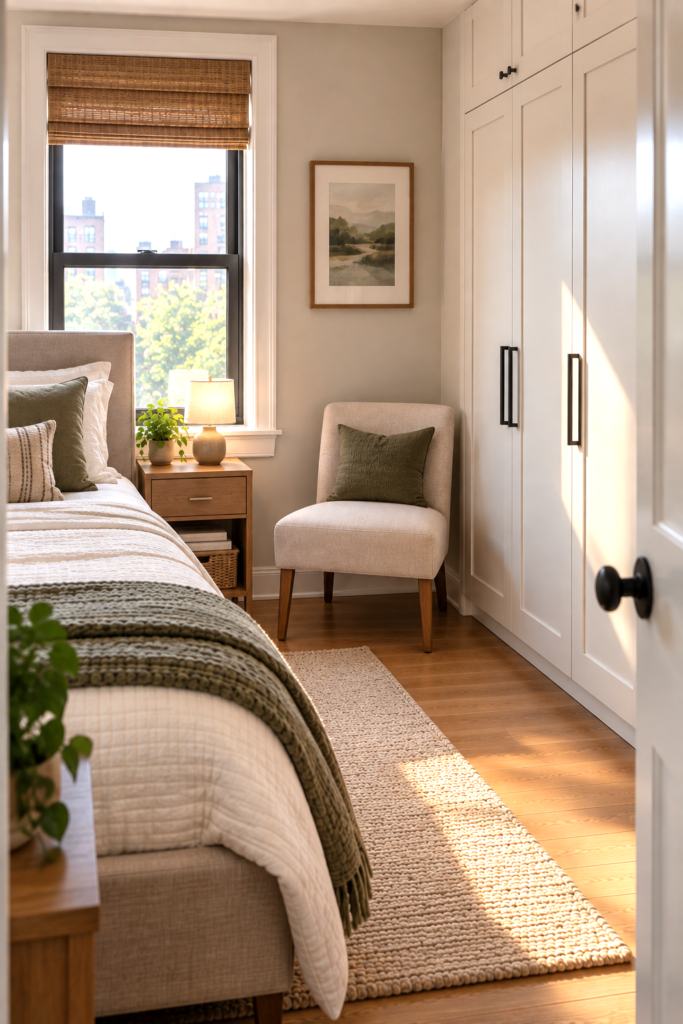
9. Add a Slim Slipper Chair Near the Closet
A slipper chair has a low, compact profile and doesn’t need the large footprint of an armchair.
Place one near the closet or wardrobe so you have somewhere to sit while putting on shoes or planning an outfit.
Keep the chair facing into the room rather than directly blocking the closet doors.
This is especially useful in a 10×10 bedroom, where every furniture placement affects the walking route.
10. Use a Wall-Mounted Drop-Leaf Seat
For an extremely tight bedroom, consider furniture that disappears against the wall.
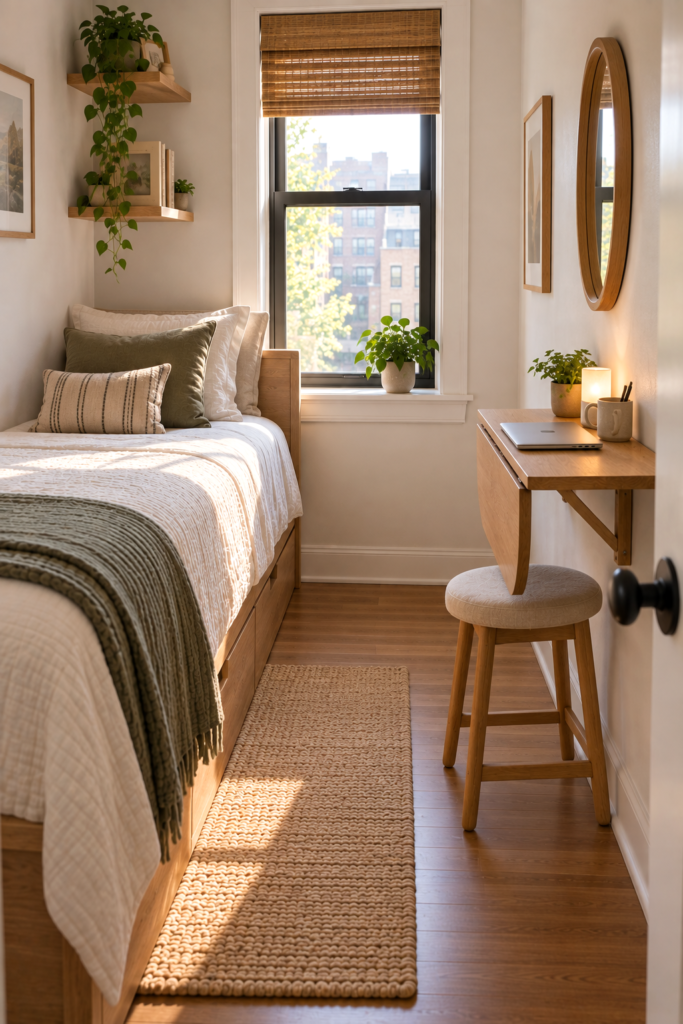
A wall-mounted drop-leaf seat folds flat when not needed and opens into a small sitting surface. Pair it with a compact stool that slides underneath.
This is more unusual than adding a conventional chair, but it makes sense in micro-apartments, children’s rooms, and narrow bedrooms.
The same idea works with a shallow wall-mounted desk if you need both a workspace and occasional seating.
11. Put a Compact Chair Beside the Bed Instead of a Nightstand
This is the most space-efficient option when your bedside area is already tight.
Replace one nightstand with a narrow chair and use a wall-mounted shelf above it for a lamp, phone, and book.
You gain a proper seat while keeping the bedside storage off the floor.
The trick is to choose a chair narrow enough that it doesn’t interfere with getting into bed. A slim wooden or metal-frame chair works particularly well here.

How to Choose the Right Seating Spot
Before buying anything, stand in the bedroom and identify the areas that already have a purpose.
Look for:
- An unused corner
- Space beside a window
- The foot of the bed
- A gap beside a dresser
- A dressing area
- Space beside a wardrobe
- An oversized nightstand footprint
Then measure the available width and depth.
Leave enough room to pull the chair out, sit down, and walk around it. A chair that technically fits but forces you to squeeze sideways through the room has failed its purpose.
Think about the seating activity too. A tiny stool works for putting on shoes. A supportive upholstered chair works better for reading. A storage bench makes more sense when blankets and bedding are also part of the problem.
What to Look for When Shopping
For small-bedroom seating, prioritize the footprint before the appearance.
Check these specifications:
Width: Look for roughly 18–28 inches for compact chairs and stools.
Depth: Around 16–24 inches keeps many options manageable.
Height: Make sure the seat works with the table, vanity, or surface beside it.
Arms: Armless designs save valuable width.
Storage: A storage bench or ottoman earns its floor space twice.
Mobility: Lightweight chairs are easier to move when you need the room for another activity.
Color: A chair close to the wall or bedding color visually blends into the room instead of becoming a heavy focal point.
Don’t buy based on a product photo alone. Check the actual dimensions listed by the retailer before ordering.
The Best Placement for Your Bedroom Layout
There isn’t one universal position for a bedroom chair. The correct location depends on the room’s traffic pattern.
For a narrow rectangular bedroom, the foot of the bed is a strong option because it uses an existing furniture zone.
For a room with a large window, create a window reading corner.
For a bedroom with limited open floor space, use a folding chair or stool that disappears when you don’t need it.
And for a room with an unused corner, a compact accent chair creates a dedicated seating zone without interfering with the main furniture.
The important thing is to protect the route between the door, bed, wardrobe, and bathroom. That walking path matters more than squeezing in another decorative chair.
FAQ
What size chair works in a small bedroom?
A chair around 24–28 inches wide is a practical starting point, but the available floor area matters more than the number itself. Measure the intended location and account for the space needed to pull the chair out.
Should a bedroom chair have arms?
Armless chairs save width and make tight spaces easier to navigate. Chairs with arms provide a more substantial place to sit but require extra clearance on both sides.
Where should a chair go in a bedroom with a queen bed?
Check the foot of the bed first, then unused corners and window areas. Avoid placing the chair where it interrupts the route from the bedroom door to the bed or closet.
What seating works for a bedroom that doubles as a home office?
A compact task chair is more practical than a decorative accent chair when you spend several hours working there. Choose a chair that fits completely under the desk when it isn’t being used.
Final Tip: Protect the Walking Path
The biggest mistake in a small bedroom is choosing the seating first and figuring out the layout afterward.
If you only do one thing, mark the chair’s footprint on the floor with painter’s tape and walk around it for a full day before buying it. You’ll immediately see whether the new seat improves the bedroom—or simply steals the floor space you needed.