
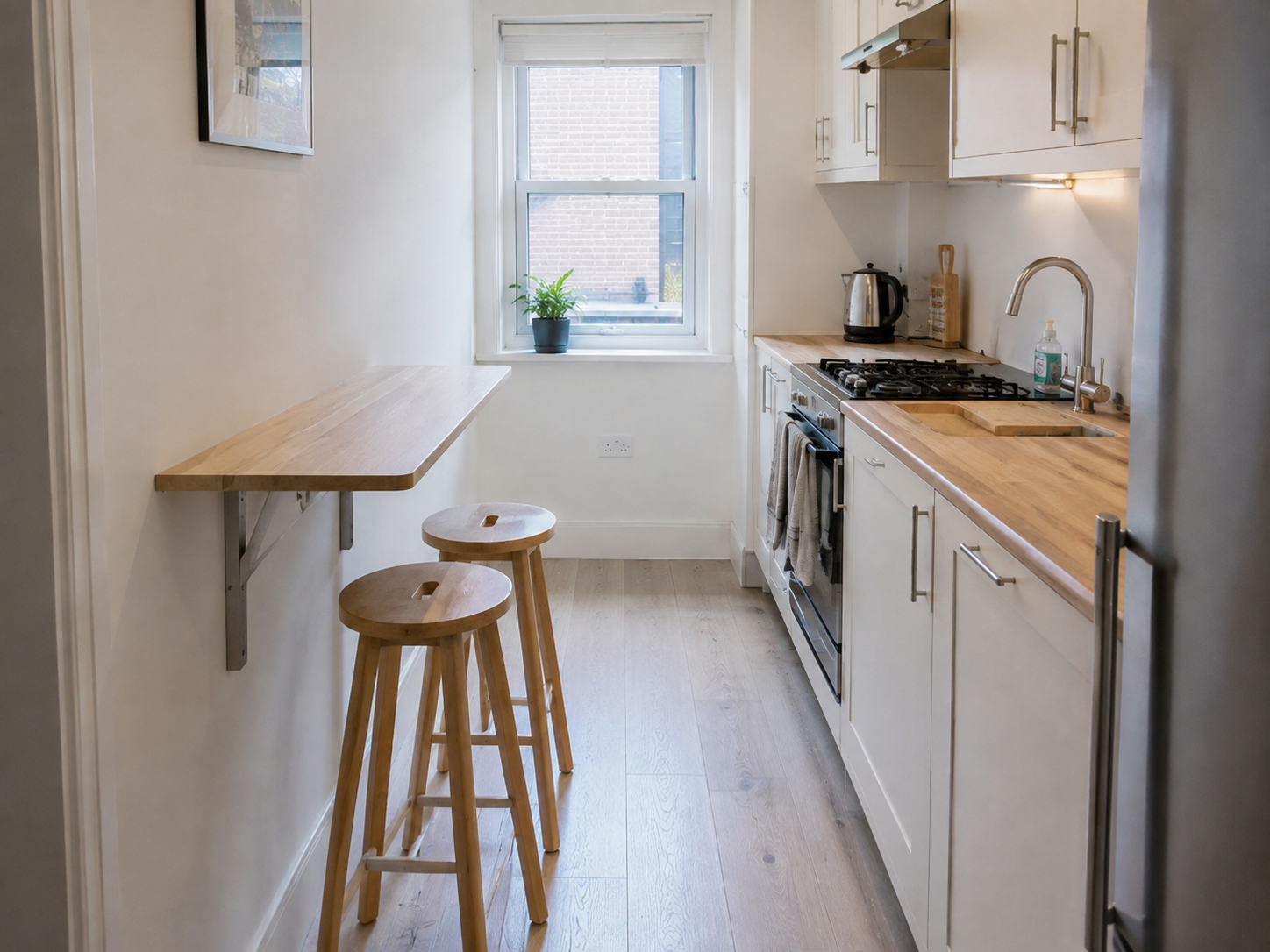
The smartest way to renovate a small kitchen is to fix the things you use every day before spending money on things that only make the kitchen look newer. Better storage, lighting, layout, and durable surfaces will improve the room far more than expensive finishes in the wrong places.
A small kitchen also gives you less room for mistakes. Replacing cabinets twice, choosing the wrong countertop, or adding an island that blocks the walkway gets expensive fast.
Here are the upgrades I’d put at the top of the budget.
1. Fix the Kitchen Layout First
Before choosing cabinet colors or backsplash tile, look at how you move through the kitchen.
The refrigerator, sink, and cooking area should work together without forcing you to walk around an island or open cabinet doors into each other.
For a small kitchen, removing an awkward cabinet can sometimes improve the room more than adding another one.
Draw the existing layout and mark where you prep, cook, wash dishes, and store food. That reveals the real problems before demolition begins.
2. Spend More on Cabinets Where Storage Is Actually Needed
Small kitchens need storage efficiency, not simply more cabinets.
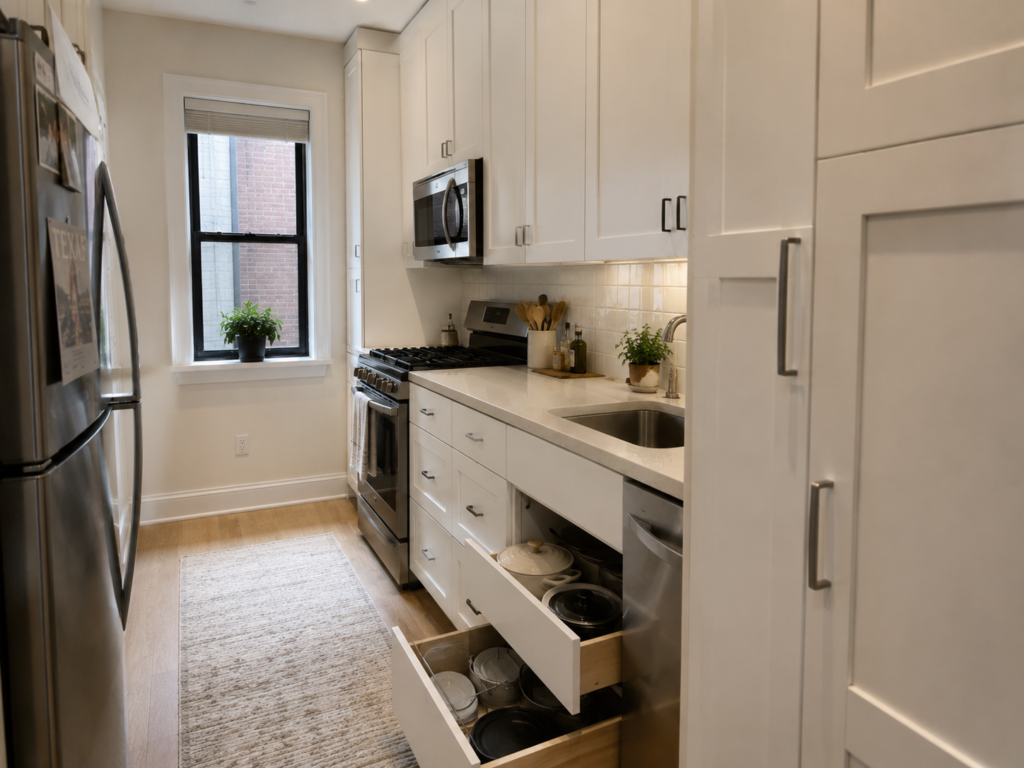
Use drawers for pots, pans, plates, and cooking tools because you can see the contents without reaching into the back of a deep cabinet.
For upper cabinets, extend them toward the ceiling when the proportions work. The upper section can hold appliances or rarely used serving pieces.
3. Keep the Countertop Practical
Don’t cover every inch of a small kitchen with decorative objects.
You need clear workspace.
A countertop depth of around 24 inches is standard, but the usable prep area matters more than simply having a large surface. Protect the main work zone between the sink and cooktop.
Quartz from brands such as Caesarstone gives you a durable surface with many design options, while laminate remains a practical choice when keeping the renovation budget tight.
4. Improve Lighting Before Adding Expensive Finishes
One ceiling light creates harsh shadows exactly where you’re trying to prepare food.
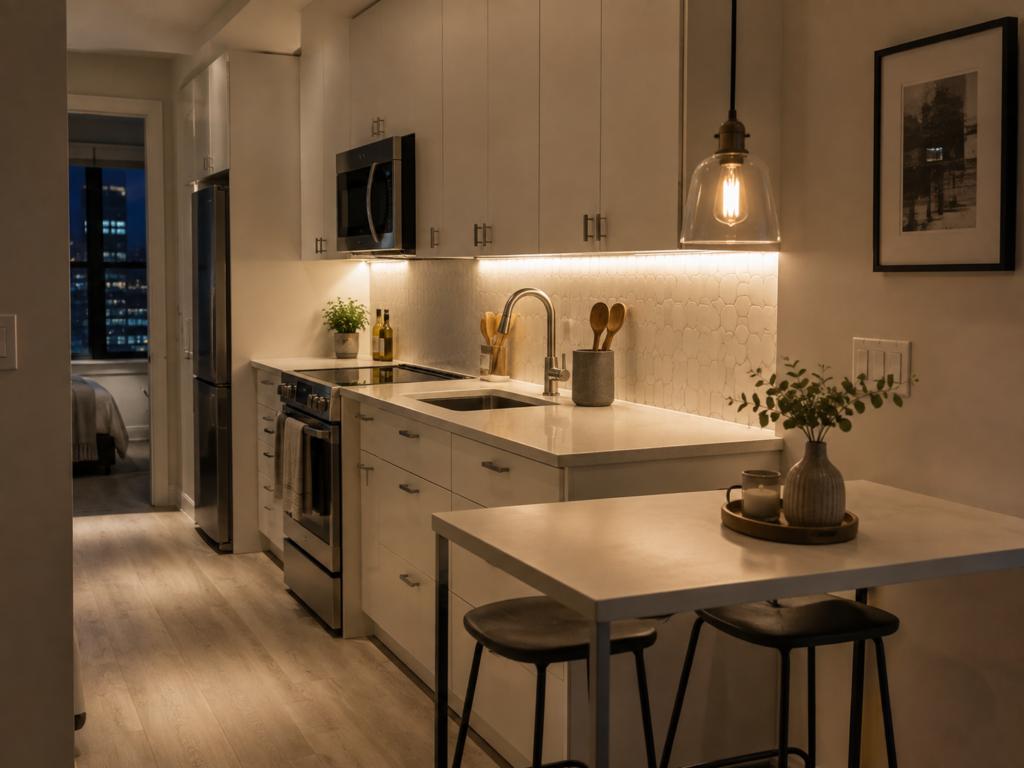
Add under-cabinet lighting above the main countertop work areas. LED strips or puck lights are inexpensive compared with replacing cabinets and make a noticeable difference every evening.
Use a warm-white temperature around 2700K–3000K for a comfortable residential feel.
5. Don’t Replace Cabinets That Are Still Good
This is one of the easiest ways to waste a renovation budget.
Solid cabinets with a sensible layout don’t automatically need replacing.
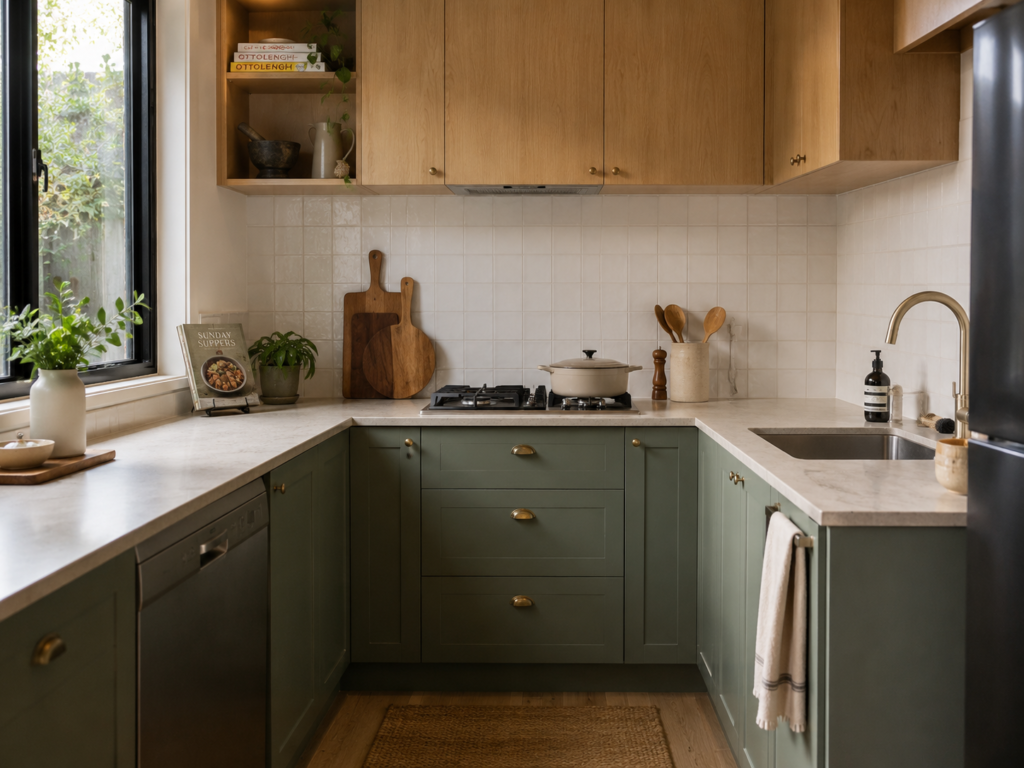
Painting, replacing doors, changing handles, and improving the internal organization can give them a completely different feel.
Benjamin Moore Simply White is a popular clean option for bright kitchen cabinetry, while Sherwin-Williams Alabaster gives a softer appearance.
Spend the cabinet replacement budget only when the boxes are damaged, poorly arranged, or impossible to adapt.
6. Replace Hardware Before Chasing Trendy Details
New cabinet handles are inexpensive compared with new cabinetry.
Choose a consistent finish and a comfortable shape. Longer pulls work particularly well on wide drawers because they are easier to grip.
I’d skip overly trendy hardware finishes that dominate the entire kitchen. Simple brushed nickel or classic black hardware has more staying power than a finish chosen only because it is currently everywhere.
7. Use a Backsplash Where It Actually Helps
A backsplash protects the wall behind the sink and cooking area, but it doesn’t need to cover every wall.
Use durable, easy-to-clean tile around the areas exposed to splashes and cooking grease.
Simple subway tile, square ceramic tile, or large-format porcelain keeps the visual field calmer in a small kitchen.
8. Add One Smart Storage Feature
You don’t need every cabinet filled with expensive organizers.
Choose the storage problem that annoys you most.
A pull-out trash cabinet, vertical tray divider, drawer organizer, or narrow spice pull-out can solve a daily frustration.
For example, a 6–9 inch pull-out cabinet beside a range can turn an awkward gap into useful storage for spices, oils, or cooking bottles.
9. Choose Appliances by Size, Not Status
A small kitchen doesn’t benefit from appliances that consume valuable cabinet and countertop space simply because they are premium models.
Measure every appliance opening before ordering.
A 24-inch dishwasher, compact refrigerator, or slim range can preserve valuable storage and walking space.
Look at the actual cooking habits of the household. A larger appliance is only useful when you regularly need its capacity.
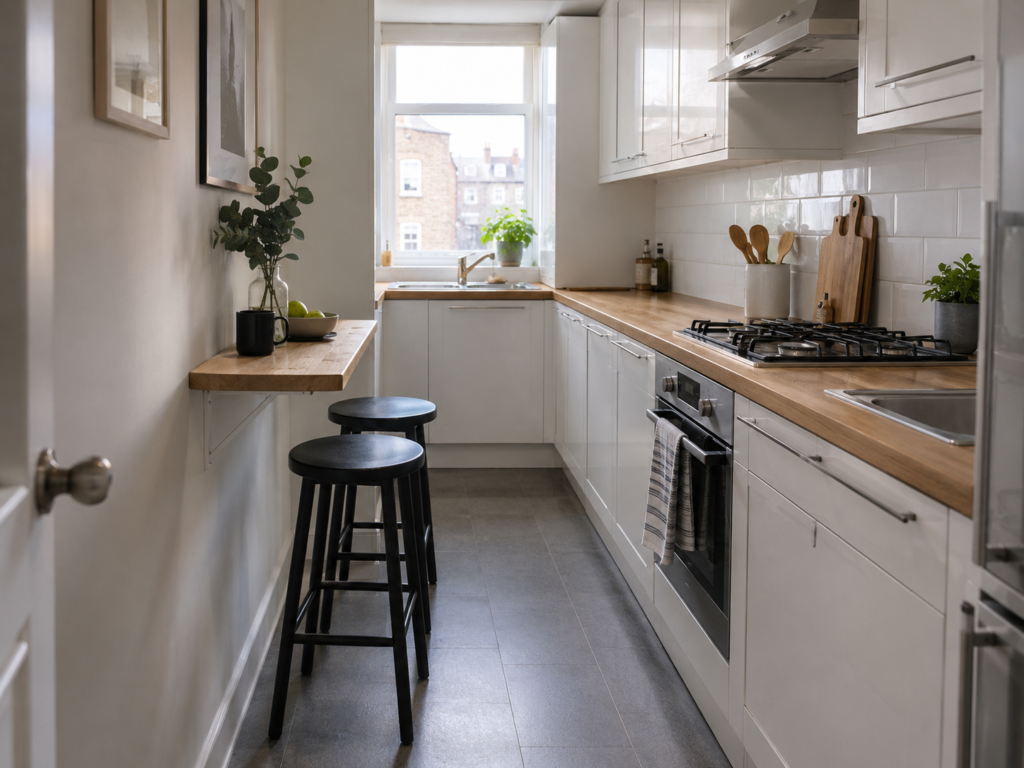
10. Create a Small Dining Zone Instead of Forcing an Island
A kitchen island is not automatically an upgrade.
In a narrow kitchen, it can make the walkway uncomfortable and reduce the usable work area.
A wall-mounted folding table or 12–18 inch-deep breakfast counter can provide seating without permanently occupying the center of the room.
11. Upgrade the Sink Only When the Existing One Creates a Problem
A huge farmhouse sink can consume valuable countertop space in a small kitchen.
Choose the sink based on cabinet width and daily use.
A compact single-bowl sink gives you more uninterrupted counter space while still handling normal cooking and washing.
Don’t replace a perfectly functional sink simply because another style looks better in photographs.
12. Spend the Final Budget on the Problems You Touch Every Day
Once the major renovation work is complete, look at the small frustrations.
Does the cabinet door hit the refrigerator?
Is there nowhere to put cutting boards?
Do drawers slam?
Is the trash bin blocking a walkway?
Do you have to reach across the stove to turn on the light?
Fix those problems before buying decorative accessories.
A renovation succeeds when the kitchen becomes easier to use—not when every surface looks expensive.
A Simple Small Kitchen Renovation Budget Priority
For a realistic small 8×10-foot kitchen, I’d prioritize the budget roughly in this order:
- Layout and necessary construction
- Cabinets or cabinet improvements
- Countertop
- Appliances that actually fit
- Lighting and electrical work
- Sink and faucet
- Backsplash
- Hardware
- Decorative finishes
The exact cost depends heavily on labor, cabinetry, plumbing, and local material prices, so don’t treat a percentage-based online renovation budget as a quote.
What Should You Renovate First?
Start with anything that affects how the kitchen functions.
A cabinet that doesn’t open properly matters more than its color. Poor lighting matters more than an expensive backsplash. A blocked walkway matters more than a designer island.
Once those problems are solved, choose finishes that make the small room feel cohesive.
FAQ
Is it cheaper to paint kitchen cabinets or replace them?
Painting costs less when the existing cabinet boxes are structurally sound and the layout works. Replacement becomes more sensible when cabinets have water damage, failing construction, or badly designed storage.
How long does a small kitchen renovation take?
A cosmetic update can take days to a few weeks, while a renovation involving new cabinets, electrical work, plumbing, flooring, and countertops takes longer. Cabinet availability and contractor scheduling often determine the timeline.
Should flooring be replaced during a kitchen renovation?
Replace flooring when it is damaged, difficult to clean, or prevents the new layout from working. Otherwise, keeping usable flooring protects the renovation budget for more important improvements.
Do I need permits to remodel a small kitchen?
Permit requirements depend on your location and the work involved. Cosmetic changes such as painting normally differ from electrical, plumbing, structural, or gas modifications. Check with your local building authority before starting those projects.
Final Takeaway
The most common small-kitchen renovation mistake is spending heavily on finishes before fixing the layout and storage—solve the problems you face every day first, then make the kitchen beautiful.